The Ultimate Guide to Taking Your Dog to Peru: Requirements, Flights, and Tips
Moving to Peru with your dog or bringing them along for an extended stay is entirely doable, but it takes careful planning. Peru's import requirements for pets are managed by SENASA (Servicio Nacional de Sanidad Agraria), and while the process is less bureaucratic than many South American countries, missing a single document can result in quarantine or your dog being denied entry.
This guide covers every step of the process from paperwork to landing, plus practical advice on living with a dog in Peru once you arrive. Whether you are relocating permanently, spending a few months, or just cannot imagine traveling without your four-legged companion, this is the resource you need.
SENASA Requirements: What Peru Demands for Pet Entry
SENASA is Peru's agricultural health authority, and they regulate the import of all animals into the country. As of 2025, the requirements for bringing a dog into Peru are as follows:
- International Health Certificate: Issued by a licensed veterinarian in your country of origin within 10 days of departure. The certificate must state that your dog is healthy, free of infectious diseases, and fit to travel. In the US, this is the USDA-endorsed APHIS 7001 form.
- Rabies Vaccination: Your dog must have a valid rabies vaccination administered at least 30 days and no more than 12 months before arrival. Puppies under 3 months old are exempt but face additional restrictions.
- Microchip: An ISO 11784/11785 compliant microchip is required. The microchip must be implanted before the rabies vaccination for the records to be linked properly. If your country uses a different microchip standard, bring your own scanner.
- Deworming Certificate: Proof that your dog has been treated for internal and external parasites within 15 days of travel. The specific product and dosage should be recorded by your vet.
- Import Permit (optional but recommended): While Peru does not always require a pre-arrival import permit for dogs from most countries, obtaining one from SENASA can speed up processing at the airport. Apply online through the VUCE (Ventanilla Única de Comercio Exterior) system.
All documents should be in Spanish or accompanied by a certified Spanish translation. SENASA officers at the airport will inspect your paperwork and may do a brief visual health check of your dog upon arrival.
Step-by-Step Document Preparation Timeline
Timing is everything when preparing to fly with a pet. Follow this timeline to avoid last-minute complications:
- 3-6 months before: Confirm your dog's microchip is ISO-compliant. Schedule rabies vaccination if not current (must be at least 30 days before travel). Research airline pet policies and book your flight early, as most airlines limit the number of pets per flight.
- 6-8 weeks before: Apply for a SENASA import permit through VUCE if desired. Schedule a pre-travel vet appointment for any outstanding vaccinations.
- 2 weeks before: Get your dog dewormed and obtain the deworming certificate with product name, dosage, and date.
- 7-10 days before: Visit your veterinarian for the International Health Certificate. Ensure all details match your dog's microchip number and vaccination records exactly.
- 3-5 days before (US travelers): Submit the health certificate to your local USDA APHIS Veterinary Services office for endorsement. This step is mandatory for US departures. Allow at least 2 business days for processing.
- Day of travel: Carry all original documents in your hand luggage. Have copies in digital format as backup. Arrive at the airport early.
Airline Pet Policies for Flights to Peru
Not all airlines allow pets, and those that do have varying rules. Here is what to expect from carriers commonly flying to Lima's Jorge Chávez International Airport:
In-Cabin Travel
Small dogs (typically under 8 kg including carrier) can fly in the cabin on most airlines. The carrier must fit under the seat in front of you. Airlines that commonly allow in-cabin pets on Peru routes include:
- LATAM Airlines: Allows pets in cabin on select routes. Maximum combined weight of pet and carrier is 7 kg. Reserve early as there is a limit of 2 pets per cabin class per flight. Fee varies by route but expect $150-$200 USD one way.
- Avianca: Permits in-cabin pets up to 8 kg. Similar restrictions on number per flight.
- Copa Airlines: Allows in-cabin pets on most routes through Panama City.
- American Airlines: In-cabin pets allowed on international flights where regulations permit. Fee around $200 USD each way.
Cargo Hold Travel
Larger dogs must travel in the pressurized, temperature-controlled cargo hold. This is safe but requires an airline-approved hard-shell crate (IATA compliant). The crate must be large enough for your dog to stand, turn around, and lie down comfortably. Attach a water dish inside and include absorbent bedding.
Cargo fees for larger dogs range from $200 to $500 USD depending on the airline and crate size. Some airlines restrict cargo pet travel during extreme temperatures. Direct flights are always preferable to reduce stress and the risk of mishandling during layovers.
Pet Shipping Services
If the logistics feel overwhelming, professional pet transport companies handle the entire process: documentation, crate selection, airport procedures, and customs clearance. Companies like PetRelocation and International Pet Transport offer door-to-door services. Costs range from $1,500 to $5,000 USD depending on origin, dog size, and service level.
Quarantine Rules in Peru
Peru does not impose a mandatory quarantine period for dogs arriving with complete and valid documentation. This is one of Peru's advantages compared to countries like Australia or New Zealand, which require months of quarantine.
However, if your paperwork is incomplete, if the health certificate is expired, or if SENASA officers have concerns about your dog's health upon visual inspection, they can hold your pet at the airport quarantine facility until the issues are resolved. This can take anywhere from a few hours to several days and incurs daily fees.
The takeaway: get your documents right and you walk out of the airport with your dog. Make a mistake and you are dealing with bureaucratic delays at a facility that is functional but not comfortable for your pet.
Pet-Friendly Accommodations in Lima and Cusco
Peru's pet-friendly accommodation scene has grown significantly in recent years, particularly in Lima and Cusco.
Lima
The neighborhoods of Miraflores, Barranco, and San Isidro are the most dog-friendly districts in Lima. Many Airbnb apartments accept pets, and several hotels have pet policies:
- The Westin Lima allows dogs under 18 kg with a pet fee.
- JW Marriott Lima accepts pets in specific room categories.
- Numerous boutique hotels and apart-hotels in Barranco and Miraflores are pet-friendly. Always confirm directly before booking.
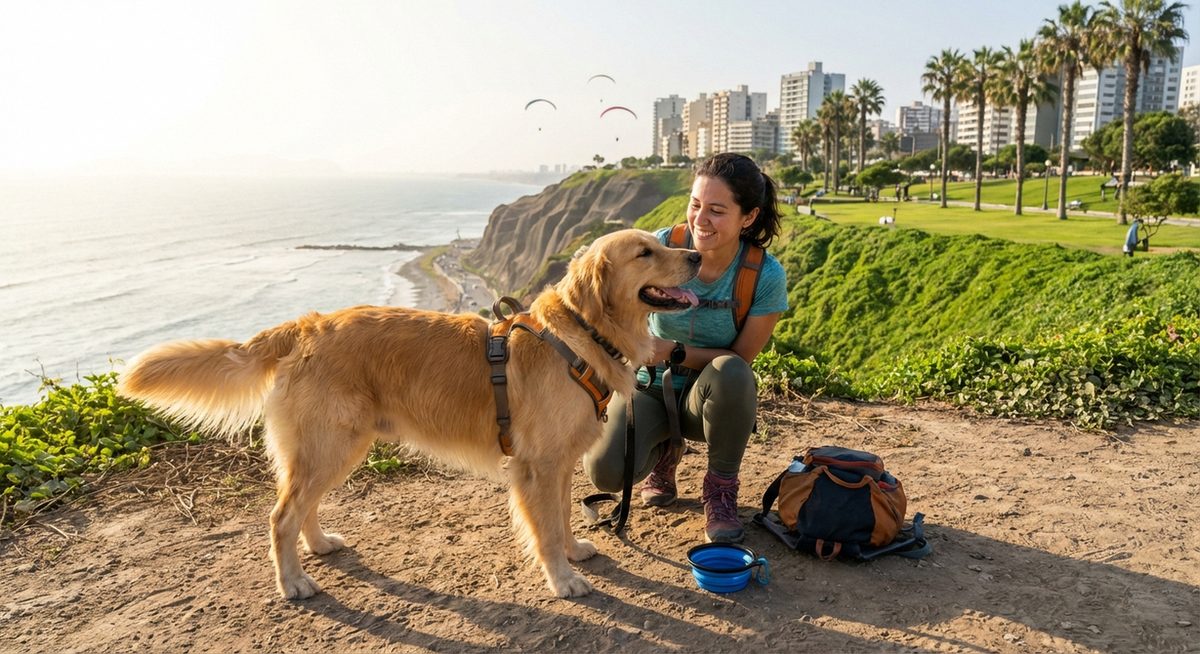
Miraflores has excellent parks for dogs, including Parque Kennedy (where the famous cat colony lives, so keep your dog leashed), Parque del Amor along the Malecón, and the green strips running along the cliffs.
Cusco
Cusco is trickier with dogs due to narrow streets and altitude, but it is absolutely possible. Several guesthouses in the San Blas neighborhood accept pets, and there are vacation rentals on the outskirts of the city with enclosed yards. The countryside around the Sacred Valley is ideal for dogs who need space to run.
For ideas on exploring Cusco with a canine companion, read about discovering the hidden gems of Cusco with a puppy.
Veterinary Services and Pet Food in Peru
Peru has a solid network of veterinary clinics, especially in Lima. Many vets speak some English, and costs are substantially lower than in North America or Europe. A standard vet consultation runs 50 to 100 soles ($13-$27 USD), and common procedures like spaying or dental cleaning are a fraction of US prices.
Recommended veterinary clinics in Lima include:
- Clínica Veterinaria San Luis: Well-established with emergency services.
- Vets Miraflores: Convenient location and English-speaking staff.
- Centro Veterinario San Borja: Comprehensive services including imaging and surgery.
International pet food brands like Royal Canin, Hill's Science Diet, and Purina Pro Plan are widely available at pet shops and supermarkets throughout Lima. Local brands like Ricocan and Mimaskot are affordable alternatives. In smaller cities and towns, options narrow, so stock up in Lima if you are heading into rural areas.
Cultural Attitudes Toward Dogs in Peru
Peru's relationship with dogs is complex and worth understanding before you arrive. In urban areas, pet ownership has grown rapidly among the middle and upper classes. You will see well-groomed dogs in parks, pet stores in malls, and dog-friendly cafes in Miraflores. Peru even has a national Adopt a Pet Day.
At the same time, stray dogs are a visible part of life in every Peruvian city and town. Many are semi-owned, fed by specific people or businesses without being formally adopted. Some neighborhoods have packs of strays that can be territorial. Keep your dog leashed in unfamiliar areas and avoid interactions with unknown street dogs to prevent bites and disease exposure.
In rural and highland areas, dogs serve more utilitarian roles as guard dogs or herding companions. They may not be vaccinated or socialized. Exercise extra caution when hiking with your dog in these regions.
Peru is also home to the Peruvian Hairless Dog (Perro Sin Pelo del Perú), a national treasure recognized by the Peruvian government as a cultural heritage animal. You will encounter them at archaeological sites, museums, and sometimes wandering colonial neighborhoods. If you are fascinated by this ancient breed, read our article on the 31 reasons to adopt a Peruvian Hairless Dog.
Health Risks for Dogs in Peru
Before bringing your dog, consult your vet about these Peru-specific health risks:
- Altitude sickness: Dogs can suffer from altitude sickness just like humans. If you are heading to Cusco (3,400 m) or higher, allow your dog time to acclimatize. Watch for lethargy, loss of appetite, and vomiting. Some vets recommend a gradual ascent over several days.
- Parasites: Fleas, ticks, and intestinal worms are common. Maintain a regular deworming and anti-parasite treatment schedule throughout your stay.
- Rabies: Keep your dog's rabies vaccination current. Avoid contact with stray animals.
- Ehrlichiosis and Leptospirosis: Tick-borne and waterborne diseases respectively, both present in Peru. Discuss preventive measures with your vet.
- Strong sun: Peru sits near the equator and UV levels are intense, especially in the highlands. Light-skinned and short-haired dogs can sunburn. Limit midday sun exposure.
Practical Tips from Experience
Bringing a dog to Peru is an adventure in itself. Here are practical lessons from people who have done it:
- Fly direct if at all possible. Layovers increase stress, risk, and the chance of paperwork issues at transit airports. Lima has direct flights from many US and European cities.
- Bring your dog's regular food for the first week. Sudden diet changes combined with travel stress can cause digestive problems. Transition to locally available food gradually.
- Pack a familiar blanket or toy. The smells of their normal environment help dogs settle into new surroundings faster.
- Get a Peruvian phone number quickly. You will need it to call vets, communicate with pet-friendly accommodations, and use delivery apps for pet supplies.
- Join expat and pet owner groups on Facebook. Groups like "Expats in Lima" and "Pet Owners Peru" are invaluable for recommendations on vets, groomers, pet sitters, and dog-friendly locations.
- Budget for pet expenses. While vet care is cheaper in Peru, other costs add up: monthly anti-parasite treatments, quality food, grooming, and pet deposits at rentals.
For broader trip planning, review the 8 things you must know before traveling to Peru and our overview of whether Peru is safe for tourists.
Returning Home: Taking Your Dog Out of Peru
When it is time to leave Peru, you will need an export health certificate from SENASA. The process involves:
- A vet visit within 10 days of departure for a health check.
- Updated rabies vaccination certificate if expired during your stay.
- An appointment at the SENASA office (available in Lima and major cities) for the export permit.
- Compliance with your destination country's import requirements, which may differ from Peru's export requirements.
US residents returning with their dog need the CDC's updated requirements, which as of 2024 include proof of rabies vaccination and a CDC Dog Import Form submitted online before travel. Processing can take several weeks, so start early.
Costs Summary: What to Budget
Here is a rough cost breakdown for bringing a dog to Peru from the United States:
- Vet visit and health certificate: $100-$300
- USDA endorsement: $38
- Airline pet fee (in-cabin): $150-$250
- Airline cargo fee (large dogs): $200-$500
- IATA-compliant crate: $80-$300
- Professional pet transport service: $1,500-$5,000
- SENASA processing at arrival: Usually free with proper documents
Total DIY cost for a small dog flying in-cabin: roughly $300-$600. For a large dog in cargo: $400-$1,100. Professional service: $1,500 and up.
Frequently Asked Questions
Does Peru require quarantine for dogs?
No. Peru does not impose a mandatory quarantine period for dogs arriving with complete, valid documentation including a health certificate issued within 10 days of travel, current rabies vaccination, and deworming records. If documents are incomplete or expired, SENASA may hold your pet at the airport facility until the situation is resolved.
What documents do I need to bring my dog to Peru?
You need an International Health Certificate issued within 10 days of departure, proof of rabies vaccination (administered at least 30 days before travel), a microchip certificate (ISO 11784/11785), and a deworming certificate from the past 15 days. US travelers also need USDA APHIS endorsement of the health certificate. All documents should be in Spanish or accompanied by certified translations.
Can my dog fly in the cabin to Peru?
Yes, if your dog and carrier weigh under approximately 7-8 kg combined (varies by airline). Airlines like LATAM, Avianca, Copa, and American Airlines allow in-cabin pets on Peru routes. Book early as there is a strict limit on pets per flight. The carrier must fit under the seat in front of you.
How much does it cost to fly a dog to Peru?
In-cabin fees range from $150 to $250 USD per direction. Cargo fees for larger dogs range from $200 to $500 depending on the airline and crate size. Add vet and documentation costs of $150 to $350, plus a crate if needed ($80-$300). Total for a small dog: roughly $300-$600. Professional shipping services run $1,500 to $5,000.
Is Peru dog-friendly?
Urban Peru, especially Lima's Miraflores and Barranco districts, is increasingly dog-friendly with parks, pet-friendly cafes, and a growing pet culture. However, stray dogs are common throughout the country, pet-friendly accommodations are not universal, and rural areas view dogs primarily as working animals. With some planning, it is a great place to be with a dog.
Can my dog get altitude sickness in Cusco?
Yes. Dogs can experience altitude sickness with symptoms including lethargy, loss of appetite, vomiting, and difficulty breathing. Cusco sits at 3,400 meters. Allow your dog to acclimatize gradually, ideally spending a day or two at intermediate altitudes. Ensure they stay hydrated and limit strenuous activity for the first 48 hours.
What vaccinations does my dog need for Peru?
A current rabies vaccination is mandatory, administered at least 30 days before travel. While not strictly required by SENASA, your vet may also recommend updating distemper, parvovirus, leptospirosis, and kennel cough vaccines. Peru has ehrlichiosis from ticks and leptospirosis from contaminated water, so discuss preventive measures with your vet.
Can I find good pet food in Peru?
Yes. International brands like Royal Canin, Hill's Science Diet, and Purina Pro Plan are available at pet stores and major supermarkets in Lima and other large cities. Prices are comparable to or slightly higher than US prices. Local brands are cheaper. In smaller towns and rural areas, selection decreases significantly, so stock up when visiting cities.
Are Peruvian Hairless Dogs common in Peru?
You will encounter Peruvian Hairless Dogs (Perro Sin Pelo del Perú) at archaeological sites, some museums, and occasionally in parks and neighborhoods. They are a protected national heritage breed. While not as common as mixed-breed street dogs, they are a cherished part of Peruvian culture. Some breeders and rescue organizations in Lima specialize in the breed.
What happens if my dog's paperwork is rejected at Lima airport?
If SENASA officers find issues with your documentation, your dog will be held at the airport quarantine facility while you resolve the problem. This could mean obtaining a new health certificate from a local vet, getting additional vaccinations, or waiting for corrected documents from your home country. The facility charges daily fees. In worst-case scenarios with major documentation failures, your dog could be sent back on the next available flight. Prevention through thorough preparation is far easier than dealing with this situation.