Peru Weather Guide: Climate by Region, Best Time to Visit, and What to Pack
Peru is one of the most climatically diverse countries on Earth. Within a single day, you could leave the gray coastal fog of Lima, fly over sun-scorched deserts, and land in the freezing highlands of Cusco before descending into the sweltering humidity of the Amazon basin. Understanding Peru's weather is not just useful for packing, it is essential for planning when and where to go. The wrong timing can mean washed-out mountain trails, invisible views behind cloud cover, or unbearable jungle heat.
This guide covers all three of Peru's climate zones in detail, breaks down weather month by month for the most popular destinations, and gives you a practical packing list so you arrive prepared. Whether you are heading to Machu Picchu, the beaches of the north coast, or the depths of the Amazon, you will know exactly what to expect from the sky above.
Peru's Three Climate Zones Explained
Peru's geography creates three distinct climate zones that run roughly parallel from north to south, each with its own weather patterns, temperatures, and seasons. Understanding these zones is the foundation of all trip planning.
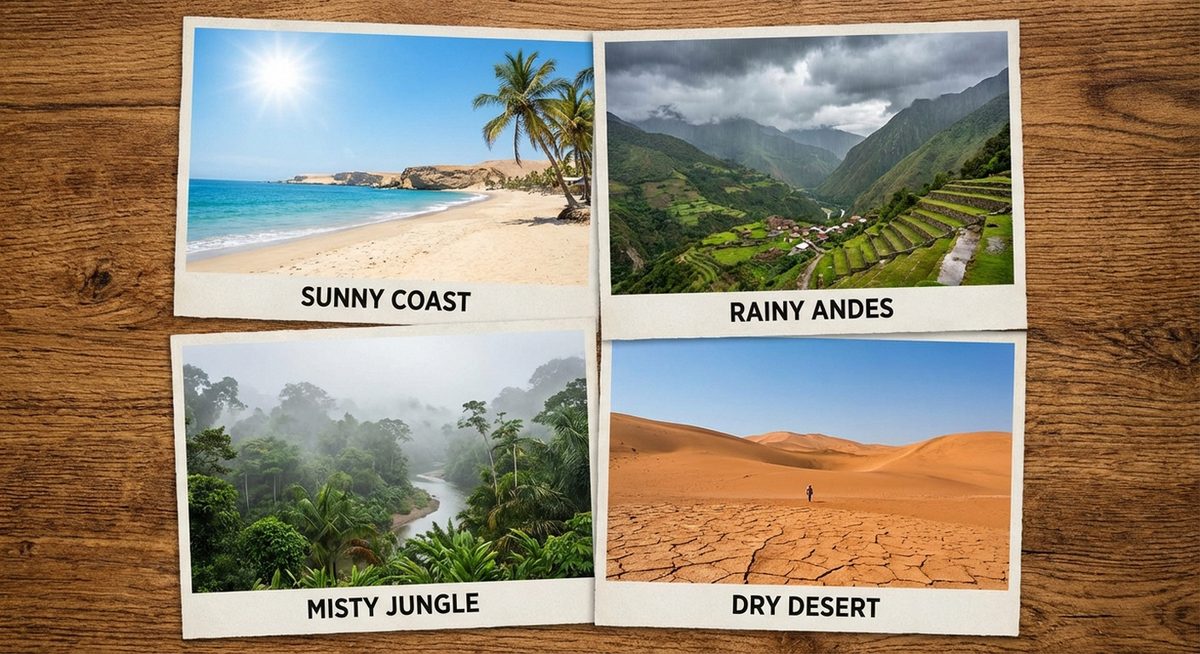
La Costa (The Coast): A narrow desert strip running the entire length of Peru's Pacific coastline. Lima, Trujillo, Chiclayo, Nazca, and Ica are all coastal cities. Despite being at tropical latitudes, the coast is kept cool and dry by the cold Humboldt Current flowing up from Antarctica. Lima averages just 10 millimeters of rain per year, making it one of the driest capital cities in the world. Coastal temperatures range from 15 to 19 degrees Celsius in winter (June to October) and 23 to 30 degrees in summer (December to March). The defining feature of Lima's climate is the garua, a persistent gray fog that blankets the city from May through November. Northern coastal cities like Piura and Tumbes are hotter and sunnier year-round.
La Sierra (The Highlands): The Andes mountains create a climate defined by altitude rather than latitude. Cusco at 3,400 meters, Puno at 3,800 meters, and Huaraz at 3,050 meters all experience cold nights (often below freezing), warm sunny days (15 to 20 degrees Celsius), and a pronounced dry season (May to September) and wet season (November to March). The dry season brings cloudless blue skies perfect for trekking, while the wet season delivers daily afternoon thunderstorms that can turn trails into rivers. Temperature swings of 20 degrees in a single day are normal in the highlands.
La Selva (The Jungle): The Amazon basin covers over 60 percent of Peru and has a hot, humid tropical climate year-round. Temperatures hover between 25 and 35 degrees Celsius with humidity rarely dropping below 80 percent. The jungle has its own wet season (November to April, with the heaviest rains in January and February) and dry season (May to October), though "dry" is relative since it rains throughout the year. For a deeper look at what awaits in the jungle, see our complete guide to Amazon trip costs.
Month-by-Month Weather Breakdown for Peru
Planning a trip across multiple regions requires understanding how conditions overlap. Here is what to expect each month:
January and February: The height of the wet season in the highlands and jungle. Heavy rains make the Inca Trail impassable (it closes every February for maintenance). The coast is at its warmest and sunniest, making these ideal beach months. Amazon rivers reach peak flood levels, opening up flooded-forest canoe trips but closing many hiking trails.
March and April: Rain begins to taper off in the highlands by mid-March. April is an excellent shoulder month for Cusco and Machu Picchu: fewer crowds than dry season, greener landscapes, and decreasing rain. The coast remains warm. The Amazon starts its transition to dry season.
May and June: The dry season begins in the highlands and jungle. May is one of the best months to visit Peru overall. Cusco has clear skies, moderate temperatures, and the landscape is still green from recent rains. June marks the start of Lima's gray winter fog, which can be depressing for visitors expecting a sunny capital city. Inti Raymi, the Festival of the Sun, takes place on June 24 in Cusco.
July and August: Peak tourist season across Peru. The highlands are dry and cold, especially at night (expect below-freezing temperatures in Puno and on high-altitude treks). Lima is at its grayest and coolest. The Amazon is at its best for wildlife spotting as animals concentrate around shrinking water sources. Flights and lodges are most expensive during these months. Book everything well in advance.
September and October: The tail end of the dry season. September offers many of the benefits of July and August with fewer crowds and lower prices. October sees the first hints of returning rain in the highlands. The coast begins to warm up. These are excellent months for budget-conscious travelers who want good weather without peak-season prices. Consider visiting Rainbow Mountain during this window for the clearest views.
November and December: The wet season returns to the highlands by mid-November. December is a transition month with sporadic afternoon showers that do not usually ruin a day of sightseeing. The coast warms up for summer, and beaches near Lima fill with local visitors. The Amazon enters its wet season, but early November still offers reasonable conditions.
Lima Weather: What the Capital Is Really Like
Lima surprises nearly every first-time visitor. Located on the Pacific coast at the edge of the Atacama Desert, the city receives almost no rain, yet it is blanketed in gray fog for over half the year. The garua creates a damp, chilly atmosphere from May through November that feels nothing like what most people imagine when they think of a South American capital.
Summer in Lima (December to April) is genuinely pleasant: sunny, warm, and dry with temperatures between 24 and 30 degrees. This is when limeños head to the beaches in Miraflores, Barranco, and further south along the coast. Winter (June to October) brings temperatures of 14 to 18 degrees, persistent overcast skies, and high humidity despite the lack of actual rain. If you are only visiting Lima as a transit point, try to schedule your time there during the summer months. But if you want to explore Peru's top destinations beyond Lima, the city's weather should not dictate your entire trip schedule.
Cusco and the Highlands: Dry Season vs Wet Season
For most travelers, Cusco is the heart of a Peru trip, and its weather follows a clear two-season pattern that directly affects the quality of your experience.
Dry season (May to September): Clear blue skies almost every day. Daytime temperatures of 18 to 20 degrees in the sun, dropping to 0 to 5 degrees at night. Zero to minimal rainfall. This is the best time for trekking the Inca Trail, Salkantay, or any multi-day highland hike. The landscape is golden and dry. Machu Picchu has clear views most mornings, with clouds typically rolling in by afternoon.
Wet season (November to March): Daily afternoon rainstorms, usually lasting 1 to 3 hours. Mornings are often sunny and warm, making early starts ideal. The landscape turns vivid green, waterfalls appear everywhere, and the ruins of Machu Picchu draped in mist can be hauntingly beautiful. Trails are muddier and more challenging. The Inca Trail closes in February. Hotel prices drop by 20 to 40 percent, and tourist crowds thin significantly.
Altitude sickness is a bigger concern than weather for most visitors. At 3,400 meters, Cusco's thin air affects most people for the first 24 to 48 hours. Plan a rest day upon arrival regardless of the season. Read our essential Peru travel tips for more advice on handling altitude.
Amazon Weather: Heat, Humidity, and When to Go
The Peruvian Amazon is hot and humid year-round, with less seasonal variation than the coast or highlands. However, the difference between wet and dry seasons dramatically changes the type of experience you will have.
During the dry season (May to October), temperatures range from 28 to 35 degrees Celsius. Rainfall decreases to 100 to 200 millimeters per month (compared to 300 to 400 in the wet season). Trails are accessible, river levels drop to expose sandy beaches, and wildlife congregates around remaining water sources, making animal sightings easier. This is peak season for Amazon lodges.
During the wet season (November to April), daily downpours of 2 to 4 hours are standard, usually in the afternoon. The forest floods, and canoe travel replaces hiking. Water levels can rise 10 to 15 meters, turning the forest floor into a navigable waterway. Many travelers find the flooded-forest experience more magical than dry-season hiking, and lodge prices are 20 to 30 percent cheaper.
Best Months for Machu Picchu: A Focused Look
Machu Picchu deserves its own weather analysis because it sits in a unique microclimate. Located at 2,430 meters on a ridge between the Andes and the Amazon basin, it receives more moisture than Cusco (which is higher and drier) but less than the lowland jungle.
The absolute best months for Machu Picchu are May, June, September, and October. These months offer the clearest skies, the lowest chance of rain, and comfortable temperatures. July and August are also dry but more crowded and more expensive. April and November are excellent shoulder options where you trade a small rain risk for significantly fewer visitors.
Regardless of when you visit, bring a rain jacket. Even in the dry season, clouds can roll in from the Amazon basin and produce unexpected showers. Morning visits (arriving by 6:00 or 7:00 AM) almost always have better weather than afternoon visits.
El Nino Effects on Peru's Weather
El Nino is not just a weather curiosity for Peru; it is a serious phenomenon that can radically alter travel conditions. During strong El Nino years, warm ocean currents replace the cold Humboldt Current, causing torrential rain on the normally arid coast, flooding in coastal cities, and landslides that close roads in the highlands.
The 2017 Coastal El Nino caused devastating floods in Trujillo, Piura, and Lima. Roads to Machu Picchu were temporarily cut off by landslides. If you are planning a trip during a predicted El Nino year, build extra flexibility into your itinerary and avoid the northern coast during January to March. Highland and jungle areas are less directly affected but can still experience disrupted road access due to landslides.
Check the ENFEN (Estudio Nacional del Fenomeno El Nino) forecasts before booking, especially for trips between December and April. Travel insurance that covers weather-related disruptions is essential during El Nino years.
What to Pack for Peru: A Region-by-Region Guide
Because Peru's climate varies so dramatically by region, packing for a multi-destination trip requires layers and versatility. Here is what to bring for each zone:
For the Coast (Lima, Nazca, Paracas): Light layers for summer (T-shirts, shorts, sunscreen, sunglasses) and a warm fleece or light jacket for winter. Lima's garua makes a water-resistant shell useful even though it rarely actually rains. Comfortable walking shoes are sufficient.
For the Highlands (Cusco, Puno, Huaraz): Layers are everything. Bring a warm base layer (merino wool or synthetic), a fleece mid-layer, and a waterproof outer shell. A warm hat and gloves are essential for early morning starts and high-altitude treks. Sturdy hiking boots with ankle support are critical for uneven terrain. Sunscreen rated SPF 50 or higher is mandatory as UV radiation at altitude is intense, even on cloudy days.
For the Amazon (Iquitos, Puerto Maldonado, Manu): Lightweight, long-sleeved shirts and long pants in breathable fabric to protect against mosquitoes and sun. Rubber boots are usually provided by lodges but bring quick-dry socks. A high-DEET insect repellent, a waterproof phone case, and a dry bag for electronics are essential. A headlamp is useful for night walks. Leave cotton at the lodge; it stays wet in jungle humidity.
Frequently Asked Questions
What is the best month to visit Peru overall?
May and September are widely considered the best months to visit Peru. Both fall in the dry season for the highlands and jungle, with pleasant temperatures in Cusco and clear views at Machu Picchu. Tourist numbers are lower than July and August, and prices are more reasonable. The coast is cooler but still comfortable during these months.
Does it rain a lot in Cusco?
During the dry season (May to September), Cusco receives almost no rain. During the wet season (November to March), it rains daily, usually in the afternoon for 1 to 3 hours. Annual rainfall in Cusco is about 700 millimeters, mostly concentrated in January and February. Morning sightseeing is usually unaffected even in the wet season.
Is Lima always foggy and gray?
From May to November, yes. The garua fog is caused by the cold Humboldt Current and creates a persistent overcast sky over Lima. From December to April, Lima enjoys warm, sunny weather with temperatures reaching 28 to 30 degrees Celsius. If you want to see Lima at its best, visit during the summer months.
How cold does it get at Machu Picchu?
Machu Picchu sits at 2,430 meters, lower than Cusco, so it is warmer. Daytime temperatures range from 17 to 22 degrees Celsius year-round. Nighttime temperatures rarely drop below 8 to 10 degrees. The main weather concern is rain and cloud cover rather than cold. Bring layers for the early morning bus ride and a rain jacket at all times.
Can I visit Peru during the rainy season?
Absolutely. The rainy season (November to March) offers lower prices, fewer crowds, and lush green landscapes. Rain typically falls in afternoon bursts, leaving mornings clear for activities. The main drawback is that some trekking routes close (the Inca Trail shuts down in February) and mountain views can be obscured. The coast is sunny during this period, making it ideal for beach visits.
What is the temperature in the Amazon rainforest in Peru?
The Peruvian Amazon maintains temperatures between 25 and 35 degrees Celsius throughout the year. Nighttime lows rarely drop below 20 degrees. Humidity is consistently between 80 and 100 percent. The wet season is slightly cooler due to cloud cover, while the dry season can push temperatures to 38 degrees on the hottest days.
Do I need warm clothes for Peru in July?
Yes, if you are visiting the highlands. Cusco in July regularly sees nighttime temperatures of 0 to minus 5 degrees Celsius. Even during the day, shade temperatures can be chilly at altitude. A warm jacket, hat, and gloves are essential for highland travel in July. The coast is cool but not cold (15 to 18 degrees), while the Amazon remains hot year-round.
What is the best time to visit Rainbow Mountain?
June through September offers the best conditions for Rainbow Mountain (Vinicunca), with clear skies that reveal the full spectrum of mineral colors. The hike is at 5,200 meters, so dry weather is critical for safety. During the wet season, the mountain is often covered in snow, hiding the rainbow stripes entirely. Early morning starts help avoid afternoon clouds.
How does El Nino affect travel to Peru?
Strong El Nino events bring heavy rains to Peru's normally arid coast, causing floods and landslides that can close roads and disrupt flights. The highlands and jungle are less directly affected but can experience road closures due to landslides. Check ENFEN forecasts before booking and ensure your travel insurance covers weather-related cancellations during El Nino years.
Should I pack differently for different parts of Peru?
Yes. Peru's extreme climate variation means you need coastal clothes (light layers), highland gear (warm layers, rain jacket, hiking boots), and jungle essentials (lightweight long sleeves, insect repellent, waterproof bags) if visiting multiple regions. A versatile packing approach with layerable items works best. Most travelers find that a 40- to 50-liter backpack is sufficient for a 2- to 3-week multi-region trip.