15 Things You Must Know About Futaleufú River Rafting Before You Go
The Futaleufú River in southern Chile is widely regarded as one of the top whitewater rafting destinations on the planet. Cutting through the Patagonian Andes with crystal-clear turquoise water and Class IV to Class V rapids, the Futaleufú (often shortened to "the Fu") attracts experienced rafters and adventurous beginners from around the world. If you are combining a South American trip that includes Peru's top destinations, adding a few days in Patagonia for the Futaleufú is one of the best side trips you can make.
Before you commit to a Futaleufú river rafting trip, there are important things to understand about logistics, difficulty, costs, and safety. This guide covers the 15 most critical things every rafter needs to know.
1. The Futaleufú Is One of the World's Most Challenging Rivers
The Futaleufú is not a lazy float trip. It features sustained Class IV and Class V rapids across multiple sections. The river drops about 12 meters per kilometer in certain stretches, creating powerful hydraulics, large standing waves, and complex rapid sequences. Rivers like the Colorado through the Grand Canyon and the Zambezi below Victoria Falls are often mentioned in the same breath, but many professional rafters rank the Futaleufú higher for sheer intensity and consistency of whitewater.
That said, the river has calmer sections too. Outfitters typically offer trips on different sections depending on experience level, so beginners are not thrown into the deep end immediately.
2. You Do Not Need Prior Rafting Experience for Every Section
While the full river demands serious whitewater skills, several outfitters run trips on the lower and intermediate sections that are suitable for first-time rafters. The Bridge to Bridge section offers Class III rapids with manageable drops, plenty of excitement, and enough calm stretches to catch your breath. If you have never rafted before, start here. For a true adrenaline rush, the Inferno Canyon section is the one experienced rafters travel thousands of miles to run.
3. The Best Season Runs from December to March
The Futaleufú rafting season follows the Southern Hemisphere summer. December through March offers the warmest air temperatures (typically 18 to 28 degrees Celsius), the longest daylight hours, and the most reliable water levels. January and February are peak months when most outfitters have full schedules running. The water temperature hovers around 8 to 12 degrees Celsius year-round, which is cold regardless of the air temperature.
Outside this window, the town of Futaleufú largely shuts down. Most lodges, outfitters, and restaurants operate seasonally, so planning a visit in April through November means limited options and unpredictable conditions.
4. Getting There Requires Some Effort
Futaleufú is remote. The nearest major airport is in Puerto Montt, Chile, about 10 hours south by road. From there, you drive along the Carretera Austral, one of South America's most scenic highways but also one of its slowest due to gravel stretches and ferry crossings. Alternatively, you can fly to Chaitén (a small airstrip with irregular service) and drive about 2 hours south.
Another option is crossing from the Argentine side via the town of Esquel or Trevelin and entering Chile at the Futaleufú border crossing. This route works well if you are already traveling in Argentine Patagonia. Budget at least a full travel day to reach the town, regardless of which direction you come from.
5. Water Temperature Is Shockingly Cold
The Futaleufú is fed by glacial melt from the Andes, and the water temperature reflects that origin. Even in the height of summer, expect 8 to 12 degrees Celsius. Every reputable outfitter provides drysuits or thick wetsuits, but the initial shock of falling in is still intense. Swimmers describe it as a full-body ice bath that takes your breath away for a few seconds before the wetsuit insulation kicks in.
Bring thermal base layers, neoprene socks if you have them, and accept that you will get wet. The cold is part of the experience, and most people adapt quickly once the adrenaline takes over.
6. The Turquoise Water Color Is Real
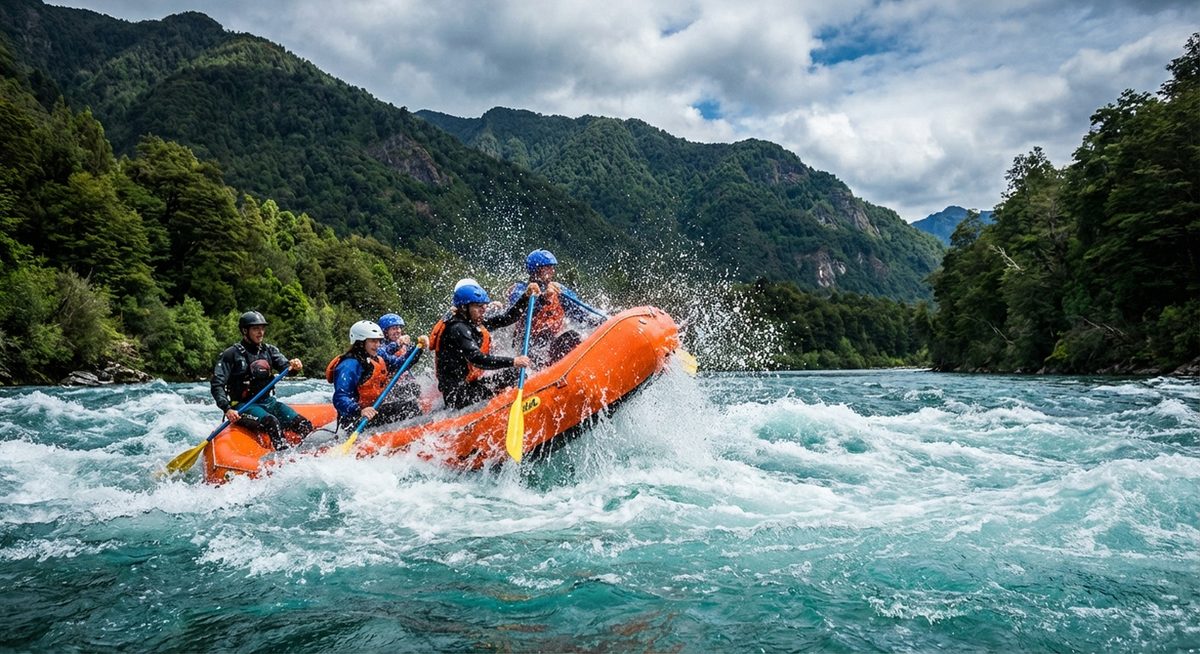
Photographs of the Futaleufú look heavily filtered, but the color is genuine. The turquoise hue comes from glacial flour, microscopic rock particles suspended in the water that scatter light. The clarity is remarkable, and on calm sections you can see several meters down to the riverbed. This water quality is one of the reasons the Futaleufú has become an icon for whitewater photography and videography.
7. Expect to Pay Between $100 and $300 per Day
A single-day rafting trip on the Futaleufú typically costs between $100 and $180 USD per person, depending on the section and the outfitter. Multi-day expeditions that include camping along the river, meals, and multiple sections range from $200 to $300 per day. Premium all-inclusive lodge-based packages can run higher.
Budget separately for gear rental if you do not have your own wetsuit and booties, though most outfitters include basic gear in the trip price. Tips for guides are customary and typically range from 10 to 15 percent of the trip cost.
8. Kayaking Is an Alternative Worth Considering
If you have kayaking experience, the Futaleufú is a world-class kayaking river as well. Several outfitters offer guided kayak trips for intermediate to advanced paddlers, and the town has a community of resident kayakers who paddle daily during the season. Kayaking gives you more control and a more intimate experience with the rapids, but it requires solid roll technique and comfort in Class IV water.
Some outfitters offer inflatable kayak (duckie) trips as a middle ground between rafting and hardshell kayaking. These are more accessible for less experienced paddlers and still provide the thrill of navigating rapids independently.
9. The Town of Futaleufú Is Small but Welcoming
Futaleufú is a village of roughly 2,000 permanent residents. It has a handful of hostels, guesthouses, and lodges, a few restaurants, a small supermarket, and limited ATM access. There is no hospital, only a basic health post. The town is friendly and accustomed to international visitors, with many locals working in the outdoor tourism industry. Spanish is the primary language, and English is spoken at varying levels by guides and tourism operators.
Stock up on cash before arriving. Card acceptance is improving but still unreliable, and the nearest reliable ATMs are in Chaitén or across the border in Argentina.
10. Safety Records Are Generally Good
The Futaleufú has a strong safety record relative to the difficulty of its rapids. Established outfitters use experienced guides, many of whom have paddled the river for over a decade. Safety kayakers accompany most trips, and rescue protocols are well-practiced. Fatalities are extremely rare and typically involve private groups without proper equipment or training.
Choose a reputable outfitter with certified guides, proper equipment (including drysuits, helmets, and throwbags), and clear safety briefings. Ask about guide-to-client ratios and what rescue procedures are in place before booking.
11. There Are Multiple River Sections to Choose From
The Futaleufú is not a single run. It is divided into distinct sections, each with a different character:
- Bridge to Bridge: Class III, excellent for beginners and families. Scenic, playful rapids, great for building confidence.
- Terminator Section: Class IV, intermediate level. Bigger waves, faster current, more technical moves required.
- Inferno Canyon: Class V, expert only. Massive hydraulics, steep drops, and continuous whitewater. This is the section that made the Futaleufú famous.
- Mundaca to Zapata: Class III-IV, a good all-around section combining scenery with moderate challenge.
Most multi-day trips combine two or three sections so you experience the full range of the river.
12. Bring Sun Protection Even on Cloudy Days
The Patagonian sun is deceptively strong, especially with reflection off the water. UV levels are high due to the thinner ozone layer in the Southern Hemisphere, and sunburn happens fast. Bring waterproof SPF 50 sunscreen, UV-blocking sunglasses with a retainer strap, and a hat or buff for non-rafting hours. Many rafters underestimate the sun exposure and end up with painful burns on their face, neck, and hands after a full day on the water.
13. The Surrounding Landscape Is Extraordinary
The river valley is a postcard of Patagonian scenery. Snow-capped peaks, dense temperate rainforest, waterfalls cascading from cliffs, and virtually no development along the riverbanks. Between rapids, you drift through canyons with vertical rock walls draped in moss and ferns. It looks like something from a nature documentary, and the lack of roads or buildings along most of the river adds to the feeling of genuine wilderness.
If you enjoy hiking and photography, budget extra days in the area. There are trails along the river and in the surrounding mountains that offer stunning viewpoints. The area around the Futaleufú is part of a broader corridor of protected and semi-protected wilderness.
14. Conservation Efforts Have Saved This River
In the early 2000s, the Chilean energy company Endesa proposed building hydroelectric dams on the Futaleufú that would have flooded sections of the valley and destroyed the rapids. A major international campaign, spearheaded by environmental groups and the rafting community, successfully blocked the project. The river remains undammed and free-flowing, one of the last major rivers in Chile to retain that status.
Supporting local outfitters and conservation-minded tourism operators helps ensure the Futaleufú stays protected. Several organizations continue to monitor threats to the watershed and advocate for permanent protection.
15. Combine It with Other Patagonian Adventures
If you are already making the journey to this corner of Patagonia, it makes sense to extend your trip. The Carretera Austral offers access to the marble caves at Puerto Río Tranquilo, the glaciers of Queulat National Park, and the hot springs of Pumalin Park. Across the border in Argentina, the Los Alerces National Park and the town of El Bolsón offer hiking and craft beer in a relaxed mountain setting.
Many travelers combine a Futaleufú rafting trip with a broader South American itinerary that includes the top things to do in Peru, travel in Bolivia, and Patagonia as one extended overland route. The logistics take planning, but the payoff is a trip that covers some of the continent's most diverse and dramatic landscapes.
Frequently Asked Questions
How difficult is Futaleufú river rafting for beginners?
The Futaleufú has sections suitable for beginners. The Bridge to Bridge section features Class III rapids that are exciting but manageable with no prior experience. Your guide handles the technical navigation while you follow paddle commands. The advanced sections (Class IV-V) require previous rafting experience or strong swimming ability.
What is the best month for Futaleufú rafting?
January and February are the peak months with the warmest weather, longest days, and most consistent water levels. December and March are shoulder months that offer fewer crowds and slightly lower prices, though weather can be more variable. The season runs from late November through early April.
How cold is the Futaleufú River water?
The water temperature ranges from 8 to 12 degrees Celsius (46 to 54 Fahrenheit) year-round due to glacial melt feeding the river. All reputable outfitters provide drysuits or thick wetsuits to manage the cold. You will still feel the chill when splashed or submerged, but proper gear makes it comfortable.
How much does a Futaleufú rafting trip cost?
A single-day trip costs between $100 and $180 USD per person including gear and guides. Multi-day expeditions with camping and meals run $200 to $300 per person per day. Premium lodge-based packages are more expensive. Budget separately for tips (10-15%), travel to Futaleufú, and accommodation in town.
Can children go rafting on the Futaleufú?
Some outfitters accept children aged 12 and up on the Bridge to Bridge (Class III) section with parental consent. The more advanced sections have minimum age requirements of 16 or 18. Children should be strong swimmers and comfortable in cold water. Always confirm age policies with your specific outfitter before booking.
How do I get to Futaleufú from Santiago?
The most common route is flying from Santiago to Puerto Montt (about 2 hours), then driving south along the Carretera Austral for approximately 10 hours. Alternatively, fly to Balmaceda and drive north, or enter from Argentina via Esquel. There is no direct flight to Futaleufú, though the nearby airstrip at Chaitén occasionally has charter service.
Is Futaleufú rafting dangerous?
With a reputable outfitter and proper safety equipment, Futaleufú rafting has a strong safety record. The river is powerful and demands respect, but established operators use experienced guides, safety kayakers, and well-maintained gear. Serious incidents are rare and almost always involve unprepared private groups without professional guidance.
What should I pack for a Futaleufú rafting trip?
Bring thermal base layers, a swimsuit, quick-dry clothing, waterproof sunscreen (SPF 50), sunglasses with a retainer strap, a waterproof camera or GoPro, and sandals or water shoes. Most outfitters provide wetsuits, drysuits, helmets, and life jackets. Bring cash in Chilean pesos as card acceptance in town is limited.
Can I combine Futaleufú with a trip to Peru?
Absolutely. Many travelers combine South American destinations into one itinerary. You can fly from Lima to Santiago, then onward to Puerto Montt to reach Futaleufú. Alternatively, overland routes through Bolivia and northern Argentina connect Peru to Patagonia, though these require significantly more time. Plan at least 3 to 4 weeks for a combined Peru and Patagonia trip.
Are there other activities in Futaleufú besides rafting?
The area offers kayaking, fly fishing, horseback riding, hiking, mountain biking, and canyoneering. The surrounding mountains have trails with panoramic views, and the temperate rainforest is excellent for birdwatching. In winter, some visitors come for backcountry skiing. The town also has a growing food scene with several restaurants serving local Patagonian cuisine.