Is Trujillo Peru Safe? What Every Tourist Needs to Know Before Visiting
Trujillo is Peru's third-largest city and one of its most historically significant destinations. Sitting on the northern coastal plain, it draws visitors with pre-Columbian ruins like Chan Chan and the Temples of the Sun and Moon, colonial architecture, and the nearby surf town of Huanchaco. But the question travelers keep asking is straightforward: is Trujillo safe?
The short answer is that Trujillo is reasonably safe for tourists who take common-sense precautions. It is not as polished or tourist-oriented as Cusco or Miraflores in Lima, and it does have higher petty crime rates than smaller Peruvian cities. However, with a bit of planning, you can explore Trujillo comfortably. This guide covers the safety situation in detail so you can make an informed decision before booking your trip.
Trujillo at a Glance: Why Tourists Visit
Trujillo sits about 560 kilometers north of Lima along the Pan-American Highway. The city was founded by the Spanish in 1534 and served as a political and economic hub during the colonial period. Today it has a population of roughly one million people in the greater metropolitan area and acts as the capital of the La Libertad region.
Visitors come for several reasons. The UNESCO-listed ruins of Chan Chan, once the largest adobe city in the world, lie just outside town. The Huacas del Sol y de la Luna (Temples of the Sun and Moon) showcase Moche civilization. The historic center features well-preserved colonial mansions and a lively Plaza de Armas. And Huanchaco, a beach village about 13 kilometers northwest, offers surfing, fresh ceviche, and caballitos de totora, the traditional reed boats still used by local fishermen.
If you are planning a broader trip around the country, check our guide to the top 10 destinations to visit in Peru to see how Trujillo fits into the bigger picture.
The Current Safety Situation in Trujillo
Trujillo has experienced a rise in organized crime over the past decade, particularly related to extortion rackets targeting local businesses. This is a real issue for residents, but it rarely affects short-term tourists directly. The criminal activity is concentrated in peripheral neighborhoods far from tourist areas.
Petty crime, including pickpocketing and bag snatching, is the most common threat to visitors. This is typical of most mid-sized Peruvian cities and is not unique to Trujillo. Violent crime against tourists is rare but not unheard of, usually involving late-night incidents in poorly lit areas or confrontations that escalate from muggings.
The Peruvian National Police have increased their presence in the historic center and around major archaeological sites. Tourist police units patrol popular areas during the day and can assist with directions and incident reports.
Safe Neighborhoods and Areas for Tourists
Not all parts of Trujillo carry the same risk. The following areas are generally considered safe for visitors during the day and early evening:
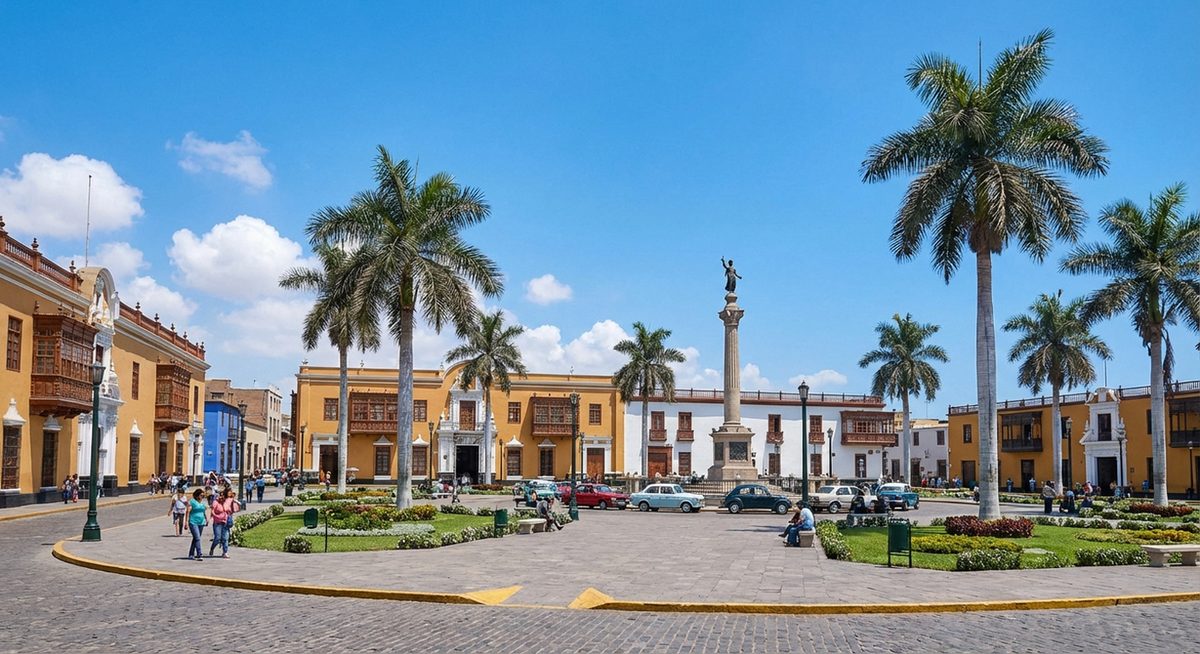
- Centro Histórico: The colonial core around the Plaza de Armas is well-patrolled and busy with foot traffic. The Cathedral, Casa de la Emancipación, and various museums are here. Stick to main streets and you will be fine.
- Huanchaco: This laid-back beach town is the safest area for tourists in the greater Trujillo region. It has a strong tourism economy, visible police presence, and a walkable boardwalk. Many travelers choose to stay here and commute into Trujillo for sightseeing.
- Urbanización El Golf: An upscale residential neighborhood with restaurants, cafes, and shopping. It is quieter than the center and has lower crime rates.
- Buenos Aires: A residential district south of the center with a calm atmosphere. It is not a major tourist destination but is safe for those staying in nearby accommodations.
Areas to Avoid in Trujillo
Certain neighborhoods have higher crime rates and offer little reason for tourists to visit. Avoid these areas, especially after dark:
- El Porvenir: One of the districts with the highest crime rates in the region. Extortion and gang activity are concentrated here.
- La Esperanza: A sprawling peripheral district with limited police presence at night.
- Florencia de Mora: Similar to El Porvenir in terms of safety concerns.
- Alto Trujillo: A newer settlement on the outskirts with underdeveloped infrastructure and higher crime.
For a broader look at which parts of Peru carry higher risk, read our article on where not to go in Peru.
Transportation Safety in Trujillo
Getting around Trujillo safely requires some awareness of the local transport landscape:
Taxis: Use registered taxi companies or ride-hailing apps like InDriver or DiDi. Avoid flagging down random taxis on the street, particularly at night. Negotiate the fare before getting in or confirm the app is running. A ride from the historic center to Huanchaco should cost around 15 to 25 soles.
Combis and microbuses: These are the cheapest option but also the most chaotic. Pickpocketing can occur on crowded routes. Keep your belongings close and avoid using them after dark.
Walking: The historic center is compact and walkable during the day. Stick to busy streets and avoid shortcuts through empty lots or alleys.
Driving: If you rent a car, be prepared for aggressive driving culture. Lock doors and keep windows up in traffic. Do not leave valuables visible.
Common Crimes Targeting Tourists
Understanding the most common crimes helps you avoid them:
- Pickpocketing: Most frequent in crowded markets, bus terminals, and the main plaza during festivals. Use a money belt or a front-facing bag.
- Phone snatching: Thieves on motorcycles may grab phones from people walking while looking at their screen. Be discreet when using your device.
- Express kidnapping: Extremely rare for tourists but worth knowing about. A victim is forced to withdraw money from ATMs. Only use ATMs inside banks or shopping centers.
- Overcharging: Some taxi drivers and market vendors will quote inflated prices to foreigners. Research typical costs in advance.
These risks are not unique to Trujillo. You will encounter them in any mid-to-large Peruvian city. Our Peru safety guide for tourists covers the nationwide picture.
Is Trujillo Safe at Night?
Nighttime changes the safety equation significantly. The historic center empties out after 9 or 10 PM on weekdays, and empty streets increase risk. On weekends, the area around the plaza and nearby bars stays active later.
If you go out at night, follow these guidelines:
- Take a registered taxi or ride-hailing app directly to and from your destination.
- Stay in groups when possible.
- Avoid walking alone through the historic center after 10 PM.
- Huanchaco is generally safe at night along the main strip, but avoid the beach itself after dark.
- Do not carry large amounts of cash or wear expensive jewelry.
How Trujillo Compares to Other Peruvian Cities
To put Trujillo's safety in context, here is how it stacks up against other popular destinations:
- Lima: Lima's tourist districts (Miraflores, Barranco, San Isidro) are safer than Trujillo's center. However, Lima also has dangerous neighborhoods that far exceed Trujillo's worst areas. Overall, the tourist experience is comparable.
- Cusco: Generally safer than Trujillo for tourists due to heavier tourism infrastructure. Petty crime still exists, especially around San Pedro market.
- Arequipa: Similar to Trujillo in terms of safety. The historic center is well-maintained, but peripheral areas can be rough.
- Chiclayo: Often considered slightly less safe than Trujillo, with higher rates of street crime in the center.
Tips for Solo Travelers in Trujillo
Traveling alone in Trujillo is manageable with extra caution. Solo travelers should consider these specific recommendations:
- Stay in Huanchaco rather than central Trujillo if you want a more relaxed base.
- Book a guided tour for Chan Chan and the Huacas. Guides provide context and their presence adds a layer of safety.
- Share your itinerary with someone at your hostel or back home.
- Learn basic Spanish phrases. English is not widely spoken in Trujillo outside of tourist sites.
- Trust your instincts. If a street or situation feels wrong, leave immediately.
Before heading to Trujillo, review the 8 things you must know before traveling to Peru for practical preparation tips that apply across the country.
Emergency Contacts and Resources
Keep these numbers saved in your phone before arriving:
- Police emergency: 105
- Tourist police (Poltur): Located near the Plaza de Armas. Available during business hours.
- Fire: 116
- Ambulance (SAMU): 106
- iPeruTourism hotline: 01-574-8000 (for tourism-related emergencies and information)
There are several private clinics in Trujillo, including Clínica Peruano Americana and Clínica Sánchez Ferrer, which offer reliable medical care.
Final Verdict: Should You Visit Trujillo?
Trujillo is absolutely worth visiting. The archaeological sites are world-class, Huanchaco is one of the most pleasant beach towns on Peru's coast, and the city offers a more authentic slice of Peruvian life than heavily touristed destinations like Cusco or the Sacred Valley. The safety concerns are real but manageable.
Stick to known safe areas, use reliable transportation, stay aware of your surroundings, and avoid wandering alone at night in quiet streets. With these precautions, most visitors explore Trujillo without incident.
Frequently Asked Questions
Is Trujillo Peru safe for solo female travelers?
Trujillo is reasonably safe for solo female travelers who take standard precautions. Stick to Huanchaco and the historic center during daytime, use registered taxis at night, and avoid isolated areas after dark. Catcalling happens but is generally not aggressive. Staying in well-reviewed hostels or hotels in safe neighborhoods will add peace of mind.
Is Huanchaco safer than central Trujillo?
Yes. Huanchaco has a smaller, more tourist-oriented population and a visible police presence. Street crime is lower than in Trujillo's center, and the boardwalk area is active during the day and early evening. Many travelers prefer to base themselves here.
Can I walk around Trujillo's historic center at night?
The blocks immediately around the Plaza de Armas are reasonably safe until around 9 to 10 PM, especially on weekends when restaurants and bars draw crowds. Beyond that zone or later at night, take a taxi rather than walking. The streets empty quickly and poorly lit side streets present risk.
What is the most common crime against tourists in Trujillo?
Pickpocketing and phone snatching are the most reported crimes involving tourists. These typically occur in crowded areas such as markets, bus terminals, and during festivals. Using a secure bag and staying aware of your surroundings significantly reduces your risk.
Is it safe to take taxis in Trujillo?
Registered taxi companies and ride-hailing apps like InDriver or DiDi are safe. Avoid hailing unmarked cars on the street, especially at night. Always agree on the fare before the trip or confirm the app is active. Short rides within the city typically cost 5 to 10 soles.
Are the Chan Chan ruins safe to visit?
Yes. Chan Chan is a ticketed site with security and guides available. Visit during the morning or early afternoon when foot traffic is highest. Do not walk to the ruins from the highway alone. Take a taxi or organized tour from Trujillo or Huanchaco.
Is Trujillo safer than Lima?
It depends on which parts you compare. Lima's tourist districts like Miraflores are better patrolled and more developed than Trujillo's center. However, Lima's dangerous neighborhoods are more extreme than Trujillo's worst areas. For the average tourist sticking to recommended zones, the experience is roughly comparable.
Do I need travel insurance for Trujillo?
Travel insurance is strongly recommended for any trip to Peru, including Trujillo. It covers medical emergencies, theft, and trip cancellations. Trujillo has decent private clinics, but medical costs can add up quickly without coverage. Make sure your policy includes coverage for theft of personal belongings.
What should I do if I get robbed in Trujillo?
Do not resist. Hand over your belongings and get to safety. Then go to the nearest police station or tourist police office to file a report, which you will need for insurance claims. Contact your embassy if your passport was stolen. Keep digital copies of all important documents in cloud storage as a backup.
Is it safe to use ATMs in Trujillo?
Use ATMs inside banks or inside shopping centers during business hours. Avoid standalone street ATMs, especially at night. Withdraw only what you need and be aware of your surroundings when leaving the bank. Cover the keypad when entering your PIN.