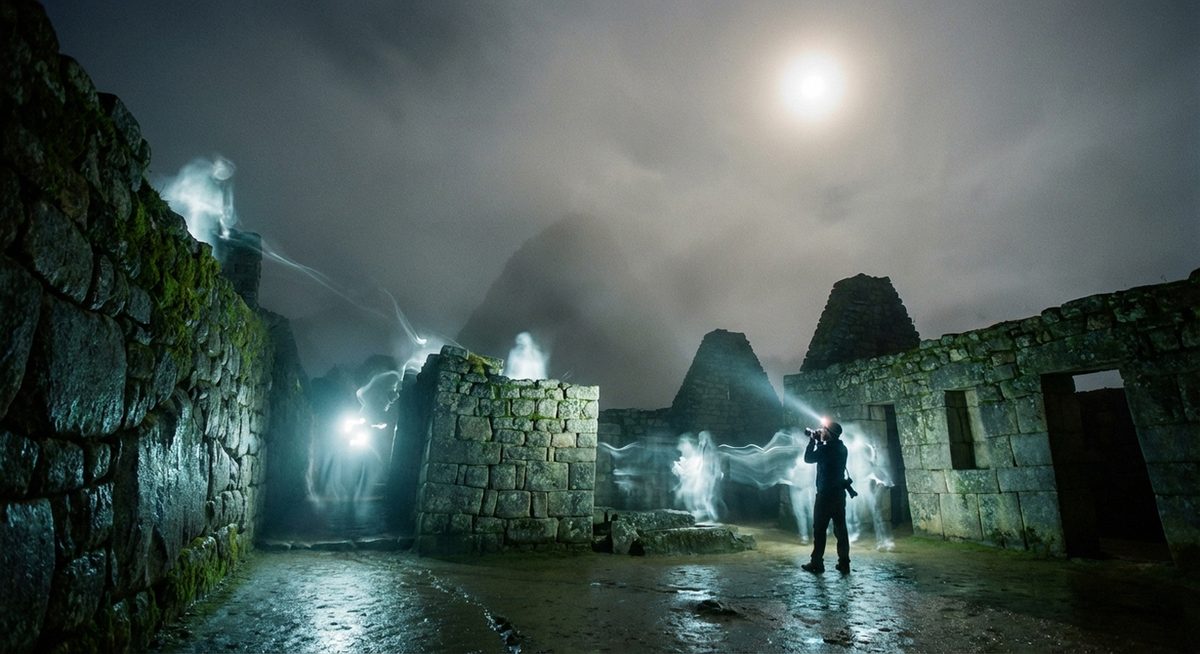
Paranormal Peru: Haunted Places, Ghost Stories, and Unexplained Mysteries Not for the Faint of Heart
Peru is famous for Machu Picchu, ceviche, and the Amazon rainforest. But beneath the postcard-perfect surface lies a darker, stranger country — one filled with haunted colonial mansions, unexplained lights in the desert sky, restless spirits wandering ancient ruins, and folk legends that still make grown adults lock their doors at night. From the catacombs under Lima's churches to the eerie silence of abandoned mining towns in the Andes, Peru has a paranormal side that most travel guides ignore entirely. This is your introduction to the mysterious, unexplained, and genuinely unsettling side of one of South America's most fascinating countries.
The Haunted Catacombs of San Francisco Church, Lima
Beneath the Basilica of San Francisco in Lima's historic center lies one of the most unnerving places in all of Peru. The catacombs, or criptas, contain the remains of an estimated 25,000 people, their bones arranged in geometric patterns — concentric circles of skulls, neat rows of femurs, stacks of vertebrae sorted by size. The catacombs served as Lima's primary cemetery from the 16th century until 1808, and the sheer density of human remains in these underground chambers creates an atmosphere unlike anything else in the city.
Staff members and night security guards at the monastery have reported unexplained phenomena for decades. Cold spots in passageways that should be warm, the sound of footsteps in sealed corridors, and what some describe as the sensation of being watched from the dark recesses between bone arrangements. Whether these experiences have paranormal explanations or result from the psychological effect of standing in a room full of thousands of human remains is a question each visitor must answer for themselves.
The catacombs are open to the public during daytime hours and can be visited as part of a guided tour of the monastery. The experience is disorienting — narrow passages twist between ossuaries, the ceiling hangs low, and the musty air carries a faint mineral scent. Even skeptics tend to leave the catacombs feeling unsettled.
La Casa Matusita: Lima's Most Infamous Haunted House
On the corner of Avenida España and Avenida Garcilaso de la Vega in central Lima stands a yellow colonial building known as La Casa Matusita, widely considered the most haunted house in Peru. The building's reputation is so fearsome that it stood vacant for decades, and multiple legends compete to explain its dark energy.
One version of the story claims that a cruel servant owner threw a dinner party in the upper floor during the early 20th century. The servants, seeking revenge, laced the food with a powerful hallucinogenic substance. The guests descended into violent madness, and by morning, they had killed each other. Another version tells of a Japanese immigrant family named Matusita who suffered a series of unexplained tragedies in the house, leading to madness and death.
Over the years, various individuals have reportedly attempted to spend a night in the upper floor of La Casa Matusita. According to local lore, none emerged mentally intact. A Peruvian television host allegedly accepted a challenge to stay in the house overnight during a live broadcast in the 1980s, only to emerge hours later in a state of psychological distress so severe that he required hospitalization. While the details of these stories are difficult to verify, the building's reputation has only grown with each retelling.
The ground floor of La Casa Matusita has housed various commercial businesses over the years, but the upper floor has remained largely untouched. As of recent years, the building's status has been subject to renovation plans, but its place in Lima's paranormal folklore is permanent.
Ghost Sightings in Colonial Cusco
Cusco, the former capital of the Inca Empire, is a city built on layers of history — Inca foundations supporting colonial churches supporting modern storefronts. With so many centuries of human activity compressed into narrow cobblestone streets and ancient stone walls, it is perhaps unsurprising that Cusco has one of the richest ghost traditions in Peru.
The most frequently reported spirit in Cusco is La Llorona — the weeping woman — a figure that appears across Latin American folklore but takes on distinct local characteristics in Peru. In Cusco, she is said to wander the steep streets of the San Blas neighborhood at night, dressed in white, weeping for children lost during the colonial era. Residents of San Blas have reported hearing unexplained crying sounds in the early morning hours, and several claim to have seen a translucent female figure moving through the narrow alleys before dissolving into the stone walls.
The church and convent of Santo Domingo, built on the foundations of the Inca temple of Qoricancha (the Temple of the Sun), is another site associated with paranormal activity. Some visitors report a sensation of intense heaviness or emotional distress in certain areas of the complex, particularly in the portions where Inca stonework meets colonial construction. Whether this reflects genuine spiritual activity, the psychological weight of standing at a site of cultural destruction, or simply the altitude affecting visitors unaccustomed to 3,400 meters is open to interpretation.
The Nazca Lines and Unexplained Desert Phenomena
The Nazca Lines — massive geoglyphs etched into the desert floor of southern Peru between roughly 500 BCE and 500 CE — are among the world's greatest archaeological mysteries. While mainstream archaeologists attribute them to the Nazca civilization's astronomical, agricultural, and ceremonial practices, the sheer scale and precision of the figures have attracted alternative theories ranging from alien landing strips to spiritual energy channels.
Beyond the lines themselves, the Nazca desert has been the site of numerous reports of unexplained aerial phenomena. Pilots flying observation flights over the geoglyphs have occasionally reported unusual lights or objects in the sky, and local residents in the towns of Nazca and Palpa describe seeing bright, moving lights over the desert at night that do not correspond to known aircraft or natural phenomena.
The Nazca region is also home to the Chauchilla Cemetery, an open-air burial ground where mummified remains sit exposed to the desert air, their hair and skin still partially preserved after more than a thousand years. The sight of mummified bodies in open tombs, surrounded by bleached bones and fragments of ancient textiles, is profoundly strange and has contributed to the region's reputation as a place where the boundary between the living and the dead feels unusually thin.
The Witches' Market and Folk Healing in Lima and Chiclayo
Peru has a thriving folk healing tradition that operates alongside — and sometimes in tension with — conventional medicine and Catholic practice. In Lima's Chinatown district, the Mercado de Brujas (Witches' Market) sells an array of materials used in cleansing rituals, love spells, and healing ceremonies: bundles of palo santo, dried herbs, animal parts, carved figurines, and bottled preparations whose ingredients are known only to the vendors who make them.
In Chiclayo, northern Peru, the tradition of curanderismo (folk healing) is particularly strong. The Mercado Modelo has an extensive section dedicated to healing materials, and the surrounding area is home to numerous practicing curanderos who conduct nighttime healing ceremonies using the San Pedro cactus (which contains mescaline), ayahuasca, and other plant medicines.
The Huaca Rajada archaeological site near Chiclayo, where the tomb of the Lord of Sipán was discovered in 1987, is another location associated with unusual experiences. Workers during the original excavation reported feelings of unease, vivid dreams, and the sensation of being observed. The Lord of Sipán was one of the most powerful rulers of the Moche civilization, buried with extraordinary wealth and the sacrificed bodies of attendants. Disturbing such a tomb, in the framework of Andean belief, carries spiritual consequences.
Haunted Hotels and Colonial Buildings Across Peru
Peru's colonial architectural heritage includes numerous buildings with reputations for paranormal activity. In Arequipa, the Monastery of Santa Catalina — a sprawling 16th-century convent that was closed to the public for nearly 400 years — is said to be home to the spirits of nuns who lived and died within its thick stone walls. Staff and visitors report the sound of footsteps in empty corridors, doors that open and close on their own, and an unexplained scent of flowers in areas where no flowers grow.
In Trujillo, the colonial mansions lining the Plaza de Armas have accumulated centuries of stories about resident ghosts, hidden rooms, and mysterious occurrences. The Casa de la Emancipación, where Peru's independence from Spain was planned, is one of several buildings where staff members have reported encounters with figures in period dress who vanish when approached.
Huancavelica, one of Peru's poorest and most isolated highland cities, has a particularly dense collection of ghost stories. The city was the center of mercury mining during the colonial period, and the death toll among indigenous forced laborers was staggering. Locals speak of ghostly processions visible on certain nights — silent lines of figures in colonial-era clothing moving through the streets toward the old mines.
The Legends of Lake Titicaca
Lake Titicaca, straddling the Peru-Bolivia border at 3,812 meters above sea level, is the highest navigable lake in the world and one of the most spiritually significant sites in Andean cosmology. According to Inca creation mythology, the god Viracocha emerged from the depths of Lake Titicaca to create the sun, moon, stars, and the first human beings.
The lake's reputation for mystery extends beyond mythology. Fishermen on the Peruvian side of the lake have reported seeing unexplained lights beneath the water's surface — glowing forms that move through the deep, dark waters in patterns that do not correspond to any known aquatic life. On the island of Amantaní, residents describe a recurring phenomenon they call the luces del lago (lights of the lake), bright orbs that emerge from the water at night and move slowly across the lake's surface before disappearing.
The Sillustani burial towers (chullpas) near Puno, overlooking Lake Umayo, add another dimension to the region's eerie atmosphere. These cylindrical stone towers, built by the Colla and later Inca cultures to house the dead, stand in an exposed, windswept landscape that feels otherworldly even in full daylight. Visitors report sudden temperature drops, unusual sounds, and an overwhelming sense of presence near the larger towers.
The Pishtaco and Other Andean Folklore Figures
No survey of paranormal Peru would be complete without mentioning the pishtaco, the feared fat-stealing figure of Andean folklore. But the pishtaco is just one of many supernatural beings that populate the Andean worldview.
The condenados are spirits of the dead who are condemned to wander the earth because of unresolved sins or unfulfilled obligations. Unlike benign ancestral spirits, condenados are dangerous — they appear as decaying, often skeletal figures who may attack the living or attempt to drag them into death. Stories of condenado encounters are common in highland communities, particularly around cemeteries and sites of violent death.
The jarjacha is a creature from Ayacucho folklore described as a two-headed llama that roams the highlands at night. According to local belief, jarjachas are actually humans who committed incest and were cursed to take animal form. Their appearance is accompanied by a distinctive, terrifying cry. Reports of jarjacha sightings in Ayacucho persist to this day.
Mountain spirits known as apus are not necessarily malevolent, but they are powerful and demand respect. Each significant mountain peak in the Andes is believed to house an apu who controls weather, fertility, and the well-being of surrounding communities. Failure to make proper offerings to the apus — typically coca leaves, chicha (corn beer), and animal fat — is believed to bring misfortune, illness, or natural disasters.
Visiting Peru's Paranormal Sites
Many of Peru's most haunted and mysterious locations are accessible to visitors and can be incorporated into broader travel itineraries. The catacombs of San Francisco and the area around La Casa Matusita can be visited during a day of exploring Lima's historic center. Cusco's ghost stories add an extra layer of interest to the already compelling experience of walking the city's ancient streets at night. The Nazca Lines require a dedicated trip, but the addition of the Chauchilla Cemetery makes the journey worthwhile for those interested in the eerie and unexplained.
A few practical considerations: many of Peru's paranormal traditions are deeply connected to indigenous and folk belief systems that deserve respectful treatment. The experiences described by local people — whether interpreted as supernatural, psychological, or cultural — are meaningful to the communities that maintain them. Approaching these stories with curiosity rather than dismissal is both more respectful and, frankly, more interesting than arriving as a debunker.
Frequently Asked Questions
What are the most haunted places in Peru?
The most frequently cited haunted locations in Peru include the catacombs of San Francisco Church in Lima (containing 25,000 sets of remains), La Casa Matusita in central Lima (considered Peru's most haunted house), the colonial streets of Cusco's San Blas neighborhood, the Sillustani burial towers near Puno, and the Santa Catalina Monastery in Arequipa. Each site combines centuries of history with persistent reports of unexplained phenomena.
What is La Casa Matusita and why is it famous?
La Casa Matusita is a yellow colonial building in central Lima widely considered the most haunted house in Peru. Multiple legends surround it — the most popular involves servants who poisoned dinner party guests with hallucinogens, leading to a night of violent madness. The upper floor has been vacant for decades, and local folklore claims no one has been able to spend a night there without suffering psychological distress.
Are there ghost tours available in Peru?
Yes, several cities in Peru offer ghost tours and nighttime historical walks that incorporate paranormal stories. Lima has multiple tour operators offering evening walks through the historic center, including visits to the San Francisco catacombs and the area around La Casa Matusita. Cusco also has nighttime walking tours that cover the city's ghost legends and haunted colonial buildings. These tours typically operate in Spanish and English.
What supernatural creatures appear in Peruvian folklore?
Peruvian folklore includes numerous supernatural figures. The pishtaco steals human fat in the Andes. La Llorona (the weeping woman) haunts city streets. Condenados are cursed spirits of the sinful dead. The jarjacha is a two-headed llama-creature from Ayacucho. Apus are powerful mountain spirits. The Amazonian tradition includes spirits associated with the forest, rivers, and plant medicines like ayahuasca. Each region of Peru has its own distinct supernatural traditions.
Have there been UFO sightings in Peru?
Peru has a long history of reported UFO and unexplained aerial phenomena, particularly in the desert regions around Nazca and in the Andes. The Peruvian Air Force maintained an official UFO investigation office (OIFAA, later DIFAA) from 2001 to 2014. Pilots flying over the Nazca Lines have reported unusual lights, and residents near Lake Titicaca describe glowing objects emerging from or moving across the water.
What is the connection between the Nazca Lines and paranormal theories?
The Nazca Lines — massive geoglyphs in southern Peru dating from 500 BCE to 500 CE — have attracted paranormal and alternative theories since their discovery. Some claim they were alien landing strips, energy channels, or maps of underground water. While mainstream archaeology attributes them to the Nazca civilization's ceremonial and astronomical practices, the lines' enormous scale and the precision required to create them continue to fuel speculation.
Is it safe to visit haunted sites in Peru?
Yes, most of Peru's haunted and mysterious sites are safe to visit. The San Francisco catacombs, Santa Catalina Monastery, Sillustani towers, and Nazca sites are all established tourist attractions with guides and security. Standard travel safety precautions apply, especially when walking at night in urban areas. For remote sites, hiring a local guide is recommended both for safety and for access to the stories and context that make these places meaningful.
What role do curanderos play in Peru's paranormal culture?
Curanderos (folk healers) are central figures in Peru's supernatural landscape. They conduct cleansing ceremonies, communicate with spirits, diagnose spiritual ailments, and administer plant medicines including San Pedro cactus and ayahuasca. In Chiclayo and other northern cities, curanderismo is a thriving practice. Curanderos use materials from witches' markets — palo santo, herbs, ritual objects — to perform nighttime ceremonies that bridge the physical and spiritual worlds.
What are apus in Andean spiritual belief?
Apus are powerful mountain spirits in Andean cosmology. Each significant peak in the Andes is believed to house an apu who influences weather, agricultural fertility, and community well-being. Andean communities make offerings of coca leaves, chicha, and animal fat to the apus to maintain good relations. Neglecting these offerings is believed to bring illness, poor harvests, and natural disasters. Apus form part of a broader animistic worldview in which the landscape is alive with spiritual power.
Are Peru's paranormal traditions still practiced today?
Absolutely. Peru's paranormal and folk spiritual traditions remain vibrant and active, particularly in highland and rural communities. Curanderos continue to practice, pishtaco warnings are still issued, offerings to mountain apus are made regularly, and beliefs about condenados and other supernatural figures shape daily behavior in many communities. Even in urban areas, folk beliefs coexist with modern life — witches' markets operate in central Lima, and palo santo cleansing is common across all social classes.