The Best Sky Domes and Skylodge Adventures in Peru: Costs, Safety, and What to Expect
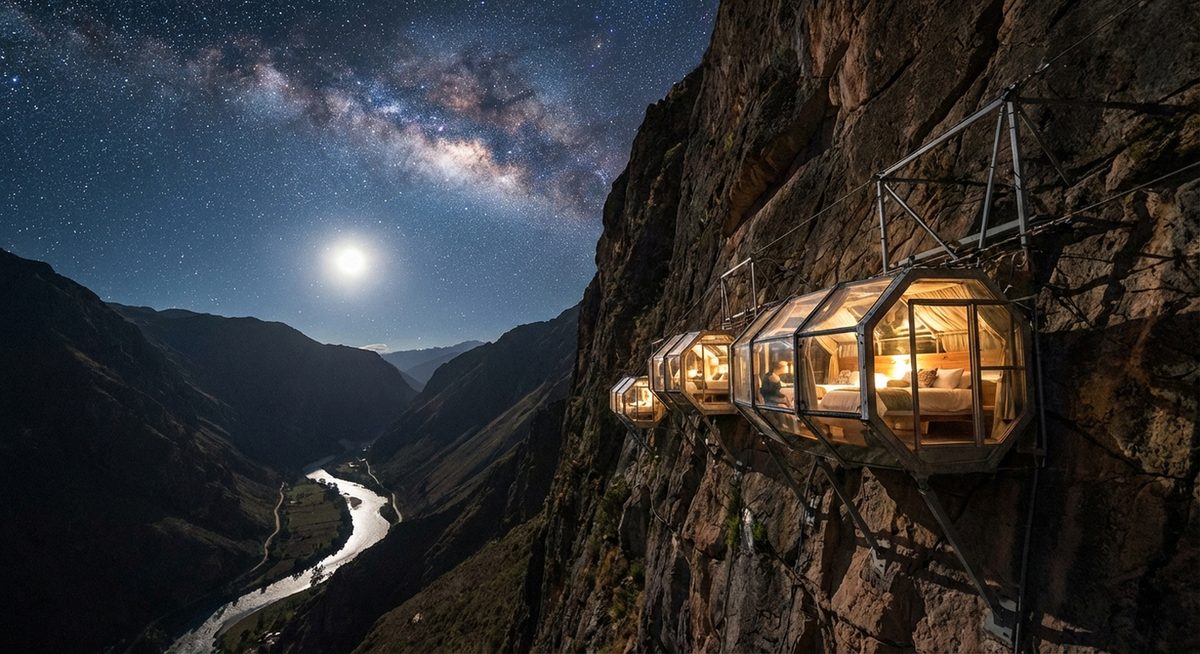
Imagine spending the night suspended 400 meters above the Sacred Valley floor, inside a transparent capsule bolted to a sheer cliff face, with nothing but glass between you and a canopy of Andean stars. That is exactly what the Skylodge Adventure Suites in Peru offer — and it has become one of the most talked-about overnight experiences anywhere on the planet. But the questions travelers ask most are practical: How much does the sky lodge Peru cost? Is there a skylodge Peru accident history? And is it genuinely worth the price and the adrenaline? In this guide, we cover everything you need to know about sky domes Peru, from costs and safety to booking tips and alternative cliff-side stays.
What Are Sky Domes and Skylodges in Peru?
The concept of sleeping in a transparent capsule attached to a mountain cliff originated with Natura Vive, a Peruvian adventure company founded by Ario Cilloniz. The company designed and installed what they call the Skylodge Adventure Suites — a series of handcrafted, transparent polycarbonate capsules mounted on the cliff face of a mountain overlooking the Sacred Valley between Cusco and Ollantaytambo.
Each capsule, also commonly referred to as a "sky dome" or "sky pod," is approximately 7.5 meters long and 2.6 meters wide, with a total interior volume of about 36 cubic meters. The walls, ceiling, and much of the floor are made from aerospace-grade aluminum and polycarbonate panels that provide 300-degree panoramic views of the valley below. Inside, each capsule contains a proper bed with high-quality linens, a small dining area, curtains for privacy, a solar-powered lighting system, and a dry ecological toilet.
The capsules sit at an altitude of approximately 2,900 meters above sea level on a cliff face in the Urubamba Valley, roughly halfway between Cusco city and the town of Ollantaytambo. The location was chosen specifically for its dramatic vertical rock faces, spectacular valley views, and proximity to the main Cusco–Ollantaytambo highway, which makes logistics manageable despite the extreme position.
How Does the Skylodge Experience Work?
Getting to your sky dome is half the adventure. There is no elevator, no helicopter, and no cable car. You have two options to reach the capsules:
Option 1: Via Ferrata Climbing Route
The most popular approach is the via ferrata — a climbing route equipped with fixed steel cables, rungs, and ladders bolted directly into the rock face. You wear a harness with two carabiners and clip yourself to the steel cable at all times, ascending roughly 400 meters of vertical cliff face over the course of 60 to 90 minutes. No previous climbing experience is required, and Natura Vive guides accompany you every step of the way, but a reasonable level of fitness and a head for heights are essential.
Option 2: Zipline Approach
For those who prefer not to climb, a zipline route reaches the capsules via a series of cables strung across the valley. This option involves hiking to a launch point above the capsules and then ziplining down to them. It is faster but still requires comfort with heights.
A Typical Evening at the Skylodge
- 2:00–3:00 PM: Meet your guide at the base of the cliff near Kilometer 60 on the Cusco–Ollantaytambo road.
- 3:00–4:30 PM: Ascend via the via ferrata route or zipline to the capsules.
- 4:30–5:00 PM: Settle into your capsule, explore the balcony platform shared between pods.
- 5:30–7:00 PM: Watch the sunset over the Sacred Valley from inside your glass capsule — often described as the single most memorable moment of the experience.
- 7:00–8:00 PM: Gourmet dinner prepared by the guides and served inside the capsule. Menus typically include Peruvian-fusion dishes with local ingredients.
- 8:00 PM onward: Stargazing through the transparent ceiling. The Sacred Valley has minimal light pollution, and the Milky Way is visible with extraordinary clarity.
- 7:00–8:00 AM: Breakfast in the capsule, then descent via zipline (six lines, covering a total of about 2.5 kilometers).
The entire experience — from arriving at the base to completing the morning zipline descent — takes roughly 18 hours, of which you spend about 14 hours in or around the capsule. For more incredible experiences in Peru, check out our guide to the top things to do in Peru.
Skylodge Peru Cost: Full Breakdown for 2026
The skylodge Peru cost is one of the most searched questions about this experience, and for good reason — it is not cheap. Here is a detailed breakdown:
- Standard booking (1 night, 1 capsule, up to 2 guests): $450–550 USD per person, depending on season and availability. This includes the via ferrata climb, one night in the capsule, gourmet dinner, breakfast, and the zipline descent.
- Peak season surcharge (June–August): Prices can reach $600+ per person during the busiest months. Booking 3–6 months in advance is strongly recommended.
- Private capsule supplement: If you want an entire capsule to yourself (solo travelers), expect to pay $700–800 USD.
- Transfer from Cusco: Most bookings include round-trip transportation from Cusco hotels, but confirm this with the operator.
- Not included: Alcoholic beverages (wine and beer can be purchased separately), gratuities for guides, travel insurance.
Compared to other "extreme lodging" experiences worldwide — such as the Treehotel in Sweden ($600+/night) or the Icehotel ($300+/night) — the Skylodge is competitively priced given that it includes adventure activities, meals, and a completely unique setting. Most guests report that the overall package feels like a fair value despite the high absolute price.
Safety Record: Has There Been a Skylodge Peru Accident?
The search term "skylodge Peru accident" appears frequently online, which reflects a natural and reasonable concern: is it safe to sleep in a glass pod on a cliff face? Here is what the record shows.
As of early 2026, there have been no fatal accidents or serious injuries associated with the Skylodge Adventure Suites. The capsules have been in operation since 2013, and over those years thousands of guests have completed the experience without incident. Natura Vive maintains a rigorous safety protocol that includes:
- Engineering inspections: Each capsule and its mounting system are inspected regularly by structural engineers. The capsules are rated to withstand winds exceeding 120 km/h and seismic activity common to the Andean region.
- Double-anchor harness system: During the via ferrata climb, guests wear dual-carabiner harnesses that ensure at least one point of contact with the steel cable at all times. This redundant system means that even if one carabiner were to malfunction (which has never happened), the second maintains your connection.
- Guide-to-guest ratios: Natura Vive maintains strict ratios, typically one certified guide for every three to four guests during the climb.
- Weather cancellations: Excursions are cancelled if weather conditions are deemed unsafe, including heavy rain, strong winds, or electrical storms. Guests receive full refunds or rescheduling options in these cases.
- Emergency protocols: Guides carry first aid kits, communication devices, and have emergency descent procedures in place should a guest experience a medical issue mid-climb.
The "accident" searches likely stem from the general anxiety people feel about the concept rather than from any actual incident. Sleeping on a cliff face is inherently unusual, and the human brain tends to flag unusual situations as potentially dangerous. In reality, the engineering and safety systems make the Skylodge statistically safer than many common adventure activities such as whitewater rafting, paragliding, or mountain biking. For broader travel safety information about Peru, see our guide on whether Peru is safe for tourists.
How to Book the Skylodge
Booking the Skylodge requires some advance planning, especially if you are visiting during peak season. Here are your main booking options:
- Direct through Natura Vive: The official website (naturavive.com) offers direct bookings and is the most reliable source for current pricing and availability. You can also contact them via email or WhatsApp for custom requests.
- Through Cusco tour agencies: Many travel agencies in Cusco sell Skylodge packages, sometimes bundled with other Sacred Valley activities. Prices through agencies tend to be 10–20 percent higher than direct bookings due to commissions.
- Through international booking platforms: Sites like Airbnb Experiences and Viator occasionally list the Skylodge. Prices vary but are generally similar to or higher than direct bookings.
Booking tips:
- Reserve at least 2–3 months in advance for visits between May and September. Last-minute availability during these months is rare.
- Shoulder season (April, May, October, November) offers better availability and occasionally lower prices.
- Request a capsule on the upper row if possible — these tend to have slightly better views and more privacy.
- Check the cancellation policy carefully. Most bookings allow free cancellation up to 7 days before the experience, but policies may vary.
What to Expect: Honest Review
Here is what the experience is genuinely like, beyond the marketing photos:
The climb: The via ferrata is exhilarating but genuinely challenging for those with a fear of heights. You are climbing vertically up a cliff face, and while the safety system is excellent, looking down at the valley 400 meters below is not for the faint-hearted. Most guests describe a mix of terror and thrill during the ascent, followed by an overwhelming sense of accomplishment when they reach the capsule.
The capsule: Smaller than photos suggest but perfectly adequate for a night. The bed is comfortable, the views are otherworldly, and the ecological toilet is more dignified than you might expect. The capsule can get warm in direct afternoon sun (the polycarbonate acts like a greenhouse) but cools down rapidly after sunset. Bring warm layers for the night, as temperatures in the Sacred Valley can drop to near freezing.
The sunset and stars: This is universally described as the highlight. Watching the sun set over the Sacred Valley from inside a transparent pod is a once-in-a-lifetime visual experience. After dark, the stargazing is extraordinary — the Milky Way stretches across the entire ceiling of your capsule.
Sleep quality: Mixed reviews here. Some guests sleep soundly, lulled by the silence and fresh mountain air. Others find that the combination of altitude, adrenaline, and the surreal setting makes deep sleep elusive. Wind can cause the capsule to creak slightly, which some find unnerving and others find soothing.
The zipline descent: A spectacular way to end the experience. Six ziplines carry you across the valley in a series of thrilling glides, with the final line delivering you back to the road where a vehicle waits to take you to your next destination.
Alternative Sky Dome and Glamping Experiences in Peru
The Natura Vive Skylodge is the most famous cliff-side accommodation in Peru, but the country's growing adventure tourism sector has spawned several alternative experiences for travelers seeking unique overnight stays:
Geodesic Dome Camps in the Sacred Valley
Several operators now offer geodesic dome glamping in the Sacred Valley, positioned on hilltops or valley floors rather than cliff faces. These transparent or semi-transparent domes offer stargazing and panoramic views at a fraction of the Skylodge price (typically $80–200 per night). They lack the adrenaline factor of the cliff-face pods but provide a more accessible and comfortable alternative, especially for families or travelers uncomfortable with heights.
Andean Lodges Trekking Circuit
For those who want a multi-day mountain experience, the Andean Lodges trail near Ausangate offers a series of rustic but comfortable lodges at altitudes above 4,000 meters. While not transparent capsules, the stone-and-glass lodges feature large windows with Andean peak views, hot showers, and gourmet meals cooked with local ingredients. The four-day trek includes passes at over 5,000 meters and passes near Rainbow Mountain (Vinicunca), making it an excellent combo experience.
Canopy Tree Houses in the Amazon
In the Tambopata and Madre de Dios regions of the Peruvian Amazon, several eco-lodges offer canopy-level tree house accommodations where you sleep among the treetops, surrounded by the sounds and sights of the jungle. These are typically open-air or semi-enclosed platforms at heights of 20–30 meters, offering a completely different kind of sky-sleeping experience. Prices range from $100 to $300 per night including guided jungle activities.
Bubble Hotels Near Lima
Closer to the capital, a handful of "bubble hotel" operations have popped up in the hills surrounding Lima, offering transparent inflatable domes with views of the Pacific coast or the Andes foothills. These are more affordable ($60–150 per night) and more accessible than the Skylodge but lack the dramatic cliff-face setting. They make a good option for travelers who want a taste of sky-dome sleeping without committing to the Sacred Valley adventure.
Skylodge vs. Other Unique Stays Worldwide
How does the sky lodge Peru stack up against other extreme accommodations around the world?
- Skylodge vs. Treehotel (Sweden): Both offer design-forward accommodations in dramatic settings. The Treehotel is less physically demanding (no via ferrata) but lacks the raw adrenaline and panoramic valley views. Price is comparable ($500–700/night).
- Skylodge vs. Icehotel (Sweden): The Icehotel is a cultural landmark and a work of art, but the experience is fundamentally about cold tolerance rather than heights. The Skylodge offers warmer sleeping conditions and arguably more spectacular views. Icehotel prices are similar ($300–600/night).
- Skylodge vs. Cliff Camping (USA/UK): Traditional portaledge camping on a cliff face is cheaper but offers none of the comforts — no meals, no solid walls, no toilet, and the setup requires genuine climbing skills. The Skylodge makes cliff-face sleeping accessible to non-climbers.
- Skylodge vs. Underwater Hotels (Maldives/Tanzania): Underwater rooms offer a completely different kind of spectacle but at dramatically higher prices ($1,000–50,000/night). The Skylodge is vastly more affordable while delivering an equally unique story.
Practical Tips for Your Skylodge Visit
- Fitness: You do not need to be an athlete, but you should be comfortable walking uphill for 60–90 minutes and have enough upper body strength to pull yourself up metal rungs. If you can climb a tall ladder, you can do the via ferrata.
- Fear of heights: Be honest with yourself. If you have a severe fear of heights, this experience will likely be more stressful than enjoyable. The via ferrata involves looking straight down at a 400-meter drop, and there is no way to avoid that visual during the climb.
- Packing: Bring warm layers (temperatures drop significantly after dark), a headlamp, sunscreen, a camera with good low-light capability for star photos, and any medications you need. Leave large bags at your hotel — you can only bring a small daypack up the cliff.
- Altitude: The capsules are at approximately 2,900 meters, which is lower than Cusco (3,400 meters). If you have already spent a day or two in Cusco, altitude should not be an issue at the Skylodge.
- Dietary needs: Inform Natura Vive of any dietary restrictions or allergies when booking. They are accustomed to accommodating vegetarian, vegan, and gluten-free diets.
- Photography: The best photos are taken during sunset (golden hour) and at night (star trails). A tripod or phone mount that can attach to the capsule window is useful for long-exposure star shots.
Frequently Asked Questions About Sky Domes in Peru
How much does the Skylodge in Peru cost per person?
The standard rate is $450–550 USD per person for a one-night stay that includes the via ferrata climb, gourmet dinner, breakfast, and zipline descent. Peak season (June through August) can push prices to $600 or more per person. Solo travelers booking a private capsule should expect to pay $700–800 USD. Prices include round-trip transportation from most Cusco hotels. Alcoholic beverages and gratuities are extra.
Has there been an accident at the Peru Skylodge?
No. As of 2026, there have been no fatal accidents or serious injuries at the Skylodge Adventure Suites since they opened in 2013. The capsules are engineered to withstand extreme weather and seismic activity, and the via ferrata climbing system uses a redundant dual-carabiner harness that maintains at least one point of contact with the safety cable at all times. The operation has an excellent safety record over more than a decade of continuous service.
Is the Skylodge safe during earthquakes?
The capsules and their mounting systems were specifically designed for the seismically active Andean region. Each pod is secured with multiple high-tensile steel anchors drilled deep into the rock face, and the mounting system allows for a degree of flex that absorbs seismic movement rather than resisting it rigidly. The capsules have been through multiple earthquakes during their years of operation without sustaining damage. Natura Vive consults with structural engineers regularly to verify the integrity of all installations.
Can you use the bathroom in the Skylodge capsule?
Yes. Each capsule includes a dry ecological toilet with a privacy curtain. The system uses no water and is designed to be odor-free. While it is not a luxury bathroom experience, it is far more dignified and convenient than the alternative of having no facilities at all. Most guests report that the toilet works well and does not detract from the overall experience.
What if it rains during my Skylodge stay?
Light rain does not cancel the experience — the capsules are fully waterproof and actually create a dramatic atmosphere as rain drums on the polycarbonate panels while you stay dry inside. Heavy rain, strong winds, or electrical storms may result in cancellation or rescheduling for safety reasons, particularly because the via ferrata climb becomes hazardous when wet. In cancellation cases, Natura Vive typically offers full refunds or rebooking at no additional cost. Booking during the dry season (May through October) minimizes weather risk.
Is there an age limit for the Skylodge?
Natura Vive generally recommends the experience for guests aged 12 and older, though exceptions may be made on a case-by-case basis for mature children accompanied by adults. The via ferrata climb requires a certain reach and strength that very young children may lack. There is no upper age limit, but guests of any age should be reasonably fit and comfortable with heights. Guests with serious heart conditions, severe vertigo, or mobility impairments should consult with the operator and their physician before booking.
Do the sky dome capsules have WiFi or phone signal?
There is no WiFi inside the capsules, and mobile phone signal is weak to nonexistent at the cliff-face location. Most guests find this to be a welcome feature rather than a drawback, as it encourages full immersion in the experience. If you need to communicate, inform people before your ascent that you will be unreachable for approximately 18 hours. Bring a camera with sufficient storage and battery, as you will not be able to charge devices overnight.
Can I book the Skylodge for a special occasion like a proposal or anniversary?
Yes, Natura Vive regularly accommodates special occasion bookings and can arrange extras such as sparkling wine, flowers, or personalized messages. Request these additions when booking directly through their website or WhatsApp. The sunset from inside the capsule, suspended above the Sacred Valley, creates a genuinely unforgettable backdrop for proposals and celebrations. Book well in advance for peak season dates, as private capsules for special occasions sell out quickly.
Final Thoughts on Peru's Sky Domes
The Skylodge Adventure Suites represent one of the most genuinely unique overnight experiences available anywhere in the world. The combination of via ferrata climbing, cliff-face sleeping in a transparent capsule, Sacred Valley stargazing, and zipline descent creates a multi-layered adventure that few other accommodations can match. The safety record is clean, the engineering is solid, and the natural setting is spectacular.
Is it worth the $500 per person price tag? For travelers who value once-in-a-lifetime experiences and have the budget and the nerve, unquestionably yes. The Skylodge is the kind of experience that becomes a defining story of your trip — the thing you tell friends about for years afterward. For travelers on a tighter budget, the growing number of geodesic dome camps and alternative glamping options in the Sacred Valley offer a taste of sky-dome sleeping at more accessible price points.
However you choose to experience Peru's vertical landscapes, the Sacred Valley delivers. Plan your broader Peru itinerary with our guide to the top 10 destinations to visit in Peru, or pair your Skylodge adventure with a day trip to Rainbow Mountain for the ultimate Cusco-region experience.