The Mysterious Pishtacos: Peru's Most Terrifying Andean Legend and What It Really Means
Deep in the Andean highlands of Peru, a legend persists that has frightened villagers for nearly five centuries. The pishtaco — sometimes spelled "pishtaku" or "nakaq" — is a terrifying figure from Peruvian folklore who roams dark mountain roads and isolated paths, hunting victims to steal their body fat. Unlike many folk legends that have faded into storybook curiosities, the pishtaco remains a living, breathing part of Andean culture, and encounters are still reported in remote communities today. This is the story of one of Peru's most enduring and disturbing myths.
Who Is the Pishtaco? Origins of the Fat-Stealing Legend
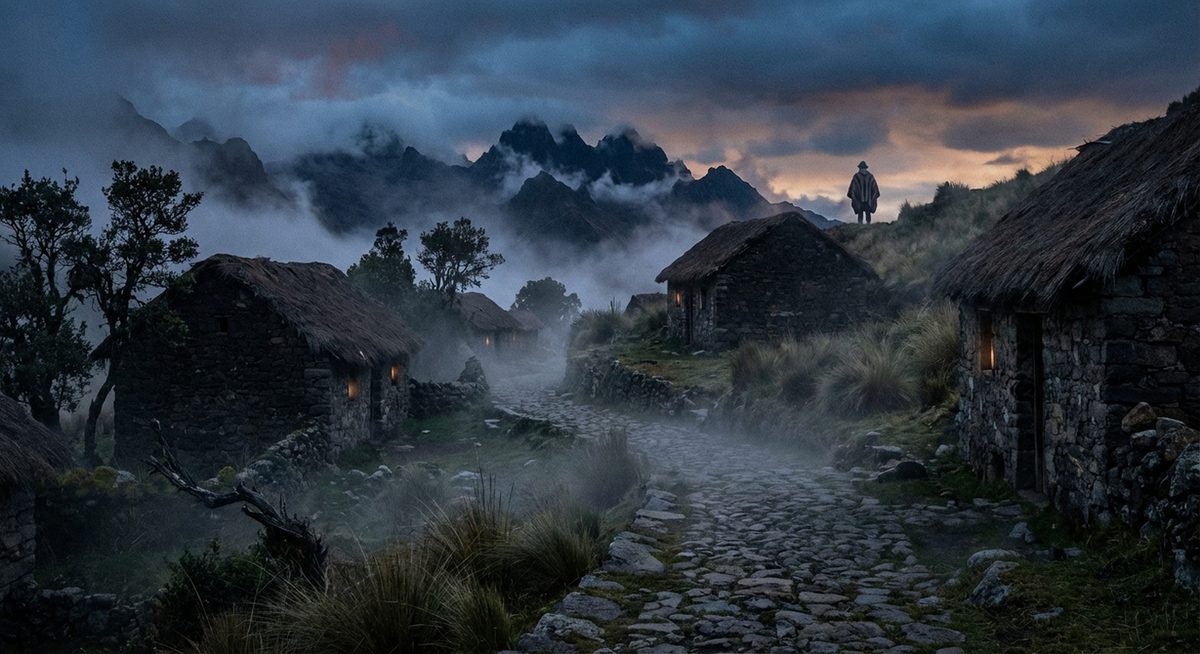
The pishtaco is described in Andean oral tradition as a tall, pale-skinned stranger — often depicted as a white man or mestizo — who lurks along lonely roads, mountain trails, and the outskirts of villages. His victims are typically lone travelers or people who have strayed from their communities after dark. The pishtaco attacks by rendering his victim unconscious, either through a magical powder, a hypnotic gaze, or physical force, and then extracts the victim's body fat, leaving them to die or to waste away over the following days and weeks.
The word "pishtaco" derives from the Quechua verb pishtay, meaning "to behead" or "to cut the throat." In some regional variations, the figure is called nakaq (from the Quechua nakay, "to slaughter") or ñakaq. In Bolivia, an equivalent figure is known as the kharisiri or lik'ichiri, which translates roughly to "one who extracts grease." These names point to the central horror of the legend: the violation of the body and the theft of a substance that Andean peoples have long associated with vitality, warmth, and life itself.
In traditional Andean belief, human fat (wira in Quechua) holds special significance. Fat represents health, energy, and the capacity to work and survive in the harsh mountain environment. Losing one's fat is not merely a physical affliction but a spiritual and social catastrophe — it means being drained of life force. The pishtaco, therefore, does not simply kill; he steals the very essence of his victim's ability to live.
Historical Roots: How the Spanish Conquest Created a Monster
Most scholars trace the pishtaco legend to the traumatic period of the Spanish conquest and colonization of Peru in the 16th century. The arrival of Europeans brought violence, disease, forced labor, and cultural devastation on a scale that the indigenous population had never experienced. The pishtaco — pale-skinned, predatory, and alien — emerged as a symbolic embodiment of colonial exploitation.
There is evidence that the legend has pre-Columbian antecedents. Some researchers point to Moche and Chimú iconography depicting figures involved in ritual violence and body modification, suggesting that anxieties about bodily violation had deeper roots in Andean culture. However, the pishtaco as he is understood today — a white or light-skinned outsider who steals indigenous fat for his own purposes — is fundamentally shaped by the colonial encounter.
During the colonial era, specific historical events reinforced the legend. Indigenous workers in Spanish mines and textile workshops (known as obrajes) died in enormous numbers from overwork, malnutrition, and disease. Rumors circulated that the Spanish were literally consuming the life force of indigenous laborers. In the 17th century, reports emerged that Spanish priests and missionaries were using human fat to grease church bells to improve their sound — a practice that may or may not have been real, but which became firmly embedded in Andean oral history.
The Bethlemite monks who operated hospitals in colonial Peru were also associated with the pishtaco legend. Indigenous patients who entered these hospitals often did not return, and communities interpreted these disappearances through the lens of the fat-stealing myth. Whether the monks actually extracted fat from corpses for medicinal purposes (human fat was used in European medicine well into the 18th century) remains debated, but the association between religious outsiders and bodily exploitation became a permanent fixture of Andean folklore.
The Pishtaco Through the Centuries: An Evolving Legend
What makes the pishtaco legend remarkable is its adaptability. While the core narrative — an outsider who steals indigenous body fat — has remained consistent, the details have shifted to reflect changing historical circumstances.
In the colonial period, pishtacos were typically described as Spanish priests, monks, or soldiers. As Peru gained independence in the 19th century and new forms of external influence arrived, the pishtaco took on different guises. During the rubber boom of the late 1800s, pishtacos were associated with caucheros (rubber barons) and their agents who exploited indigenous Amazonian labor. In the 20th century, as roads and industrial projects reached deeper into the highlands, pishtacos were said to be engineers, truck drivers, or government officials — anyone who represented outside power entering indigenous communities.
During Peru's brutal internal conflict of the 1980s and 1990s, when the Shining Path guerrilla movement and the Peruvian military devastated highland communities, pishtaco reports surged. Both soldiers and guerrillas were accused of being pishtacos by terrified villagers caught between two armed forces. The violence, disappearances, and breakdown of trust during this period created fertile ground for a legend built on fear of powerful outsiders.
In 2009, the pishtaco legend made international headlines when Peruvian police arrested a gang in the Huánuco region who were allegedly killing people and extracting their fat to sell to cosmetics companies. While the case was widely reported, many details were later questioned, and some journalists and scholars suggested that the police had crafted the narrative to fit the pishtaco archetype. Regardless of the case's veracity, the episode demonstrated how powerfully the legend continues to shape how Peruvians interpret violence and exploitation.
What the Pishtaco Tells Us About Andean Worldview
The pishtaco is more than a scary story. For anthropologists and folklorists, the legend is a window into how Andean communities understand power, exploitation, and the relationship between the indigenous world and external forces.
At its core, the pishtaco represents a fundamental anxiety about extraction — the taking of something vital from indigenous bodies and communities for the benefit of outsiders. This theme resonates with the lived experience of Andean peoples across five centuries: Spanish colonizers extracted silver and gold, republican-era landowners extracted labor, modern mining companies extract minerals, and throughout it all, the pishtaco has been there as a metaphor for what is happening to indigenous communities.
The emphasis on fat is culturally specific. In the Andean highlands, where temperatures drop well below freezing at night and physical labor is demanding, fat is genuinely essential for survival. A fat person is a healthy person, a prosperous person, a person with reserves. To lose one's fat is to become vulnerable, weak, and exposed. The pishtaco's theft of fat is therefore an attack on the most fundamental resource an Andean person possesses.
The legend also encodes rules about social behavior. Stories about pishtaco attacks typically involve victims who were traveling alone, out at night, or away from the protection of their community. The pishtaco, in this sense, functions as a cautionary figure — a reminder of the dangers that await those who wander beyond the safety of the collective. This protective function explains why the legend persists even in communities that are otherwise integrated into modern Peruvian society.
Pishtaco Encounters in Modern Peru
Despite urbanization and the spread of education, pishtaco beliefs remain strong in many parts of the Peruvian highlands. Anthropologists conducting fieldwork in Ayacucho, Huancavelica, Apurímac, and Cusco regularly encounter people who take the pishtaco seriously as a real threat. Reports of pishtaco sightings circulate periodically, particularly during times of social stress or when unfamiliar people — construction workers, government surveyors, NGO staff — appear in isolated communities.
In the early 2000s, researchers documented pishtaco panic in communities near mining operations in Apurímac and Cusco. Villagers suspected that mining company employees were pishtacos, a fear that reflected genuine anxieties about the environmental and social impacts of extractive industries on highland communities. The pattern is consistent: when outside forces arrive with the power to transform local landscapes and livelihoods, the pishtaco follows.
Travelers in Peru's highlands may occasionally hear references to pishtacos, particularly from older residents in rural areas. These references should be understood not as naive superstition but as a culturally specific way of expressing real concerns about power, exploitation, and vulnerability. The pishtaco is part of the same rich fabric of Andean beliefs that includes sacred plants like palo santo, ayahuasca ceremonial traditions, and the veneration of mountain spirits known as apus.
The Pishtaco in Literature, Film, and Art
The pishtaco has inspired numerous works of Peruvian literature, cinema, and visual art. Nobel Prize-winning author Mario Vargas Llosa incorporates the pishtaco legend into his novel Lituma en los Andes (1993), using it to explore the collision between modern state authority and indigenous belief systems during Peru's internal conflict. The novel follows a police corporal investigating disappearances in a highland community where pishtaco fears are pervasive.
Peruvian filmmaker Palito Ortega Matute has explored the pishtaco legend in several horror films produced in Ayacucho, part of a broader movement of regional Andean cinema that draws on local folklore. These low-budget productions, shot in Quechua and Spanish, have become cult favorites and demonstrate the ongoing cultural vitality of the legend.
Contemporary Peruvian artists have also used the pishtaco as a vehicle for commenting on current social issues, including extractive industries, inequality, and the persistence of colonial-era power structures. In these works, the pishtaco is not merely a folk monster but a lens through which to examine Peru's most difficult questions about identity, exploitation, and justice. For more on Peru's dark and mysterious traditions, see our guide to paranormal Peru.
Frequently Asked Questions
What is a pishtaco in Peruvian folklore?
A pishtaco is a feared figure in Andean Peruvian folklore who targets lone travelers and isolated individuals to steal their body fat. Typically described as a tall, pale-skinned outsider, the pishtaco renders victims unconscious and extracts their fat, which in Andean belief represents vitality and life force. The legend dates back to the Spanish colonial period and remains active in highland communities today.
Where does the word pishtaco come from?
The word pishtaco comes from the Quechua verb pishtay, meaning "to behead" or "to cut the throat." Regional variations include nakaq (from nakay, "to slaughter") and ñakaq. In Bolivia, equivalent figures are called kharisiri or lik'ichiri, meaning "one who extracts grease." All these names emphasize the violent and extractive nature of the figure.
Is the pishtaco legend based on real events?
The pishtaco legend is rooted in the real trauma of the Spanish conquest and colonization of Peru. Historical events that reinforced the myth include the mass death of indigenous workers in colonial mines, rumors of Spanish priests using human fat for church bells, and hospitals where indigenous patients disappeared. While the pishtaco himself is a folkloric figure, the exploitation he symbolizes was very real.
Do people in Peru still believe in pishtacos?
Yes, pishtaco beliefs remain active in many highland communities in Peru, particularly in the regions of Ayacucho, Huancavelica, Apurímac, and Cusco. Reports of pishtaco sightings continue to emerge periodically, especially during times of social stress or when unfamiliar outsiders appear in remote areas. Anthropologists conducting fieldwork regularly encounter people who take the pishtaco seriously as a genuine threat.
Why does the pishtaco steal fat specifically?
In Andean highland culture, body fat (wira in Quechua) is closely associated with health, vitality, warmth, and the capacity to survive in harsh mountain conditions. A fat person is considered healthy and prosperous, while a thin person is seen as vulnerable. The pishtaco's theft of fat represents the ultimate attack on an Andean person's life force and well-being — a symbolic draining of everything that sustains them.
What does the pishtaco legend symbolize?
The pishtaco symbolizes external exploitation of indigenous communities. Across five centuries, the figure has adapted to represent different forms of outsider threat — Spanish colonizers, rubber barons, government officials, mining companies, and military forces. The core theme remains constant: powerful outsiders extracting vital resources from vulnerable indigenous bodies and communities for their own benefit.
Has the pishtaco legend changed over time?
Yes, the pishtaco legend is remarkably adaptable. In the colonial period, pishtacos were described as Spanish priests and soldiers. In the 19th century, they became rubber barons. In the 20th century, they appeared as engineers, truck drivers, and government agents. During Peru's internal conflict (1980s-90s), both soldiers and guerrillas were accused of being pishtacos. The figure evolves to match whatever form of external threat is most relevant to a given era.
Are pishtacos mentioned in any famous books or films?
Yes, Nobel laureate Mario Vargas Llosa features the pishtaco legend prominently in his 1993 novel Lituma en los Andes. Peruvian filmmaker Palito Ortega Matute has produced several horror films based on the pishtaco in Ayacucho. The figure also appears in works by anthropologists like Mary Weismantel and various contemporary Peruvian visual artists exploring themes of colonial legacy and indigenous identity.
Can tourists encounter pishtaco beliefs while traveling in Peru?
Travelers in Peru's highland regions may hear references to pishtacos, particularly from older residents in rural communities. These beliefs are most common in Ayacucho, Huancavelica, and parts of Cusco and Apurímac. Rather than dismissing these references as superstition, visitors should understand them as a culturally meaningful way of expressing concerns about outside power and exploitation that are deeply rooted in Andean historical experience.
How does the pishtaco compare to other folklore monsters?
The pishtaco shares some features with vampire legends (draining victims of a vital substance) but is distinct in its focus on fat rather than blood and its strong connection to colonial and economic exploitation. Unlike European vampires, the pishtaco is not supernatural in origin — he is human, typically a specific type of outsider. The closest parallels are found in other Andean and South American folklore, such as Bolivia's kharisiri and the Caribbean's chupacabra.