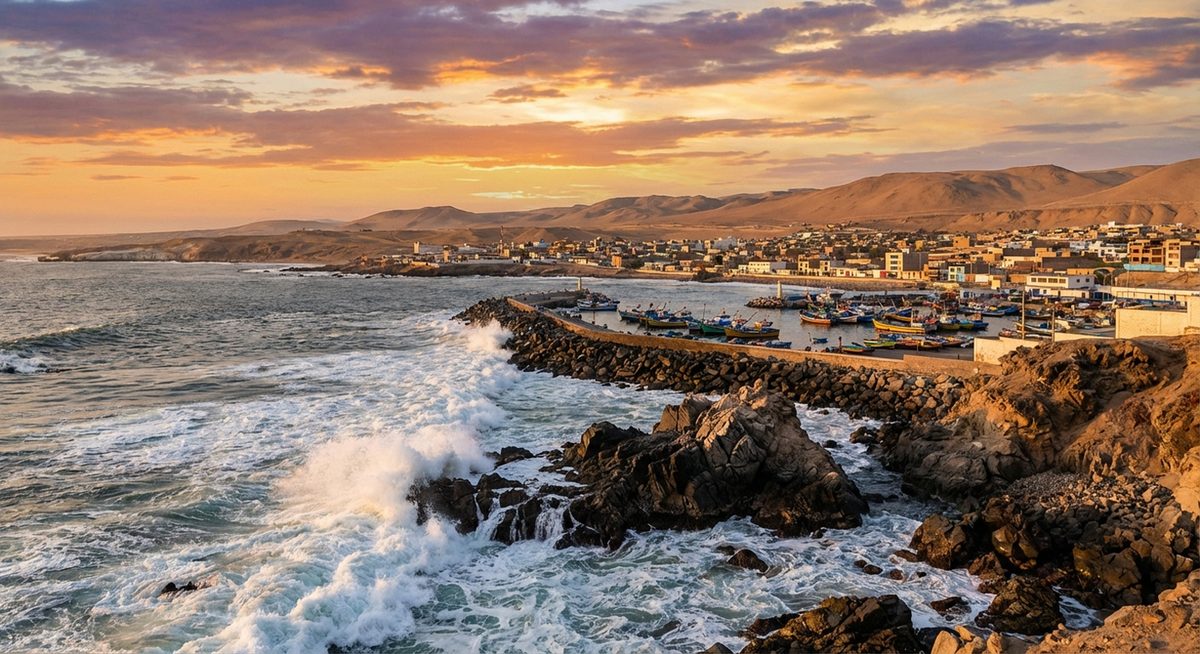
Interesting Things About Ilo Peru and Why This Coastal Gem Deserves a Spot on Your Itinerary
Most travelers flying into Peru head straight for Lima, Cusco, or Arequipa. Very few stop to consider the quiet coastal towns that line the country's southern Pacific shore. Ilo is one of those overlooked places, a small port city in the Moquegua region that most guidebooks mention only in passing, if they mention it at all. That is a shame, because Ilo has a personality all its own: long stretches of beach, the largest olive groves in Peru, outstanding seafood, and a relaxed pace of life that feels worlds apart from the tourist circuits up north.
This guide pulls together everything worth knowing about Ilo Peru, from its ancient fishing roots to the best beaches for a quiet afternoon, so you can decide for yourself whether this southern coastal gem belongs on your next itinerary.
Where Exactly Is Ilo?
Ilo sits at the far southern end of Peru's coastline, roughly 1,200 kilometers south of Lima and about 90 kilometers southwest of the regional capital Moquegua. It is the only coastal province in the Moquegua region, which means it serves as the gateway between the high Andes interior and the Pacific Ocean. The city itself is compact, built along a narrow strip of land between the ocean and the arid hills that rise sharply behind it.
Geographically, Ilo is closer to the Chilean border than it is to most other Peruvian tourist destinations. Tacna, the last major Peruvian city before Chile, is only about 160 kilometers to the south. That proximity gives Ilo a unique cultural flavour, blending southern Peruvian traditions with a bit of cross-border influence. The Atacama Desert stretches nearby, making the surrounding landscape strikingly arid, almost lunar in places, which only makes the contrast with the blue ocean more dramatic.
Getting to Ilo is straightforward. Regular buses connect the town to Arequipa (about five hours), Tacna (around two and a half hours), and Moquegua (roughly ninety minutes). There is no commercial airport in Ilo, so overland travel is the standard option. If you are already exploring Peru's top destinations, adding Ilo to the southern leg of your trip takes minimal effort.
A Brief History of Ilo
Long before the Spanish arrived, the coast around Ilo was home to the Chiribaya people, a pre-Inca culture that thrived between roughly 900 and 1350 AD. The Chiribaya were skilled fishermen, farmers, and herders who left behind a rich archaeological record including mummies, textiles, ceramics, and even the preserved remains of their dogs, which are considered some of the earliest examples of the Peruvian hairless breed. If you are interested in Peruvian dogs, you will enjoy reading about reasons to adopt a Peruvian hairless dog.
During the colonial period, Ilo served primarily as a port for shipping goods from the interior, particularly minerals extracted from the mines of Moquegua and surrounding regions. The town remained small and functional, never growing into a major colonial centre like Arequipa or Lima. That relative obscurity continued through much of the Republican era. In the twentieth century, Ilo experienced a growth spurt driven by copper mining (the nearby Toquepala and Cuajone mines) and the fishing industry, both of which brought jobs and infrastructure to the area.
Today Ilo has a population of around 65,000 people. It functions as a working port and fishing hub with a growing tourism sector, though visitors remain predominantly Peruvian. International tourists who find their way here are still something of a novelty, which means you will encounter genuine hospitality rather than the polished but impersonal service of heavily touristed areas.
The Beaches: Pozo de Lizas, Boca del Río, and More
Ilo's coastline offers several beaches, each with a slightly different character. The standout is Pozo de Lizas, a sheltered bay with calm water that is popular with families. The beach has a gentle slope, making it safe for children, and the water temperature during summer (December through March) is pleasant enough for extended swimming. Facilities are basic but adequate: a few food stalls, restrooms, and shaded areas.
Boca del Río lies a few kilometres south and is wider, wilder, and less developed. It is the beach where the Osmore River meets the Pacific, creating an interesting ecological zone where you can spot coastal birds and, during migration seasons, even sea lions resting on nearby rocks. The surf here is rougher, so it is better suited for walking and watching than swimming. Surfers occasionally try the breaks, though the waves are inconsistent.
Further south, there are smaller coves and rocky stretches that appeal to fishermen and tide-pool enthusiasts. Playa Gentilares and Playa Wawakiki are less visited, offering real solitude if you do not mind a lack of facilities. If you enjoy beach travel in Peru, you may want to compare these options with the healthiest beaches in Lima, which offer a different experience entirely.
The Olive Groves: Peru's Olive Capital
One of the most surprising things about Ilo and the broader Moquegua-Tacna region is its olive production. Peru is not a country most people associate with olives, yet the southern coast produces high-quality olive oil and table olives that rival Mediterranean offerings. Ilo sits at the northern edge of this olive belt, and the groves here are among the oldest and largest in the country.
The olives were originally brought to South America by the Spanish in the sixteenth century, and the climate of southern Peru turned out to be ideal for their cultivation. The dry, warm conditions and mineral-rich soil produce olives with an intense flavour profile. Varieties grown here include Sevillana (the most common), Ascolana, and Criolla.
Visiting the olive groves is possible, especially during harvest season (April through June). Some local producers offer informal tours where you can see the pressing process and taste the oil fresh. The town of La Yarada-Los Palos, between Ilo and Tacna, is the epicentre of production, but there are smaller groves closer to Ilo itself. For food lovers, picking up a bottle of locally pressed extra-virgin olive oil is one of the best souvenirs you can take from this part of Peru.
Seafood and Local Cuisine
As a fishing port, Ilo delivers some of the freshest seafood on Peru's southern coast. The local cuisine leans heavily on what comes off the boats each morning: corvina, lenguado, bonito, pulpo, and an impressive variety of shellfish including conchas de abanico (scallop-like fan shells) and machas (razor clams).
Ceviche here tends to be simpler and more direct than the elaborate preparations you find in Lima's upscale restaurants. The fish is ultra-fresh, cut into larger pieces, and served with plenty of lime juice, red onion, and ají limo. Chicharrón de pescado (fried fish) is another staple, typically served with yuca and a spicy salsa criolla. For something heartier, try a parihuela, a rich and spicy seafood stew that combines multiple types of fish and shellfish in a deeply flavoured broth.
The best places to eat are the small restaurants near the port and along the malecón. These are not fancy establishments, many are little more than a kitchen with plastic tables and chairs under a corrugated roof, but the quality of the food is outstanding. Prices are significantly lower than Lima or Arequipa, making Ilo an excellent place to eat well on a budget.
The Algarrobal Museum and Chiribaya Heritage
The Museo de Sitio El Algarrobal is Ilo's most important cultural attraction. Located a few kilometres outside the city centre, the museum houses artefacts from the Chiribaya civilisation, including mummies, ceramics, textiles, and metal tools. The highlight for many visitors is the collection of Chiribaya dog mummies, which provide evidence that these ancient people deliberately bred and cared for dogs, including an early form of the Peruvian hairless breed.
The museum is small but well curated, with informative displays in Spanish (English information is limited, so a basic grasp of Spanish or a translation app is helpful). The surrounding archaeological zone includes burial sites and the remains of agricultural terraces. A visit takes about an hour and provides valuable context for understanding the region's pre-Columbian history.
If pre-Columbian history interests you, Ilo's Chiribaya heritage connects to broader Peruvian themes that you can explore further in places like Cusco. Consider reading about hidden gems of Cusco for more off-the-beaten-path archaeological experiences.
El Malecón and Glorieta José Gálvez
Ilo's malecón (waterfront promenade) runs along the clifftop above the port, offering panoramic views of the Pacific. It is a pleasant place for an evening walk, especially around sunset when the sky turns shades of orange and purple over the ocean. The malecón is well maintained, with benches, lampposts, and a few monuments.
The centrepiece is the Glorieta José Gálvez, a restored Victorian-era pavilion that sits at a prominent point along the promenade. Built in the late nineteenth century, the glorieta is an elegant wrought-iron structure with ornate railings and a domed roof. It was originally used as a gathering place for the town's elite and has been declared a national historical monument. Today it serves mainly as a photo opportunity and a shaded rest spot, but it remains one of Ilo's most recognisable landmarks.
The area around the malecón also includes a few plazas, the main church, and several of the town's better restaurants. On weekends, local families stroll here after dinner, vendors sell churros and picarones, and the atmosphere is genuinely relaxed.
Climate and Best Time to Visit Ilo
Ilo has a mild desert climate, classified as BWh under the Köppen system. That means it is warm and dry for most of the year, with very little rainfall. Summers (December through March) bring temperatures between 20 and 28 degrees Celsius, with plenty of sunshine and warm ocean water. This is the best period for beach activities.
Winters (June through August) are cooler, with temperatures dropping to around 12 to 18 degrees Celsius. Fog (known locally as garúa) can roll in from the ocean during the morning hours, though it usually burns off by midday. The winter months are still perfectly pleasant for sightseeing, hiking, and cultural visits; you simply will not want to swim.
The shoulder months of April-May and September-November offer a good balance: fewer visitors than peak summer, comfortable temperatures, and clear skies most days. If your primary interest is the olive harvest, aim for April through June.
How to Get to Ilo from Major Cities
From Arequipa, multiple bus companies run daily services to Ilo. The journey takes approximately five hours along a well-maintained highway that descends from the Andes foothills to the coast. Cruz del Sur, Flores, and Oltursa are reliable options. From Tacna, the trip is shorter at around two and a half hours, and colectivos (shared minibuses) depart frequently from the terminal.
From Moquegua, the regional capital, Ilo is only about ninety minutes by bus or colectivo. This is the most common route for day-trippers. If you are coming from Lima, the most efficient option is to fly to Arequipa or Tacna (both have commercial airports) and then take a bus to Ilo.
Driving is also an option if you have rented a car. The Panamericana Sur passes through the region, and the roads to Ilo are paved and in good condition. Keep in mind that the landscape is extremely arid, so carry plenty of water and ensure your vehicle is in good mechanical shape.
Things to Do Beyond the Beach
While the beaches and seafood are the main draws, Ilo offers a handful of other activities worth your time. The Cerro de la Serpiente (Serpent Hill) is a natural rock formation on the outskirts of town that offers good views and a short hike. Local legend attributes mystical properties to the site, and it has been associated with pre-Columbian ritual activity.
Birdwatching along the coast can be rewarding, particularly near the mouth of the Osmore River. Species you might spot include Peruvian pelicans, Inca terns, red-legged cormorants, and Humboldt penguins. For dedicated birders, Ilo can serve as a starting point for exploring the broader Moquegua coast, which is less disturbed than areas further north. Our guide to bird watching in Peru has more details on the country's avian diversity.
The Toquepala Caves, located about two hours inland, contain some of the oldest cave paintings in South America, dating back approximately 9,000 years. These are not always easy to access (you may need to arrange a guide through the municipality), but for archaeology enthusiasts, the detour is well worth the effort.
Shopping in Ilo centres on the main market, where you can buy fresh produce, dried fish, olives, olive oil, and local sweets. There are no upscale boutiques or souvenir shops aimed at tourists, which is part of the charm. If you want more activity ideas across Peru, we have a separate guide for that.
Practical Tips for Visiting Ilo
Accommodation in Ilo is limited compared to major tourist cities. There are a few comfortable mid-range hotels in the centre and some basic hostales near the port. Booking ahead during January and February (peak summer) is advisable, as many Peruvian families from the highlands come to Ilo for beach holidays. Outside of those months, you can usually find a room without reservation.
ATMs are available in the town centre, though it is wise to carry some cash for smaller restaurants and transport. Credit cards are accepted at hotels and larger establishments. The local currency is the Peruvian sol. English is not widely spoken, so basic Spanish will make your visit much smoother.
Safety in Ilo is generally good. The town is small enough that serious crime is rare, and locals are accustomed to visitors from other parts of Peru even if international tourists are uncommon. Standard precautions apply: do not flash expensive electronics, keep valuables secure, and stick to well-lit areas after dark.
Why Ilo Deserves a Spot on Your Peru Itinerary
Ilo is not trying to be Cusco or Lima. It does not have Machu Picchu or world-class museums. What it does have is authenticity, a working Peruvian coastal town that has not been reshaped by mass tourism. The beaches are clean and uncrowded, the seafood is among the freshest you will find anywhere in the country, and the Chiribaya heritage adds a layer of historical depth that most beach towns lack.
For travellers who have already seen Peru's headline attractions and want to dig deeper, Ilo offers a glimpse of everyday coastal life in the country's far south. It pairs well with visits to Moquegua (known for its pisco and colonial architecture), Tacna (with its duty-free shopping and Chilean border culture), and the broader Atacama region. Adding two or three days in Ilo to a southern Peru itinerary gives you something genuinely different from the standard tourist circuit.
Frequently Asked Questions About Ilo Peru
Is Ilo Peru worth visiting?
Yes, Ilo is worth visiting if you enjoy uncrowded beaches, fresh seafood, and off-the-beaten-path destinations. It is not a mainstream tourist spot, which is part of its appeal. The Chiribaya archaeological sites and the olive groves add cultural and agricultural interest beyond the beach. If your only goal is nightlife or luxury resorts, Ilo is probably not for you, but for curious travellers who appreciate authenticity, it delivers.
How do I get from Arequipa to Ilo?
Take a direct bus from Arequipa's main terminal. Several companies operate this route daily, and the journey takes about five hours. Bus tickets typically cost between 25 and 50 soles depending on the company and seat class. Colectivos (shared minivans) are also available and may be slightly faster, though less comfortable.
What is the best time to visit Ilo?
The best time for beach activities is December through March, when temperatures are warmest and the ocean is most pleasant. For sightseeing without crowds, the shoulder months of April-May or September-November are ideal. If you want to see the olive harvest, visit in April through June. Winter (June-August) is cooler but still suitable for non-beach activities.
Are there hotels in Ilo Peru?
Yes, Ilo has a range of accommodation options including mid-range hotels, hostales, and a few guesthouses. Expect basic but clean rooms with hot water, WiFi, and television. During peak summer season (January-February), it is wise to book ahead as domestic tourists fill the available rooms. Outside of that period, walk-in availability is usually fine.
What food should I try in Ilo?
Start with the ceviche, which benefits from ultra-fresh fish landed the same morning. Chicharrón de pescado (fried fish) with yuca is a local staple. Parihuela, a rich seafood stew, is perfect for cooler days. Do not miss the local olives and olive oil, which are among the best in South America. For dessert, try alfajores made with local ingredients.
Is Ilo safe for tourists?
Ilo is generally considered safe. It is a small, working-class town where serious crime against visitors is uncommon. As with any destination, use common sense: keep valuables secure, avoid walking alone in poorly lit areas at night, and stay aware of your surroundings. The local population is welcoming and accustomed to visitors from other parts of Peru.
Can I combine a visit to Ilo with other southern Peru destinations?
Yes, Ilo pairs naturally with several other southern Peru destinations. Moquegua, known for its pisco production and colonial architecture, is only ninety minutes away. Tacna, near the Chilean border, is about two and a half hours south. From Tacna, you can cross into Arica, Chile. Many travelers combine Ilo with Arequipa and Colca Canyon for a comprehensive southern Peru loop that covers coast, desert, and highlands.
Does Ilo have nightlife or entertainment options?
Ilo has a modest nightlife scene centred on a few bars and peñas (traditional music venues) near the main plaza and malecón. On weekends, locals gather at restaurants for live music and dancing. It is not a party destination like Cusco or Lima, but the evening atmosphere along the waterfront promenade is pleasant, with street food vendors and families strolling after dinner. If you are looking for lively nightlife, Ilo is best appreciated for its relaxed, authentic character instead.