Andean Cock-of-the-Rock: Everything About Peru's Dazzling National Bird
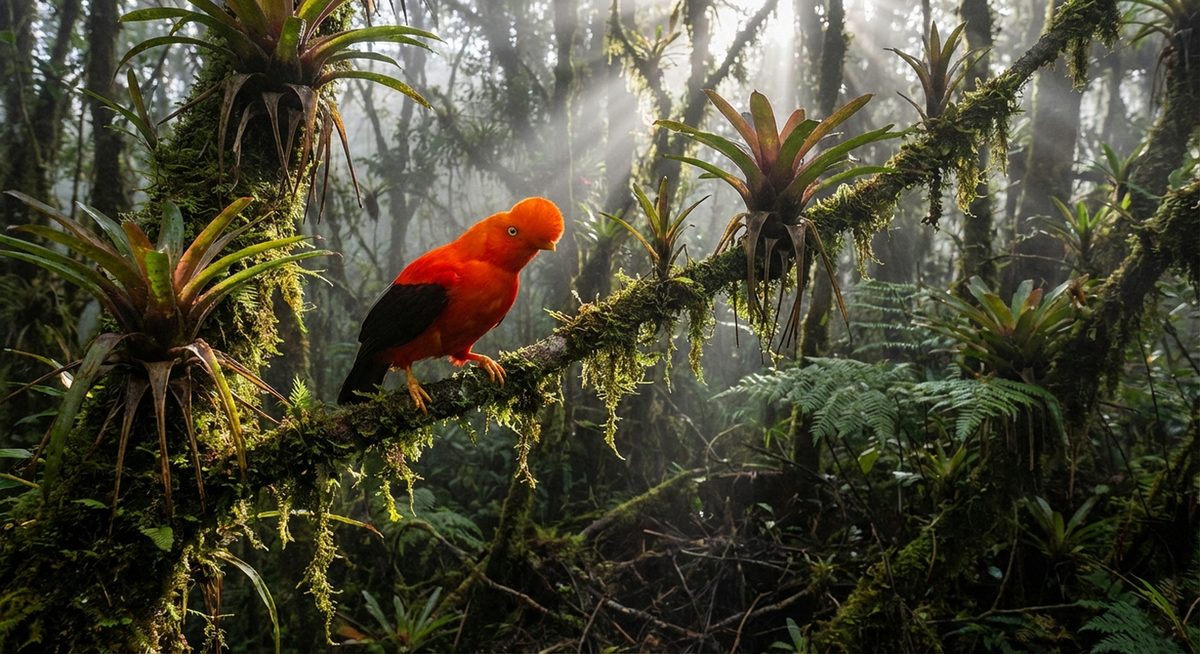
Deep within the mist-shrouded cloud forests of the Andes, a flash of brilliant scarlet catches your eye. A bird unlike any other sits on a mossy branch, its plumage so intensely red-orange that it seems to glow against the emerald backdrop. This is the Andean cock-of-the-rock (Rupicola peruvianus), Peru's official national bird and one of South America's most spectacular avian species. Known locally as tunki, this extraordinary creature has captivated ornithologists, photographers, and travelers for centuries with its dramatic appearance and even more dramatic mating rituals.
Whether you are planning a bird watching trip to Peru or simply curious about one of the world's most visually striking birds, this guide covers everything you need to know about the rock bird that has become an enduring symbol of Peruvian biodiversity.
Physical Description: A Bird That Demands Attention
The Andean cock-of-the-rock is a medium-sized passerine bird measuring roughly 30 to 33 centimeters (12 to 13 inches) in length and weighing between 200 and 300 grams. What makes this species instantly recognizable is the striking sexual dimorphism between males and females.
Males are the showstoppers. They sport an intensely vivid red-orange plumage that covers most of their body, from their broad chest to their back and wings. The most distinctive feature is a large, disc-shaped crest that extends from the base of the bill over the top of the head, forming a permanent fan of feathers that nearly obscures the beak entirely. Their wings display bands of black and grey, and the tail is black. The eyes are a piercing orange-yellow, adding to their already dramatic appearance.
Females, by contrast, are far more subdued. They wear dark brown to reddish-brown plumage that provides excellent camouflage among the rocks and vegetation of their forest habitat. Their crest is noticeably smaller than the male's. This muted coloring serves an important purpose: it helps females remain inconspicuous while nesting, protecting both themselves and their eggs from predators.
Among the cutest and most remarkable animals of Peru, the Andean cock-of-the-rock stands out not just for beauty but for sheer visual impact. Few birds anywhere on Earth can match the intensity of the male's coloration.
Taxonomy and Classification
The Andean cock-of-the-rock belongs to the family Cotingidae, a diverse group of tropical birds found throughout Central and South America. Its full scientific name is Rupicola peruvianus, with Rupicola derived from the Latin words rupes (rock) and cola (inhabitant), referring to the bird's habit of nesting on rocky cliff faces. The species name peruvianus directly references Peru, where the bird was first formally described.
There are four recognized subspecies that differ slightly in the intensity and shade of their plumage:
- R. p. peruvianus — found in Peru and Bolivia
- R. p. sanguinolentus — found in northern Peru and Ecuador
- R. p. aequatorialis — found in Ecuador and Colombia
- R. p. saturatus — found in western Venezuela and northern Colombia
The Andean cock-of-the-rock has a close relative: the Guianan cock-of-the-rock (Rupicola rupicola), found in the lowland forests of the Guiana Shield. While visually similar, the Guianan species has a more orange coloration and a half-moon shaped crest rather than the full disc seen in the Andean variety.
Why Is the Cock-of-the-Rock Peru's National Bird?
Peru officially designated the Andean cock-of-the-rock as its national bird in 1941. The choice reflects several factors deeply intertwined with Peruvian identity. The bird is endemic to the Andean cloud forests, a habitat that exists almost exclusively within the western slope of the Andes, making it a powerful symbol of Peru's unique natural heritage.
In pre-Columbian cultures, the vibrant red plumage of the tunki held spiritual significance. Feathers were used in ceremonial dress by indigenous peoples, and the bird appeared in the art and mythology of various Andean cultures. Today, it appears on Peruvian stamps, currency, and tourism materials, serving as an ambassador for the country's astonishing biodiversity. Peru is home to over 1,800 bird species, and the cock-of-the-rock represents them all as a national treasure.
Cloud Forest Habitat: Where the Rock Bird Lives
The Andean cock-of-the-rock inhabits humid montane forests, commonly known as cloud forests, at elevations between 500 and 2,400 meters above sea level. These forests are characterized by near-constant cloud cover, heavy rainfall, and an extraordinary density of epiphytic plants such as mosses, ferns, orchids, and bromeliads.
Within this habitat, the birds prefer areas with rocky outcrops, steep ravines, and waterfalls. The proximity to rock faces is essential, as females build their nests exclusively on vertical or overhanging rock surfaces, often near streams or cascades where the constant moisture helps bind the nest materials. The lush vegetation of the cloud forest, including many tropical rainforest plants, provides abundant fruit that forms the core of the bird's diet.
Peru's eastern Andean slopes, descending into the vast Peruvian Amazon basin, harbor some of the best-preserved cloud forest habitat on the continent. The transition zone between highland and lowland ecosystems creates a biodiversity hotspot where the Andean cock-of-the-rock thrives alongside hundreds of other endemic species.
The Spectacular Lek Mating Dance
Perhaps no aspect of the Andean cock-of-the-rock's behavior is more famous than its extraordinary courtship display. Males gather at traditional display sites called leks — specific clearings on the forest floor that may be used by generations of birds over many years. A lek typically hosts between 5 and 40 males, each occupying a small territory or "court" within the larger area.
When females approach, the performance begins. Males launch into an elaborate display that combines vivid visual elements with vocal performances. They puff out their brilliant plumage, spread their wings, bob their heads to show off the disc-shaped crest, hop from branch to branch, and emit a series of loud squawks, grunts, and snapping calls. The overall effect is mesmerizing: a dozen or more brilliantly colored birds competing simultaneously in a frenzy of color and sound.
Females observe the display carefully, evaluating the males based on plumage quality, crest size, dance vigor, and overall health. After watching multiple performances, a female selects a mate. Studies have shown that females consistently prefer males with the brightest plumage and the most vigorous displays, a classic example of sexual selection driving the evolution of extreme ornamentation.
Once mating occurs, the male's involvement ends entirely. The female alone builds the nest, incubates the eggs, and raises the chicks. Males return to the lek to continue displaying and mating with other females throughout the breeding season, which typically runs from October through March in Peru.
Diet: Fruits, Insects, and the Role of Seed Dispersal
The Andean cock-of-the-rock is primarily frugivorous, meaning its diet consists mainly of fruits. It feeds on a wide variety of berries, drupes, and other small fruits from cloud forest trees and shrubs, including species from the families Lauraceae, Melastomataceae, and Rubiaceae. The bright orange-red color of the male's plumage is partly derived from carotenoid pigments obtained through its fruit-rich diet.
In addition to fruit, the bird supplements its diet with insects, small vertebrates such as lizards and frogs, and occasionally snails. This protein-rich supplement is especially important during the breeding season when energy demands are high.
As a frugivore, the cock-of-the-rock plays a vital ecological role as a seed disperser. After consuming fruits, the bird regurgitates or excretes the seeds at locations away from the parent plant, helping to maintain the genetic diversity and spatial distribution of cloud forest tree species. This makes the bird a keystone species for forest health and regeneration.
Nesting Behavior: Building on Rock Faces
The nesting habits of the Andean cock-of-the-rock are as distinctive as its appearance. Females build cup-shaped nests on vertical rock surfaces, typically in sheltered overhangs, cave entrances, or cliff faces near waterfalls and streams. The nest is constructed from mud, plant fibers, and other organic material, cemented to the rock with saliva. The moisture from nearby water sources helps the mud remain pliable during construction and keeps the nest materials from drying out and crumbling.
A typical clutch consists of two eggs, which are whitish with brown speckles. The female incubates the eggs for approximately 25 to 28 days. After hatching, the chicks remain in the nest for about six weeks before fledging. Throughout this period, the female alone provides all parental care, making frequent foraging trips to bring fruit and insects back to the nest.
Nesting sites are often communal, with multiple females building nests on the same rock face. Some rock formations in Peru host nesting colonies that have been used continuously for decades, a testament to the suitability and scarcity of ideal nesting habitat.
Best Places to See the Andean Cock-of-the-Rock in Peru
Peru offers some of the finest opportunities in the world to observe this magnificent bird in the wild. Seeing the cock on a rock bird in its natural habitat is a highlight of any Peruvian wildlife expedition. Here are the top locations:
Manu Road (Cusco to Manu National Park)
The road from Cusco descending into Manu National Park passes through prime cloud forest habitat between 1,500 and 3,000 meters elevation. Several known lek sites are accessible from the road, and local guides can take you directly to active display areas. Early morning visits during the breeding season (October through March) offer the best chances of witnessing the full courtship dance.
Wayqecha Biological Station
Located at approximately 2,900 meters along the Manu Road, the Wayqecha Biological Station is a research facility surrounded by pristine cloud forest. The station maintains trails that pass through excellent cock-of-the-rock habitat, and researchers have documented multiple lek sites in the area.
Cock-of-the-Rock Lodge (Manu Biosphere Reserve)
This aptly named lodge, situated at about 1,600 meters elevation along the Manu Road, was specifically built near an active lek. Guests can observe displaying males from a comfortable viewing platform just meters away from the action. It is widely considered one of the most reliable and accessible sites in the world for seeing this species.
Machu Picchu and the Inca Trail Area
The cloud forests surrounding Machu Picchu and the lower sections of the Inca Trail harbor populations of cock-of-the-rocks. While sightings are less predictable than at dedicated lek sites along the Manu Road, birders hiking the Inca Trail or exploring the Mandor Valley near Aguas Calientes occasionally encounter them.
Abra Patricia and the Alto Mayo Region
In northern Peru, the cloud forests around Abra Patricia in the San Martin region are home to another population. The area is also famous for the long-whiskered owlet, one of the rarest birds in the world, making it a prime destination for dedicated birders.
Conservation Status and Threats
The IUCN currently classifies the Andean cock-of-the-rock as Least Concern, meaning the species is not considered globally threatened at this time. However, this assessment applies to the species across its entire range, which spans from Venezuela to Bolivia. In localized areas, populations face significant pressures.
The primary threat to the species is habitat loss. Cloud forests are being cleared for agriculture, cattle ranching, mining, and road construction throughout the Andes. Because the cock-of-the-rock requires very specific habitat conditions — intact forest with rocky outcrops near water — even moderate deforestation can eliminate viable nesting and lekking sites.
Illegal capture for the pet trade also poses a localized threat, though enforcement of wildlife protection laws has improved in recent years. Climate change represents an emerging concern, as rising temperatures are pushing cloud forest zones to higher elevations, potentially reducing the total area of suitable habitat over time.
Peru has established several protected areas that encompass key cloud forest habitat, including Manu National Park, Yanachaga-Chemillen National Park, and the Alto Mayo Protected Forest. Community-based ecotourism centered on cock-of-the-rock leks has also provided economic incentives for habitat conservation in several regions.
Cultural Significance in Peru
The tunki holds a special place in Peruvian culture that extends far beyond its official status as the national bird. In Quechua and other indigenous Andean traditions, the bird's vivid red color connects it symbolically to the sun, vitality, and the life force of the mountains. Feathers were historically prized for ceremonial adornments and were sometimes offered in rituals to honor Pachamama (Mother Earth).
Today, the Andean cock-of-the-rock features prominently in Peruvian educational materials, ecotourism branding, and conservation campaigns. It appears on the logo of SERNANP (Peru's National Service of Natural Protected Areas) and is a frequent subject in Peruvian art, textiles, and handicrafts. The annual "Festival del Tunki" in the Cusco region celebrates the bird and raises awareness about cloud forest conservation.
Just as the guinea pig holds cultural importance in Peru as part of traditional cuisine and Andean life, the tunki represents the wild, untamed side of Peru's natural heritage — a reminder that some of the planet's most extraordinary creatures still thrive in the country's remote forests.
Photography Tips for Capturing the Cock-of-the-Rocks
Photographing the Andean cock-of-the-rock is a dream for wildlife photographers, but the cloud forest environment presents unique challenges. Here are practical tips for getting the best shots:
- Use a fast lens: Cloud forests are dark environments, especially at dawn when leks are most active. A lens with a maximum aperture of f/2.8 or f/4 is essential. A focal length of 300 to 500 mm works well for lek photography.
- Shoot at high ISO: Do not be afraid to push your ISO to 3200 or even 6400. A slightly noisy sharp image is far better than a clean blurry one in low-light conditions.
- Arrive early: Lek activity peaks in the first hour after dawn. Be in position at least 30 minutes before sunrise to avoid disturbing the birds.
- Minimize movement: Cock-of-the-rock leks are sensitive to disturbance. Sit quietly in your designated observation spot and avoid sudden movements or loud sounds.
- Bring rain protection: Cloud forests live up to their name. A rain cover for your camera and lens is not optional; it is absolutely necessary. Bring silica gel packets to combat moisture.
- Use a monopod: Tripods can be awkward on uneven forest terrain. A monopod provides stability while allowing quick repositioning.
- Focus on behavior: While static portraits are beautiful, the real magic lies in capturing the dance — the wing spreads, head bobs, and interactions between males. Use burst mode to capture peak action moments.
Many of the lodges along the Manu Road provide purpose-built photography blinds near active leks, giving you stable, close-range access without disturbing the birds. Guided photography tours with local experts are widely available and highly recommended for first-time visitors.
Frequently Asked Questions
What does the Andean cock-of-the-rock look like?
The male Andean cock-of-the-rock is an unmistakable bird with brilliant scarlet-orange plumage covering most of its body. Its most distinctive feature is a large, disc-shaped crest of feathers that fans out over the top of the head, nearly hiding the bill. Females are dark brown with a smaller crest, providing camouflage in their forest habitat.
Why is the Andean cock-of-the-rock Peru's national bird?
Peru designated the Andean cock-of-the-rock as its national bird in 1941 because of its deep cultural significance, its stunning appearance, and its strong association with the Andean cloud forests that are unique to the region. The bird symbolizes Peru's extraordinary biodiversity and has been revered in indigenous cultures for centuries.
Where can I see the Andean cock-of-the-rock in the wild?
The best places to see the Andean cock-of-the-rock in Peru are along the Manu Road between Cusco and Manu National Park. The Cock-of-the-Rock Lodge offers an observation platform directly overlooking an active lek. Other locations include Wayqecha Biological Station, the cloud forests near Machu Picchu, and the Alto Mayo region in northern Peru.
What is a lek, and how does the mating dance work?
A lek is a communal display area where multiple males gather to perform courtship dances for watching females. Males compete by puffing out their vivid plumage, bobbing their crests, hopping between perches, and producing loud calls. Females observe from nearby branches and choose their preferred mate based on display quality, plumage brightness, and overall vigor.
Is the Andean cock-of-the-rock endangered?
The Andean cock-of-the-rock is currently classified as Least Concern by the IUCN. However, it faces localized threats from deforestation, habitat fragmentation, illegal capture for the pet trade, and the long-term effects of climate change on cloud forest ecosystems. Protected areas and ecotourism initiatives play a key role in conservation.
What does the Andean cock-of-the-rock eat?
The bird is primarily frugivorous, feeding on a wide variety of berries and small fruits from cloud forest trees. It supplements its diet with insects, small lizards, frogs, and snails, especially during the breeding season. The carotenoid pigments in the fruits it eats contribute to the male's vivid orange-red plumage.
How does the female build her nest?
Females build cup-shaped nests on vertical rock faces, typically near waterfalls or streams where moisture keeps nest materials pliable. The nest is constructed from mud, plant fibers, and organic matter cemented to the rock with saliva. Females handle all nesting duties alone, incubating two eggs for approximately 25 to 28 days.
What is the best time of year to see the mating display?
The breeding season in Peru runs from October through March, with peak lek activity occurring between November and January. Males display most intensely at dawn, so arriving at a lek site at least 30 minutes before sunrise gives you the best chance of witnessing the full courtship performance.
How does the cock-of-the-rock differ from the Guianan species?
The Andean cock-of-the-rock (Rupicola peruvianus) lives in montane cloud forests at 500 to 2,400 meters elevation and has a full disc-shaped crest. The Guianan cock-of-the-rock (Rupicola rupicola) inhabits lowland forests of the Guiana Shield, has a more orange coloration, and features a half-moon shaped crest rather than a complete disc.
Can I photograph the Andean cock-of-the-rock without a guide?
While it is technically possible, hiring a local guide is strongly recommended. Guides know the exact locations of active leks, understand the birds' behavior, and can position you for the best viewing and photography angles without causing disturbance. Many lodges along the Manu Road include guided lek visits as part of their packages.