Bird Watching in Peru: Where to Spot 1800+ Species Across the Andes and Amazon
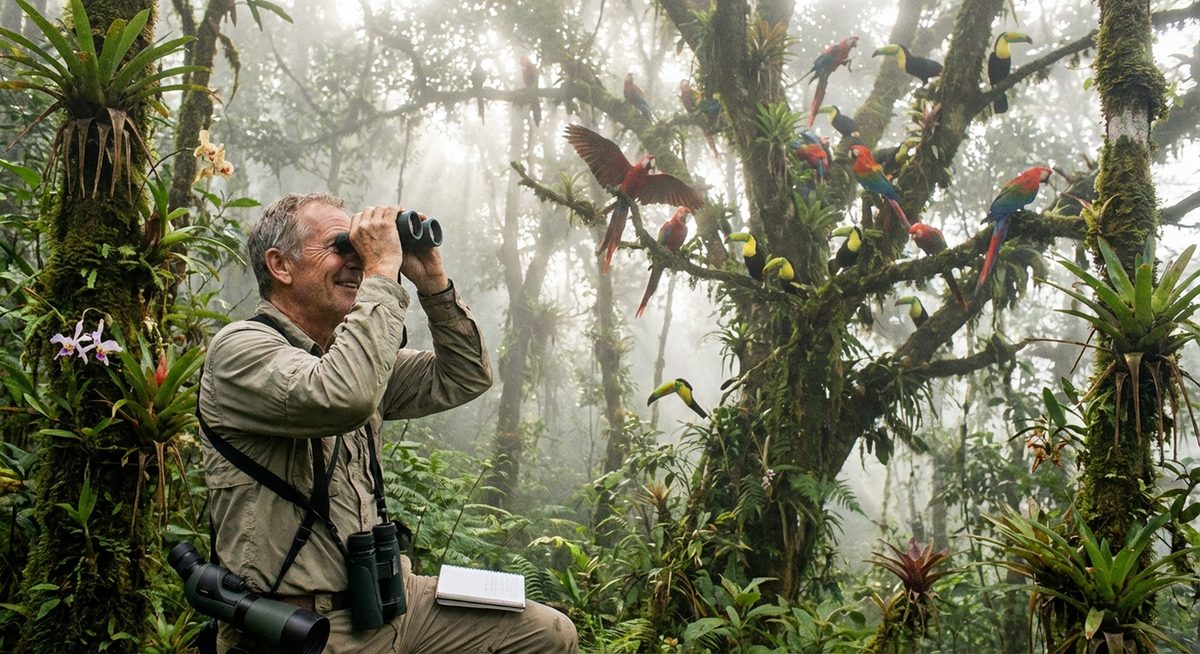
Peru is one of the most extraordinary birding destinations on the planet. With over 1,800 recorded bird species, the country ranks third globally for avian diversity, behind only Colombia and Brazil. From the soaring Andean condor circling above 4,000-meter peaks to vibrantly colored macaws gathering at riverside clay licks in the Amazon basin, Peru birds represent an astonishing range of families, behaviors, and habitats. Whether you are a seasoned lister chasing rarities or a casual nature enthusiast hoping to see your first toucan in the wild, this guide covers everything you need to plan a memorable bird watching trip to Peru.
Why Peru Is a Birding Paradise
Peru's staggering bird diversity stems from its remarkable geography. The country compresses nearly every climate zone into a single landmass: arid coastal deserts, high-altitude puna grasslands, Andean cloud forests, and the vast lowland Amazon rainforest. Each of these ecosystems supports distinct bird communities, and the transitions between them create unique microhabitats where range-restricted endemics thrive.
More than 100 bird species are found exclusively within Peru's borders. The country also sits along a major Neotropical flyway, attracting dozens of migratory species from both North and South America during their respective migration seasons. Add in the fact that new species are still being discovered — several have been described since 2010 — and it becomes clear why ornithologists and birding tour operators consistently rank Peru among the top three birding countries in the world.
Peru's biodiversity extends well beyond birds. The same forests and mountains that shelter rare avian species are home to some of the cutest and most fascinating animals in South America, including spectacled bears, pink river dolphins, and dozens of monkey species. If you are already planning a wildlife-focused trip, combining bird watching with broader animal encounters is remarkably easy here.
Top Bird Watching Locations in Peru
Manu National Park
Manu is arguably the single greatest birding site on Earth. Straddling the eastern slope of the Andes from cloud forest down to lowland Amazonian jungle, Manu National Park and its surrounding biosphere reserve have recorded over 1,000 bird species within their boundaries. That figure represents roughly 10 percent of all bird species known to science, concentrated in a single protected area.
Key species at Manu include the Andean cock-of-the-rock, whose males perform elaborate courtship displays at communal leks each dawn. You can read more about this remarkable bird in our dedicated article on the Andean cock-of-the-rock. Other highlights include mixed-species flocks of tanagers and furnariids in the cloud forest, harpy eagles nesting in emergent ceiba trees, and the bizarre hoatzin lounging along oxbow lake edges.
The lush vegetation in these forests is as spectacular as the birds themselves. The canopy layers that shelter toucans and trogons are formed by tropical rainforest plants ranging from towering kapok trees to delicate orchids and bromeliads that serve as critical microhabitats for many small bird species.
Tambopata National Reserve
Located in southeastern Peru near the city of Puerto Maldonado, Tambopata is famous for its macaw clay licks (collpas). Each morning, hundreds of scarlet macaws, blue-and-yellow macaws, and various parrot species descend on exposed riverbank clay deposits to consume minerals that help them neutralize toxins in their fruit-heavy diet. The spectacle of dozens of large macaws wheeling against the green forest backdrop is one of the most photographed wildlife scenes in South America.
Beyond the clay licks, Tambopata offers excellent trail birding in terra firme and varzea forest. Species lists regularly exceed 600 for multi-day visits. Notable finds include the rufous-headed woodpecker, razor-billed curassow, and the elusive zigzag heron. The reserve is also an excellent base for exploring the broader Peruvian Amazon, one of the most biodiverse regions anywhere on the planet.
Colca Canyon
Colca Canyon, located northwest of Arequipa, is the premier site in Peru for observing Andean condors at close range. The canyon's powerful thermal updrafts carry these enormous birds — with wingspans exceeding three meters — to eye level or even below the viewing platforms at Cruz del Condor. Early morning visits between 8:00 and 10:00 AM typically yield the best sightings, as condors ride the warming air currents up from the canyon floor.
The surrounding high-altitude scrub and polylepis woodland also supports species such as the giant hummingbird (the world's largest hummingbird), the Andean flicker, mountain caracara, and several species of sierra finch. Colca is a must-visit stop on any tour of Peru's top destinations.
Huascaran National Park
In the Cordillera Blanca of north-central Peru, Huascaran National Park protects dramatic glaciated peaks and high-altitude lakes that attract a specialized suite of Andean birds. Look for the white-capped dipper along rushing mountain streams, Andean geese on glacial lakes, and the striking black-breasted hillstar hummingbird hovering above patches of red-flowering Puya bromeliads. Polylepis woodlands scattered through the park harbor several range-restricted species, making them priority habitats for birders.
Machu Picchu and the Inca Trail Region
The cloud forests surrounding Machu Picchu provide surprisingly productive birding. The trail from Aguas Calientes up to the ruins passes through subtropical vegetation where you can find the Inca wren (a Machu Picchu endemic), green-and-white hummingbird, and Andean motmot. The broader Urubamba Valley, from Ollantaytambo down through the Quillabamba road, is considered one of the top birding routes in the Andes, with potential for well over 400 species on a multi-day itinerary.
Paracas National Reserve
Peru's coast offers a dramatically different birding experience. Paracas, located south of Lima on the arid Pacific shoreline, is home to enormous colonies of Humboldt penguins, Peruvian boobies, guanay cormorants, and Chilean flamingos. Boat trips to the Ballestas Islands reveal thousands of nesting seabirds and offer chances to spot the rare Peruvian diving-petrel. The cold Humboldt Current creates some of the most productive marine waters in the world, supporting seabird concentrations that rival anything in the Southern Ocean.
Common Birds of Peru You Should Know
While the endemic rarities attract hardcore birders, many common birds of Peru are just as visually stunning and far easier to observe. Here are the species most visitors encounter:
- Andean condor — The symbol of the Andes, visible at Colca Canyon and throughout highland regions. One of the world's largest flying birds.
- Scarlet macaw — Brilliant red, blue, and yellow plumage. Best seen at Tambopata clay licks.
- Andean cock-of-the-rock — Peru's national bird, with the males' vivid orange plumage and disc-shaped crest. Found in cloud forests between 500 and 2,400 meters.
- Toucans — Several species inhabit the Amazon lowlands, including the channel-billed and white-throated toucans, recognizable by their oversized colorful bills.
- Hummingbirds — Peru hosts over 120 hummingbird species. The booted racket-tail and marvelous spatuletail are perennial favorites among birders.
- Harpy eagle — The most powerful raptor in the Americas, found in undisturbed lowland forests. Rare but possible at Manu and Tambopata.
- Hoatzin — Sometimes called the "stinkbird," this prehistoric-looking species perches along Amazonian oxbow lakes and is unmistakable.
- Humboldt penguin — An unexpected coastal resident, breeding on rocky islands along Peru's southern coastline.
Many of these species overlap with the broader roster of must-see animals in Peru, so a single trip can combine bird watching with encounters with mammals, reptiles, and amphibians.
Best Time to Visit Peru for Bird Watching
Peru can be birded year-round, but the dry season from May to October is generally preferred for most regions. During these months, trails are more accessible, river levels are lower (making clay lick visits easier), and early morning skies tend to be clearer. The dry season also coincides with the breeding season for many Andean species, meaning more vocal activity and easier detection.
That said, the wet season (November through April) has its own advantages. Migratory species from North America are present, fruiting trees attract large flocks, and some species are more vocal during the breeding months. Serious listers often plan two trips: one in the dry season for highland and Amazon birding, and one in the wet season for coastal and migratory species.
For the coastal regions around Paracas, the austral winter months (June to August) bring the largest seabird concentrations and the highest probability of spotting pelagic species from shore or by boat.
Essential Gear for Birding in Peru
Packing smartly can make the difference between a productive birding trip and a frustrating one. Here is what experienced Peru birders recommend:
- Binoculars — 8x42 or 10x42 models offer the best balance of magnification and light-gathering for forest birding. Waterproof construction is essential for Amazon trips.
- Spotting scope — Useful in open habitats like the puna or at Colca Canyon, but too heavy for most forest trails.
- Field guide — "Birds of Peru" by Schulenberg, Stotz, Lane, O'Neill, and Parker is the standard reference and fits in a daypack.
- Layered clothing — Temperatures can swing from near-freezing at dawn in the highlands to over 30°C in the lowlands by midday. Moisture-wicking base layers plus a light down jacket cover most situations.
- Rubber boots — Provided at most Amazon lodges. Essential for muddy forest trails and stream crossings.
- Insect repellent and sun protection — High-DEET repellent for the Amazon; strong SPF for highland UV exposure.
- Camera with telephoto lens — A 100–400mm zoom lens is versatile enough for most bird photography in Peru, though the most serious photographers carry 500mm or 600mm primes.
- Sound recording app — Merlin Bird ID or eBird Mobile help with identification and also contribute to citizen science databases.
Guided Tours vs Solo Birding in Peru
Peru offers excellent opportunities for both guided and independent birders, but the choice depends on your experience level and target species.
Guided tours are the most efficient way to find rare and range-restricted species. Local guides at sites like Manu and Tambopata have spent years learning where specific species roost, feed, and display. They can identify birds by call — a critical skill in dense tropical forest where many species are heard far more often than seen. Reputable operators include Rainforest Expeditions, Manu Expeditions, and Kolibri Expeditions. Multi-day guided tours typically cost between $150 and $350 per person per day, inclusive of lodging, meals, and transport.
Solo birding is entirely feasible at accessible sites like Colca Canyon, the Manu Road (paved sections), Huascaran, and the Lima area. Peru's birding infrastructure has improved dramatically in recent years, with well-marked trails, eBird hotspot data, and local bird guide cooperatives at many sites. Independent birders should budget extra time, as locating key species without a guide can take significantly longer.
A middle-ground option is hiring a local bird guide for a single day at a specific site. Day rates for freelance guides range from $50 to $150 depending on the region and the guide's reputation. This approach lets you combine the expertise of a local guide with the flexibility of independent travel.
Bird Conservation in Peru
Despite its incredible diversity, Peru faces real conservation challenges. Deforestation in the Amazon basin, mining in highland areas, and agricultural expansion in cloud forest zones all threaten critical bird habitats. Several species, including the royal cinclodes and the white-bellied cinclodes, are classified as critically endangered due to extremely small remaining populations tied to vanishing polylepis woodlands.
Conservation organizations active in Peru include SERNANP (the national protected areas service), the Asociación Ecosistemas Andinos, and international groups like the American Bird Conservancy. Birding tourism directly supports conservation by providing economic incentives for local communities to protect forest rather than clear it. Many of the lodges in Manu and Tambopata reinvest a portion of their revenue into habitat protection and reforestation projects.
As a visiting birder, you can contribute by using eBird to log your observations (Peru data helps researchers track population trends), choosing lodges and operators with demonstrated conservation commitments, and respecting guidelines around playback use and trail etiquette at sensitive breeding sites.
Peru's wildlife extends far beyond birds, of course. Even the humble guinea pig holds a special place in Peruvian culture, serving as both a beloved pet and a traditional food source in highland communities — a reminder that the relationship between Peruvians and their native fauna runs deep and complex.
Planning Your Birding Itinerary
A comprehensive Peru birding trip typically requires at least two to three weeks to cover the main habitat types. Here is a suggested framework:
- Days 1–2: Lima area — Pantanos de Villa wetlands for coastal species, acclimatization.
- Days 3–5: Paracas and Ballestas Islands — seabirds, penguins, flamingos.
- Days 6–8: Colca Canyon — condors, highland species.
- Days 9–11: Cusco and Machu Picchu area — cloud forest birding.
- Days 12–17: Manu or Tambopata — Amazon lowland and foothill birding.
- Days 18–20: Northern highlands (optional extension) — marvelous spatuletail, long-whiskered owlet.
With this itinerary, experienced birders can realistically tally 500 to 700 species. Those with more time and a willingness to visit remote sites like the Abra Patricia area in Amazonas department can push that number significantly higher.
Frequently Asked Questions About Bird Watching in Peru
How many bird species are found in Peru?
Peru has over 1,800 confirmed bird species, making it the third most bird-rich country in the world after Colombia and Brazil. New species continue to be discovered, particularly in remote cloud forest areas on the eastern Andean slope. More than 100 of these species are endemic, meaning they are found nowhere else on Earth.
What is the best time of year for bird watching in Peru?
The dry season from May to October is generally the best period for birding in most regions of Peru. Trails are drier, visibility is better, and many species are breeding and therefore more active. However, the wet season (November to April) brings migratory species and heavy fruiting that attracts large mixed flocks, making it worthwhile for birders targeting specific seasonal species.
Do I need a guide for bird watching in Peru?
While not strictly necessary at accessible sites like Colca Canyon or the Lima wetlands, a local guide dramatically increases your chances of finding rare and difficult species. In dense forest habitats like Manu or Tambopata, a guide who knows bird calls and nesting locations is practically essential. You can hire freelance guides for $50 to $150 per day at most major birding sites.
Where can I see Andean condors in Peru?
Colca Canyon near Arequipa is the most reliable site for observing Andean condors at close range. The viewing platform at Cruz del Condor offers sightings on most mornings, typically between 8:00 and 10:00 AM. Condors are also regularly seen in the Apurimac Valley and at various highland sites above 3,500 meters throughout the Andes.
What are the common birds of Peru that beginners can easily spot?
Common birds of Peru that beginners frequently encounter include the black vulture (urban areas), rufous-collared sparrow (highlands), tropical kingbird (lowlands), bananaquit (gardens), great kiskadee (widespread), and various tanager species. At lodges and feeding stations, hummingbirds like the sparkling violetear and green-tailed trainbearer are easy to observe at close range.
Is Manu National Park worth visiting for birds?
Absolutely. Manu National Park has recorded over 1,000 bird species, making it one of the single richest birding sites on the planet. The park spans from high-altitude grasslands through cloud forest to lowland Amazon jungle, meaning you can see an extraordinary range of habitat-specific species in one trip. Multi-day tours from Cusco are the standard way to visit.
Can I see macaws at clay licks in Peru?
Yes. The Tambopata National Reserve in southeastern Peru is famous for its macaw clay licks (collpas), where hundreds of scarlet macaws, blue-and-yellow macaws, and various parrot species gather each morning. The Chuncho and Colorado clay licks are the most visited. Early morning visits (6:00 to 9:00 AM) offer the best activity, though weather and predator presence can affect timing.
What camera equipment should I bring for bird photography in Peru?
A DSLR or mirrorless camera with a 100–400mm telephoto zoom lens covers most situations. Serious bird photographers often bring a 500mm or 600mm prime lens for canopy species and distant perchers. A lightweight tripod or monopod helps with stability in low forest light. Make sure all equipment is weather-sealed, and bring silica gel packets for humidity protection in the Amazon.
Are there endemic bird species unique to Peru?
Peru has more than 100 endemic bird species found nowhere else in the world. Notable endemics include the marvelous spatuletail (a hummingbird with extraordinary tail feathers found only in the Utcubamba Valley), the white-winged guan (rediscovered in 1977 after being thought extinct), the Inca wren near Machu Picchu, and several recently described species from cloud forest habitats in the Amazonas and San Martin departments.
How much does a birding trip to Peru cost?
Costs vary widely depending on your travel style. Budget-conscious birders staying in hostels and birding independently can manage on $60 to $100 per day. Mid-range guided tours typically run $150 to $250 per person per day including accommodation, meals, and guide fees. Premium lodge-based tours in Manu or Tambopata range from $250 to $400 per day. International flights to Lima are additional. A comprehensive two-to-three-week birding trip typically totals $3,000 to $8,000 per person, excluding flights.