25 Fascinating Facts About the Peruvian Amazon Rainforest You Should Know
The Peruvian Amazon is one of the most biodiverse places on the planet, and yet most travelers only scratch the surface of what this vast wilderness holds. Spanning over 60% of Peru's total landmass, the Amazon basin in Peru is home to thousands of unique species, dozens of indigenous communities, and ecosystems that scientists are still working to fully understand. Whether you are planning a trip to the jungle or simply want to learn more about this extraordinary region, these 25 Peru rainforest facts will change the way you think about the Amazon.
Geography and Size of the Peruvian Amazon
1. The Amazon rainforest covers roughly 60% of Peru's territory. That amounts to approximately 782,800 square kilometers of dense tropical forest. While Brazil holds the largest share of the Amazon basin overall, Peru has the second-largest portion, making it one of the most jungle-covered countries in South America.
2. The source of the Amazon River begins in Peru. For decades, geographers debated the river's origin, but studies have confirmed that the Amazon's most distant source is the Mantaro River system in the Peruvian Andes, near Nevado Mismi in the Arequipa region. From this high-altitude trickle, water flows thousands of kilometers to the Atlantic Ocean.
3. Peru's Amazon region is divided into two ecological zones. The selva alta (high jungle) sits between 400 and 1,000 meters above sea level on the eastern slopes of the Andes. The selva baja (low jungle) lies below 400 meters and consists of flat, dense tropical rainforest. Each zone supports different wildlife and vegetation.
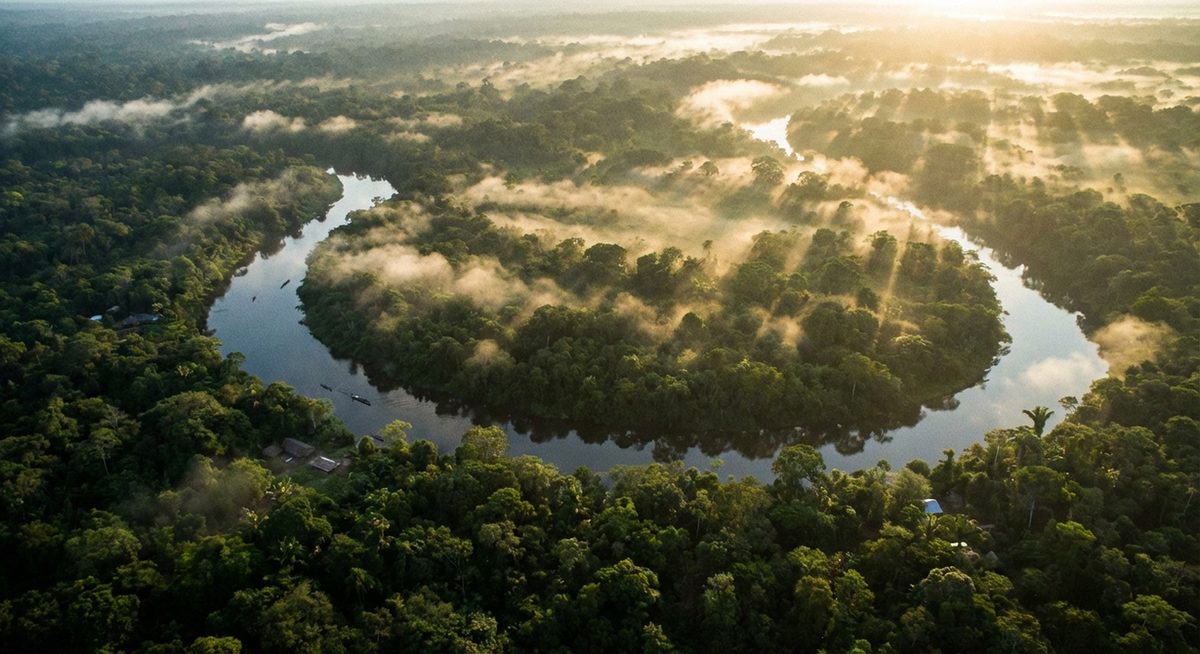
4. The Peruvian Amazon contains the Pacaya-Samiria National Reserve, the largest protected flooded forest in the world. Covering over 20,800 square kilometers in the Loreto region, this vast reserve is sometimes called the "Jungle of Mirrors" because of its calm, reflective waterways during the flood season. It is a critical refuge for pink river dolphins and giant river otters.
Biodiversity: A Living Laboratory
5. Peru ranks among the top five most biodiverse countries on Earth. The country is home to approximately 1,847 species of birds, 508 species of mammals, 855 species of reptiles and amphibians, and more than 25,000 species of flowering plants. A vast majority of these species live in the Amazon basin. Peru's cutest animals include many jungle dwellers that visitors rarely expect to encounter.
6. Manu National Park holds the world record for bird species in a single protected area. Over 1,000 bird species have been recorded within Manu's boundaries alone, making it a legendary destination for bird watching in Peru. This count exceeds the total bird species found in the entire continent of Europe.
7. A single hectare of Peruvian Amazon forest can contain over 300 tree species. That is more tree species in one hectare than exist across all of Canada. The Tambopata region, in particular, has been the site of studies documenting this staggering level of botanical diversity.
8. Scientists estimate there are more than 100,000 insect species in Peru's Amazon. Many have never been formally described or catalogued. Entomologists working in the Madre de Dios region regularly discover species new to science during field surveys. Leaf-cutter ants alone can form colonies with over eight million individuals.
Indigenous Communities and Culture
9. At least 51 distinct indigenous ethnic groups live in the Peruvian Amazon. These communities speak a wide range of languages belonging to at least 17 different language families. The Ashuar, Shipibo-Conibo, Matsigenka, and Awajun are among the larger groups, each with distinct cultural traditions, art forms, and cosmologies.
10. Peru is home to some of the world's last uncontacted tribes. The government has designated several intangible zones in the Amazon where uncontacted or voluntarily isolated peoples are believed to live. These protected areas, such as the Murunahua Territorial Reserve and the Kugapakori-Nahua-Nanti Reserve, prohibit outsiders from entering in order to protect these communities from disease and exploitation.
11. Ayahuasca ceremonies have been practiced by Amazonian indigenous groups for centuries. This plant-based brew, made from the Banisteriopsis caapi vine and other ingredients, plays a central role in spiritual and healing practices among many Peruvian jungle communities. In recent decades, it has drawn international attention from researchers and travelers alike. You can learn more about experiences with the ayahuasca ceremony to understand the cultural significance of this tradition.
Remarkable Flora of the Peruvian Jungle
12. The Peruvian Amazon contains over 80,000 plant species, many found nowhere else. Among these are towering ceiba trees that can reach 70 meters in height, strangler figs that slowly encase their host trees, and bromeliads that create miniature aquatic ecosystems in their leaf rosettes. For a deeper look at the plant life, see our guide to tropical rainforest plants native to Peru.
13. More than 1,400 plant species in the Peruvian Amazon have documented medicinal properties. Indigenous healers, known as curanderos, have used these plants for generations to treat everything from infections to digestive ailments. Cat's claw (Una de gato), dragon's blood (Sangre de grado), and the cinchona tree, from which quinine is derived, all originate from Peru's jungle.
14. The Victoria amazonica water lily, with pads up to three meters across, thrives in Peruvian oxbow lakes. These enormous lily pads can support the weight of a small child and are pollinated by beetles that get trapped inside the flower overnight. They are most commonly found in the still waters of Pacaya-Samiria and the lakes surrounding Iquitos.
15. The Amazon's canopy layer blocks up to 99% of sunlight from reaching the forest floor. This creates a dim, humid understory where specialized shade-tolerant plants have evolved unique adaptations. Some plants have leaves large enough to serve as rain shelters, while others have evolved bioluminescent fungi on their root systems.
Iconic Fauna of the Peruvian Amazon
16. The jaguar is the apex predator of the Peruvian Amazon. Although elusive and rarely seen, Peru's Tambopata and Manu regions support healthy populations of this big cat. Jaguars in the Amazon hunt caimans, peccaries, and capybaras, and they play a critical role in maintaining the ecological balance. Jaguars are among the must-see animals in Peru for wildlife enthusiasts.
17. The Amazon pink river dolphin (Inia geoffrensis) is the largest freshwater dolphin in the world. Growing up to 2.5 meters long and weighing over 180 kilograms, these dolphins get pinker as they age. In Amazonian folklore, they are believed to be shape-shifters who transform into handsome men at night. Pacaya-Samiria is one of the best places to spot them.
18. Peru's Amazon is home to the largest flying parrot species, the hyacinth macaw, and the iconic scarlet macaw. Clay licks, known as collpas, attract hundreds of macaws and parrots at dawn. The Tambopata clay lick is one of the largest in the world and provides a spectacular natural display. The Andean cock-of-the-rock, Peru's national bird, inhabits the cloud forests where the Andes meet the Amazon.
19. Giant river otters, locally called "lobos de rio," can grow up to 1.8 meters long. These highly social animals live in family groups of up to 15 individuals and are skilled cooperative hunters. They are listed as endangered, but the oxbow lakes of Manu and Tambopata remain important strongholds for their survival.
20. Guinea pigs were originally domesticated in the Andean-Amazonian transition zone of Peru over 3,000 years ago. Known as cuy in Peru, these animals remain an important part of Peruvian culture and cuisine, especially in highland and jungle communities. Learn about the relationship between guinea pigs and Peruvian culture for more on this unique connection.
Rivers, Climate, and Waterways
21. The Amazon River discharges more water into the ocean than any other river on Earth. Approximately 20% of all freshwater that enters the world's oceans comes from the Amazon system. Many of its major tributaries, including the Ucayali, Marañón, and Huallaga rivers, flow through Peruvian territory before converging near Iquitos to form the main trunk of the Amazon.
22. Iquitos is the largest city in the world that cannot be reached by road. With a population of roughly 500,000 people, Iquitos sits deep in the Peruvian Amazon and is accessible only by airplane or river boat. The city serves as the main gateway for jungle expeditions and has a vibrant cultural life shaped by its isolation. Knowing how much it costs to visit the Amazon rainforest can help you plan your route through Iquitos.
23. The Peruvian Amazon receives between 2,000 and 3,000 millimeters of rain annually. The wet season runs roughly from November to April, when rivers swell by several meters and vast stretches of forest become flooded (várzea and igapó forests). The dry season, from May to October, is generally considered the best time for wildlife viewing and trekking.
Threats, Conservation, and the Future
24. Deforestation and illegal gold mining are the two greatest threats to the Peruvian Amazon. Between 2001 and 2023, Peru lost over 26,000 square kilometers of primary forest, much of it in the Madre de Dios region due to alluvial gold mining. Mercury used in the extraction process contaminates rivers, poisons fish, and harms indigenous communities downstream. Agricultural expansion for palm oil and cacao also drives forest clearing at an alarming rate.
25. Peru has established over 25 million hectares of protected natural areas, many in the Amazon. National parks like Manu, Tambopata-Candamo, Cordillera Azul, and Alto Purús play a vital role in preserving biodiversity. Community-managed conservation areas and indigenous territorial reserves add additional layers of protection. Ecotourism has emerged as an important economic alternative to extractive industries, providing income to local communities while incentivizing forest preservation.
Visiting the Peruvian Amazon: What to Expect
Traveling to the Peruvian Amazon is unlike any other experience. Most visitors fly into Iquitos, Puerto Maldonado, or Tarapoto and then travel by boat to a jungle lodge. Multi-day expeditions typically include guided jungle hikes, canoe trips through flooded forests, piranha fishing, visits to clay licks, nighttime caiman spotting, and visits to indigenous communities.
The best time to visit depends on what you want to see. The dry season (May through October) offers easier trail access and more concentrated wildlife around shrinking water sources. The wet season (November through April) brings higher water levels ideal for canoe exploration, and the forest is at its most lush and green. Either way, expect hot and humid conditions year-round, with temperatures averaging 26 to 30 degrees Celsius.
For those planning a trip, our guide to the top destinations in Peru covers the key jungle regions alongside Peru's coastal and highland highlights. And before heading out, make sure you read up on whether Peru is safe for tourists, including practical safety tips for jungle travel.
Frequently Asked Questions About the Peruvian Amazon
How much of Peru is covered by the Amazon rainforest?
Approximately 60% of Peru's total land area is covered by Amazon rainforest, making it the second-largest holder of Amazon territory after Brazil. This amounts to roughly 782,800 square kilometers of tropical forest spanning the eastern side of the country from the Andean foothills to the lowland river basins.
What animals live in the Peruvian Amazon?
The Peruvian Amazon is home to jaguars, pink river dolphins, giant river otters, harpy eagles, scarlet macaws, anacondas, capybaras, tapirs, howler monkeys, poison dart frogs, and thousands of insect and fish species. With over 500 mammal species and 1,800 bird species recorded in Peru, the Amazon basin hosts the majority of this wildlife.
Where does the Amazon River start in Peru?
The Amazon River's most distant source is the Mantaro River system, which originates near Nevado Mismi in Peru's Arequipa region at over 5,000 meters elevation. The water flows through the Apurimac, Ene, and Tambo rivers before becoming the Ucayali, which joins the Marañón River near Iquitos to form the main Amazon trunk.
Is it safe to visit the Peruvian Amazon?
Yes, visiting the Peruvian Amazon is generally safe when you travel with a reputable tour operator and stay at established jungle lodges. Common precautions include getting yellow fever and other recommended vaccinations, using insect repellent, drinking purified water, and following your guide's instructions regarding wildlife encounters and river navigation.
What is the best time of year to visit the Peruvian Amazon?
The dry season from May to October is considered the best time for jungle hikes, wildlife spotting, and visiting clay licks. The wet season from November to April offers higher water levels ideal for canoe excursions through flooded forests. Both seasons have unique advantages, and wildlife is present year-round.
How many indigenous tribes live in the Peruvian Amazon?
At least 51 distinct indigenous ethnic groups live in the Peruvian Amazon, speaking languages from 17 different language families. Some of these communities, including several in the Murunahua and Kugapakori-Nahua-Nanti reserves, remain voluntarily uncontacted and are protected by Peruvian law from outside interference.
What are the biggest threats to the Peruvian Amazon?
The primary threats are illegal gold mining, deforestation for agriculture (especially palm oil and cacao), logging, and oil and gas exploration. Mercury contamination from gold mining is particularly damaging to river ecosystems and the health of indigenous communities. Climate change also poses a growing risk through altered rainfall patterns and increased drought frequency.
What medicinal plants come from the Peruvian Amazon?
Over 1,400 plant species in the Peruvian Amazon have documented medicinal uses. Notable examples include cat's claw (Una de gato) used for immune support, dragon's blood (Sangre de grado) for wound healing, the cinchona tree from which quinine is derived to treat malaria, and ayahuasca (Banisteriopsis caapi) used in traditional healing ceremonies.
How do I get to Iquitos in the Peruvian Amazon?
Iquitos is the largest city in the world with no road access, so you must arrive by airplane or river boat. Flights from Lima take about two hours and are offered by several Peruvian airlines. River travel from Pucallpa or Yurimaguas takes several days by cargo or passenger boat along the Ucayali or Huallaga rivers.
What national parks protect the Peruvian Amazon?
Key protected areas include Manu National Park (a UNESCO World Heritage Site known for record bird diversity), Tambopata National Reserve (famous for its clay licks and giant otters), Pacaya-Samiria National Reserve (the largest protected flooded forest), Cordillera Azul National Park, and Alto Purús National Park. Together, Peru protects over 25 million hectares of Amazonian territory.