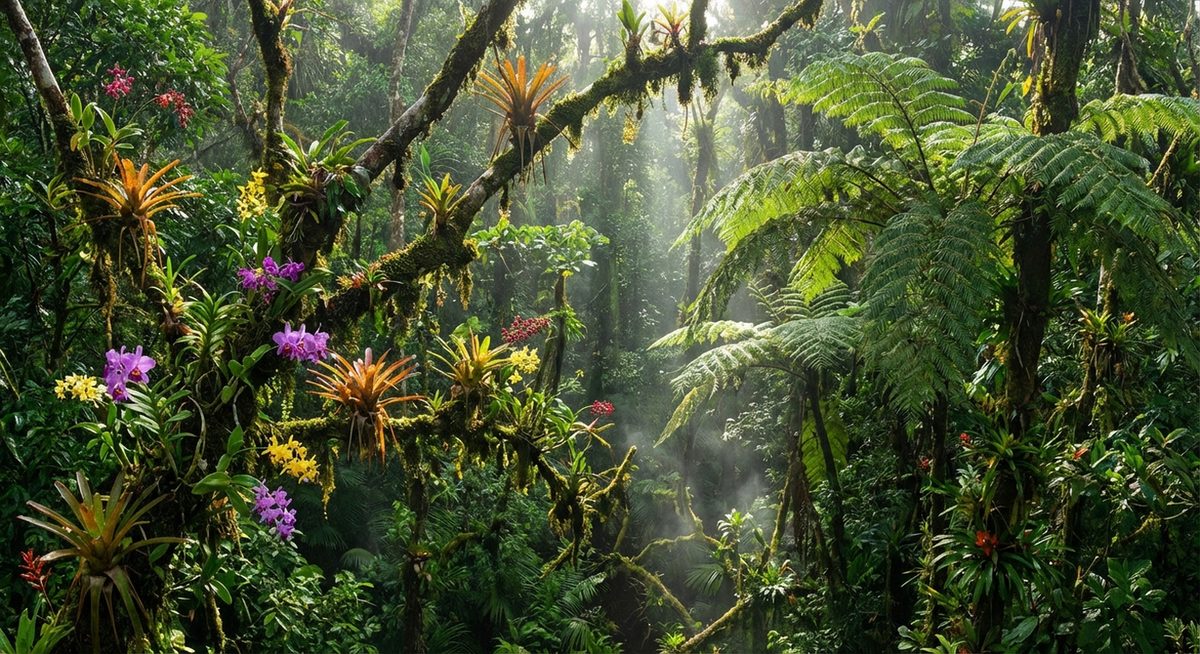
Tropical Rainforest Plants: A Complete Guide to the World's Most Extraordinary Flora
Tropical rainforests cover barely six percent of the Earth's surface, yet they shelter more than half of all known plant species. From towering canopy trees that reach sixty meters into the sky to microscopic mosses clinging to bark in perpetual shade, tropical rainforest plants represent the most diverse botanical community on the planet. Scientists estimate that a single hectare of Amazonian forest can contain over 400 tree species—more than the entire native tree count of most European countries combined.
Whether you are a botany student, an armchair explorer, or planning a trip to Peru's Amazon rainforest, understanding the plants in the tropical rainforest opens a window into one of the most complex ecosystems ever evolved. This guide walks through the major plant groups, highlights unique rainforest plants you can encounter in the wild, and explains why protecting this flora matters more than ever.
Understanding the Tropical Rainforest Biome
The tropical rainforest biome stretches across a belt around the equator, spanning Central and South America, Central Africa, Southeast Asia, and Oceania. These forests thrive where annual rainfall exceeds 2,000 millimeters and average temperatures hover between 25 and 28 degrees Celsius year-round. The absence of a true dry season allows continuous growth, which is why tropical forest plants display such staggering variety.
Rainforests are organized into distinct vertical layers. The emergent layer rises above the main canopy, catching full sunlight but enduring fierce winds. Below it, the canopy forms a dense, continuous ceiling of branches and leaves. The understory receives only two to five percent of available light, while the forest floor is shrouded in near-darkness. Each layer supports its own community of plants that live in the rainforest, adapted to very different conditions of light, moisture, and airflow.
South America holds the largest share of this biome. The Amazon Basin alone spans roughly 5.5 million square kilometers, with Peru's portion—the Peru tropical rainforest—accounting for about 60 percent of the country's territory. This makes Peru one of the most megadiverse nations on Earth, with an estimated 25,000 plant species, many of them endemic.
Epiphytes: Orchids, Bromeliads, and Ferns
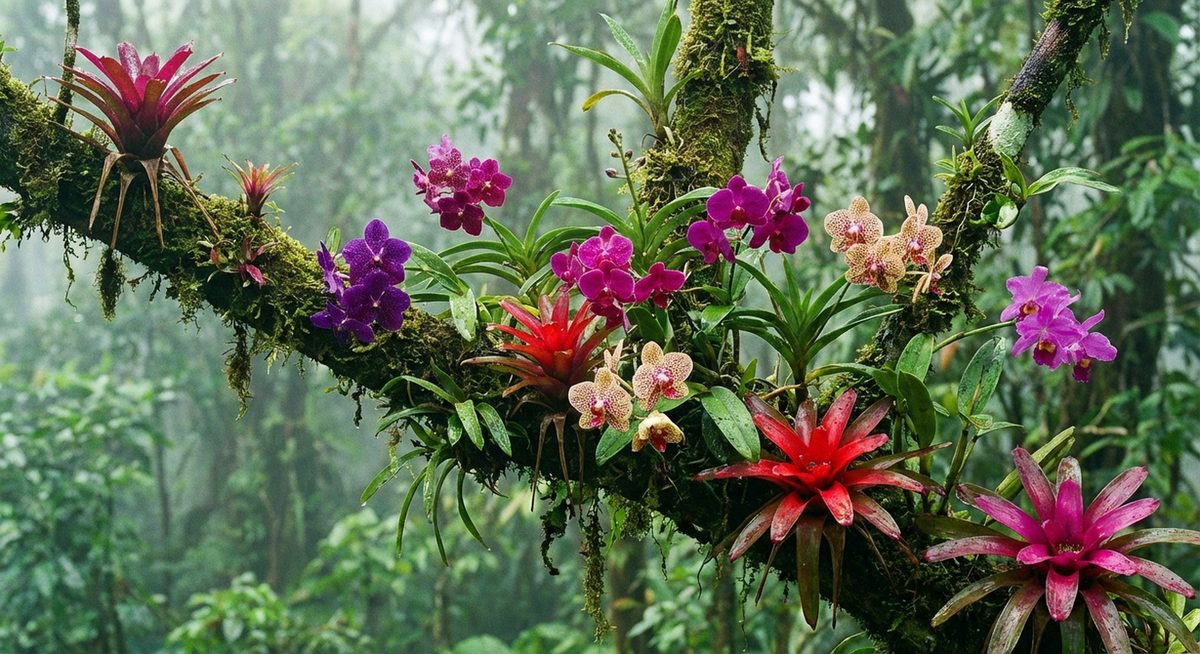
Epiphytes are plants that grow on other plants without parasitizing them. They perch on branches and trunks to access light in the dim understory, gathering moisture and nutrients from the air, rain, and organic debris that accumulates around their roots. Roughly 29,000 species of epiphytes have been identified worldwide, and the vast majority occur in tropical rainforests.
Orchids
Orchids are the undisputed royalty among tropical rainforest flowers. The family Orchidaceae contains over 28,000 species, making it the largest flowering plant family on Earth. In the Peruvian Amazon, orchid diversity is extraordinary—Manu National Park alone hosts more than 2,000 documented orchid species. Many produce intricate blooms that mimic insects or release complex scents to attract specific pollinators. The monkey face orchid (Dracula simia), native to the cloud forests of Peru and Ecuador, is a striking example of this evolutionary artistry.
Bromeliads
Bromeliads form rosettes of stiff leaves that channel rainwater into a central "tank." These miniature ponds can hold several liters of water and become entire ecosystems in themselves, sheltering frogs, insects, and even small crabs. Some of Peru's cutest animals depend on bromeliads for breeding habitat. The pineapple is the most famous bromeliad, but its wild relatives festoon branches throughout the Amazon canopy in dense clusters of green, red, and purple.
Ferns
Tree ferns and filmy ferns thrive in the humid lower levels of the rainforest. Some tree ferns grow trunks up to fifteen meters tall, creating a sub-canopy of their own. Filmy ferns, by contrast, have leaves only one cell thick—so translucent that light passes through them like stained glass. These ancient plants predate the dinosaurs and remain a dominant feature of the plants in tropical rainforest understories.
Canopy Giants: Kapok, Rubber, and Brazil Nut Trees
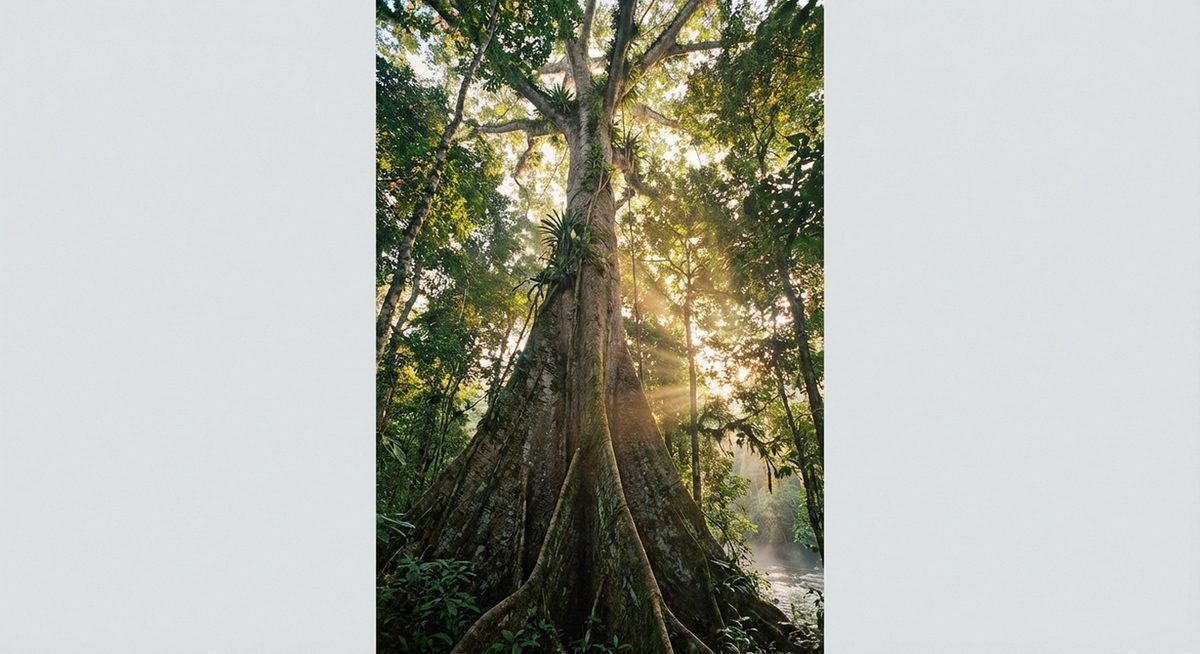
The canopy and emergent layers are dominated by massive trees whose crowns form the roof of the forest. These giants compete fiercely for sunlight, sending buttress roots across the forest floor for stability and growing straight, branchless trunks for dozens of meters before spreading their crowns.
Kapok Tree (Ceiba pentandra)
The kapok, also called ceiba, is one of the tallest trees in the Amazonian forest, regularly reaching 60 to 70 meters. Its trunk can exceed three meters in diameter, and its buttress roots can extend five meters from the base. The kapok is sacred to many indigenous groups across the Amazon. Its seed pods produce a silky fiber traditionally used to stuff pillows, life jackets, and insulation. Bats are the primary pollinators of its large, cream-colored flowers, which open at night and emit a musky odor.
Rubber Tree (Hevea brasiliensis)
The rubber tree shaped modern history. Native to the Amazon Basin, it produces a milky latex that indigenous peoples used for centuries to waterproof containers and make balls for ceremonial games. The rubber boom of the late 1800s transformed cities like Iquitos and Manaus into wealthy trading posts, though it also brought devastating exploitation of indigenous populations. Today, wild rubber trees still grow throughout the Peruvian Amazon, and sustainable tapping programs offer income to forest communities.
Brazil Nut Tree (Bertholletia excelsa)
The Brazil nut tree stands among the most ecologically and economically important amazon rainforest plants. It can live for over 500 years and reach 50 meters in height. Its large, woody fruit capsules weigh up to two kilograms and fall from the canopy with enough force to injure anyone below—a genuine hazard during harvest season. Only the agouti, a large rodent, has teeth strong enough to gnaw open the capsule, making it the tree's primary seed disperser. Brazil nut harvesting remains one of the most sustainable forms of forest income in the Amazon, since the trees only produce nuts in intact, old-growth forest.
Understory Plants: Adapting to Life in the Shadows
The understory of a tropical rainforest receives a fraction of the sunlight that bathes the canopy. Plants here have evolved enormous leaves to capture every available photon, deep green pigments to maximize photosynthesis, and flexible stems that allow them to bend without breaking when larger debris falls from above.
Heliconias, sometimes called lobster claws, are iconic understory plants in the tropical rainforest. Their bright red, orange, and yellow bracts stand out against the dark forest floor and attract hummingbirds as pollinators. Some heliconia species have evolved bracts that exactly match the beak curvature of a single hummingbird species—an example of coevolution so tight that if one partner disappears, the other may follow.
Palms also dominate the understory. The walking palm (Socratea exorrhiza) is famous for its stilt roots, which give the impression the tree can slowly "walk" toward light gaps. While the extent of this movement is debated among scientists, the stilt roots unquestionably allow the palm to colonize steep slopes and waterlogged soils that would topple other trees. Many species of animals in Peru rely on understory palms for food and shelter.
Aquatic Marvels: Goliath Water Lilies and Victoria Amazonica
The slow-moving rivers, oxbow lakes, and flooded forests of the Amazon host remarkable aquatic plants. The most famous is the goliath water lily (Victoria amazonica), whose circular leaves can span up to three meters in diameter. The leaf edges turn upward, forming a lip that keeps water from submerging the surface, and the underside is reinforced with a radial network of ribs that inspired the design of the Crystal Palace in London. A single leaf can support the weight of a small child distributed evenly across its surface.
Victoria amazonica flowers are equally spectacular. Each bloom opens white on the first evening, trapping beetles inside with a sweet scent and elevated temperature. By the second night the flower has turned pink, releases the pollen-dusted beetles, and begins to close permanently. This two-night pollination cycle is one of the most elegant plant-insect partnerships in the natural world.
Other aquatic plants in the tropical rainforest include giant salvinia, a floating fern that can double its coverage in days and is considered invasive outside its native range, and water hyacinth, whose lavender flowers blanket still waters across the tropics.
Tropical Rainforest Flowers: Beauty with Purpose
Flowering plants in rainforests do not bloom simply for beauty. Every petal shape, color, and scent serves a specific pollination strategy. Tropical rainforest flowers range from the minuscule blooms of fig trees—hidden inside the fruit itself—to the massive corpse flower (Rafflesia arnoldii) of Southeast Asia, which can span nearly a meter across.
Passion Flower (Passiflora)
The passion flower genus contains over 500 species, with the greatest diversity found in the Amazon rainforest. These intricate, wheel-shaped flowers feature a corona of filaments that early Spanish missionaries likened to the crown of thorns. Passion fruits are a staple in Peruvian cuisine, appearing in juices, desserts, and the famous maracuyá sour. Several species of passion vine have evolved an arms race with Heliconius butterflies: the plants produce egg-mimicking structures on their leaves to deter butterflies from laying real eggs, while the butterflies evolve the ability to distinguish real eggs from fakes.
Heliconias
Heliconias deserve a second mention for their sheer visual impact. With over 200 species distributed from southern Mexico to southern Brazil, they are among the most recognizable tropical forest plants. Their pendant or erect inflorescences, composed of waxy, boat-shaped bracts in vivid reds, oranges, and yellows, can last for weeks. Bird watchers visiting Peru's forests often encounter hummingbirds feeding at heliconia blooms, as these plants are a primary nectar source for many species, including the rare and brilliantly colored Andean cock-of-the-rock.
Medicinal Plants of the Tropical Rainforest
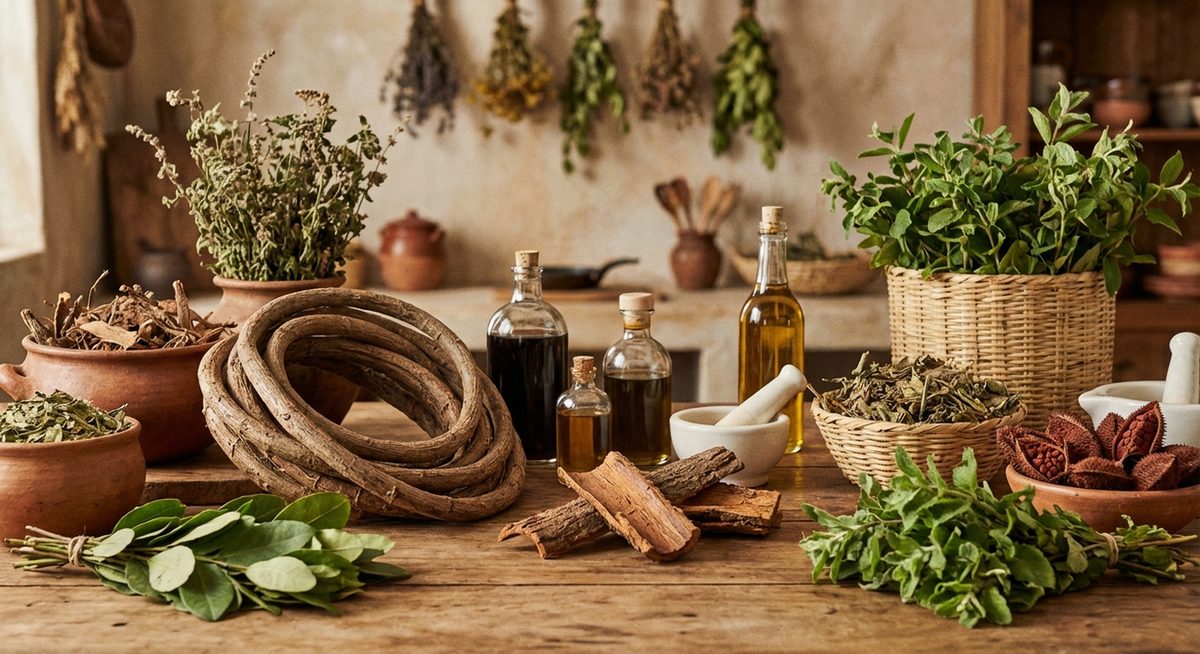
Indigenous communities across the Amazon have used rainforest plants medicinally for thousands of years. Modern science has confirmed the efficacy of many traditional remedies, and roughly 25 percent of Western pharmaceuticals trace their active ingredients to rainforest plants.
Cat's claw (Uncaria tomentosa), native to the Peruvian Amazon, is used traditionally to treat inflammation, arthritis, and digestive disorders. Alkaloids extracted from its bark have demonstrated anti-inflammatory and immunostimulant properties in laboratory studies. Cinchona bark, the source of quinine, comes from a tree native to the eastern slopes of the Andes. Quinine was the world's first effective antimalarial drug and remains in use today. The story of cinchona's discovery intertwines Peruvian indigenous knowledge with colonial exploitation in a way that still resonates.
Ayahuasca (Banisteriopsis caapi) is a vine used by indigenous shamans across the western Amazon to prepare a psychoactive brew central to spiritual and healing ceremonies. Scientific research into its potential therapeutic applications for depression and PTSD is ongoing. Dragon's blood (Croton lechleri) produces a deep red sap used to treat wounds, gastrointestinal ulcers, and insect bites. Studies have isolated a compound called taspine from the sap that accelerates wound healing by promoting collagen formation.
A Rainforest Plants List: 50 Notable Species
For quick reference, here is a rainforest plants list of 50 notable species organized by their forest layer, including both well-known and unique rainforest plants:
Emergent and Canopy Layer
- Kapok tree (Ceiba pentandra)
- Brazil nut tree (Bertholletia excelsa)
- Rubber tree (Hevea brasiliensis)
- Mahogany (Swietenia macrophylla)
- Strangler fig (Ficus spp.)
- Teak (Tectona grandis)
- Ironwood (Dipteryx spp.)
- Lupuna (Ceiba lupuna)
- Shihuahuaco (Dipteryx micrantha)
- Tornillo (Cedrelinga cateniformis)
Understory and Shrub Layer
- Heliconia (Heliconia spp.)
- Walking palm (Socratea exorrhiza)
- Cacao (Theobroma cacao)
- Coffee (Coffea spp.)
- Achiote (Bixa orellana)
- Bird of paradise (Strelitzia reginae)
- Banana (Musa spp.)
- Ginger (Zingiber officinale)
- Anthurium (Anthurium spp.)
- Philodendron (Philodendron spp.)
Epiphytes
- Monkey face orchid (Dracula simia)
- Vanilla orchid (Vanilla planifolia)
- Tank bromeliad (Neoregelia spp.)
- Spanish moss (Tillandsia usneoides)
- Staghorn fern (Platycerium spp.)
- Bird's nest fern (Asplenium nidus)
- Resurrection fern (Pleopeltis polypodioides)
- Air plant (Tillandsia spp.)
- Elkhorn fern (Platycerium bifurcatum)
- Lipstick plant (Aeschynanthus spp.)
Vines and Climbers
- Ayahuasca (Banisteriopsis caapi)
- Passion flower (Passiflora spp.)
- Cat's claw (Uncaria tomentosa)
- Swiss cheese plant (Monstera deliciosa)
- Curare vine (Strychnos toxifera)
- Liana (various families)
- Rattan palm (Calamus spp.)
- Pitcher plant vine (Nepenthes spp.)
- Mandevilla (Mandevilla spp.)
- Devil's ivy (Epipremnum aureum)
Aquatic and Ground-Level Plants
- Giant water lily (Victoria amazonica)
- Water hyacinth (Eichhornia crassipes)
- Giant salvinia (Salvinia molesta)
- Dragon's blood tree (Croton lechleri)
- Cinchona (Cinchona officinalis)
- Camu camu (Myrciaria dubia)
- Açaí palm (Euterpe oleracea)
- Aguaje palm (Mauritia flexuosa)
- Corpse flower (Amorphophallus titanum)
- Venus flytrap relative: sundew (Drosera spp.)
Peru's Tropical Rainforest Flora: A Closer Look
Peru's rainforest spans three distinct ecological zones: the lowland Amazon (selva baja), the montane forests (selva alta), and the transitional cloud forests that drape the eastern Andes. Each zone harbors plants in South America's rainforest found nowhere else on Earth.
The lowland Amazon around Iquitos and the Madre de Dios region is where you will find the greatest density of species. A 2013 study in Yasuní National Park, which extends into Peru, recorded 655 tree species in a single hectare—a world record. The Peruvian Amazon is home to commercially important species like mahogany, cedar, and the aguaje palm, whose fruit supports both wildlife and local economies.
In the cloud forests between 1,500 and 3,500 meters elevation, moisture condenses on every surface, supporting dense mats of mosses, liverworts, and epiphytic orchids. This is where many of Peru's estimated 3,000-plus orchid species are concentrated. The Inkaterra Machu Picchu hotel's private reserve alone has identified over 370 orchid species on its grounds.
Peru's tropical rainforest biome plants face significant threats from gold mining, logging, and agricultural expansion. The Madre de Dios region has lost thousands of hectares to illegal gold mining operations that strip vegetation and contaminate rivers with mercury. Conservation efforts by organizations like SERNANP and international partners have established protected areas covering roughly 17 percent of Peru's Amazon territory, but enforcement remains a challenge.
Conservation: Why Protecting Tropical Rainforest Plants Matters
Tropical rainforests function as the planet's lungs, recycling carbon dioxide and releasing oxygen on an enormous scale. The Amazon alone generates roughly 20 percent of the world's oxygen supply. But the value of tropical rainforest plants extends far beyond atmospheric chemistry.
These forests regulate regional rainfall patterns through transpiration. A single large canopy tree can release 1,000 liters of water into the atmosphere daily. Deforestation disrupts this cycle, potentially pushing the Amazon toward a tipping point where it can no longer sustain itself and degrades into savanna—a scenario with catastrophic implications for global climate.
Economically, rainforest plants provide food, medicine, building materials, and ecosystem services worth billions of dollars annually. Products like rubber, cacao, vanilla, Brazil nuts, and açaí all originate in tropical forests. The undiscovered pharmaceutical potential of rainforest species remains vast; many scientists argue that deforestation is destroying cures for diseases we have not yet found.
On a human level, an estimated 350 indigenous groups live in the Amazon Basin, many with deep botanical knowledge accumulated over millennia. Protecting the forest means protecting their cultures, livelihoods, and rights. Visitors who trek through Peru's Manu National Park or Tambopata Reserve can witness this interplay between people and plants firsthand, often guided by indigenous communities who share their knowledge of amazon rainforest plants and their traditional uses.
Even the forest's wildlife depends entirely on its flora. The dense vegetation provides habitat for species like jaguars, giant otters, and hundreds of bird species. Guinea pigs, which originated in the Andes and adjacent lowlands, still have wild relatives that forage in the forest understory. Conserving rainforest plants means conserving entire webs of life.
Frequently Asked Questions
What plants live in the tropical rainforest?
Tropical rainforests support an estimated 80,000 plant species, including towering canopy trees like the kapok and Brazil nut, thousands of orchid species, bromeliads, ferns, lianas (woody vines), palms, heliconias, and aquatic plants like the giant water lily. Each vertical layer of the forest—from the emergent treetops to the dark forest floor—hosts its own specialized plant community adapted to the available light, moisture, and nutrients.
What type of plants are in a tropical rainforest?
The main plant types include epiphytes (orchids, bromeliads, ferns that grow on other plants), canopy trees (ceiba, mahogany, rubber tree), understory shrubs and palms, climbing vines and lianas, aquatic plants in rivers and lakes, and ground-level herbs and mosses. Flowering plants (angiosperms) dominate, but ancient lineages like ferns and cycads are also well represented.
How many plant species are in the tropical rainforest?
Scientists estimate that tropical rainforests contain between 80,000 and 100,000 plant species, though many remain undiscovered. The Amazon Basin alone may harbor 40,000 to 50,000 species. A single hectare of Amazonian forest can hold over 400 tree species, more than the entire native tree flora of many temperate countries.
What are the most common plants in the Amazon rainforest?
The most abundant Amazon rainforest plants include palms (especially the genera Euterpe, Iriartea, and Astrocaryum), fig trees, cecropia trees, bromeliads, and ferns. A 2013 study found that just 227 "hyperdominant" tree species account for roughly half of all individual trees in the Amazon, despite the forest containing an estimated 16,000 tree species.
Why are tropical rainforest plants important?
Tropical rainforest plants produce roughly 20 percent of the world's oxygen, regulate global climate through carbon storage and water cycling, provide food and medicine (25 percent of modern pharmaceuticals derive from rainforest species), support indigenous livelihoods, and sustain the richest biodiversity on Earth. Their loss would have cascading effects on global ecosystems and human well-being.
What is the biggest flower in the tropical rainforest?
The largest individual flower is Rafflesia arnoldii, found in Southeast Asian rainforests, which can measure nearly one meter across and weigh up to 11 kilograms. In the Amazon, the largest blooming structure belongs to the giant water lily (Victoria amazonica), whose flowers reach 30 centimeters in diameter and change color from white to pink over two nights.
How do plants adapt to survive in the tropical rainforest?
Rainforest plants have evolved numerous adaptations: drip-tip leaves that shed water quickly to prevent fungal growth, buttress roots for stability in thin soil, epiphytic growth to reach light without rooting in the ground, large leaves in the understory to capture scarce light, waxy coatings to repel excess moisture, and toxic chemicals to deter herbivores. Some canopy trees grow over 60 meters tall in their competition for sunlight.
What medicinal plants come from the tropical rainforest?
Notable medicinal rainforest plants include cinchona bark (source of quinine for malaria), cat's claw (anti-inflammatory), curare vine (muscle relaxant used in surgery), rosy periwinkle (anti-cancer compounds vincristine and vinblastine), dragon's blood (wound healing), and camu camu (extremely high vitamin C content). Indigenous peoples have used these plants medicinally for centuries before Western science confirmed their properties.
Are goliath water lilies real, and where do they grow?
Yes, goliath water lilies (Victoria amazonica) are real and grow in the calm, nutrient-rich waters of the Amazon River basin, particularly in oxbow lakes and slow backwaters in Peru, Bolivia, Brazil, and Guyana. Their circular leaves can reach three meters in diameter, strong enough to support the weight of a small child. They are one of the most photographed plants in South America's rainforest.
What plants are unique to Peru's rainforest?
Peru's rainforests harbor many endemic species, including over 200 orchid species found nowhere else, the monkey face orchid (Dracula simia), various species of cinchona native to the eastern Andes, and dozens of bromeliad species restricted to Peru's cloud forests. The country is considered one of the world's 17 megadiverse nations, with thousands of plant species still being catalogued by botanists.
Can you eat plants from the tropical rainforest?
Many tropical rainforest plants are edible and form staple foods worldwide, including cacao (chocolate), vanilla, banana, pineapple, passion fruit, Brazil nuts, açaí berries, and camu camu. However, the rainforest also contains many highly toxic species. Indigenous communities possess detailed knowledge of which plants are safe, a knowledge base developed over thousands of years that is now threatened by cultural erosion and deforestation.
How does deforestation affect tropical rainforest plants?
Deforestation destroys plant habitat directly and fragments remaining forest into isolated patches where species cannot maintain viable populations. It disrupts the water cycle, reduces rainfall, increases fire vulnerability, and eliminates species before they can even be discovered. The Amazon lost approximately 10,000 square kilometers of forest annually over the past decade, though recent conservation efforts in Brazil and Peru have begun to slow this rate.