Top 10 Must-Visit Destinations in Peru for First-Time and Returning Travelers
Peru is a country that defies expectations at every turn. From the mist-shrouded citadel of Machu Picchu perched above the Urubamba Valley to the vast emerald canopy of the Amazon rainforest, the best places to visit in Peru cover an astonishing range of landscapes, cultures, and experiences. Whether you are making your first trip to South America or returning for a deeper exploration, knowing which Peru destinations deserve a spot on your itinerary is essential for making the most of your time.
This guide walks you through the top 10 destinations in Peru that consistently rank among the most rewarding for travelers. We cover what makes each place special, the best time to go, and what you should not miss while you are there. Along the way, you will find links to our detailed guides on specific attractions, wildlife, and cultural experiences that can help you plan each leg of your journey. If you want a quick overview of the best activities, check out our guide to the top 6 things to do in Peru.
1. Machu Picchu — The Icon of the Andes
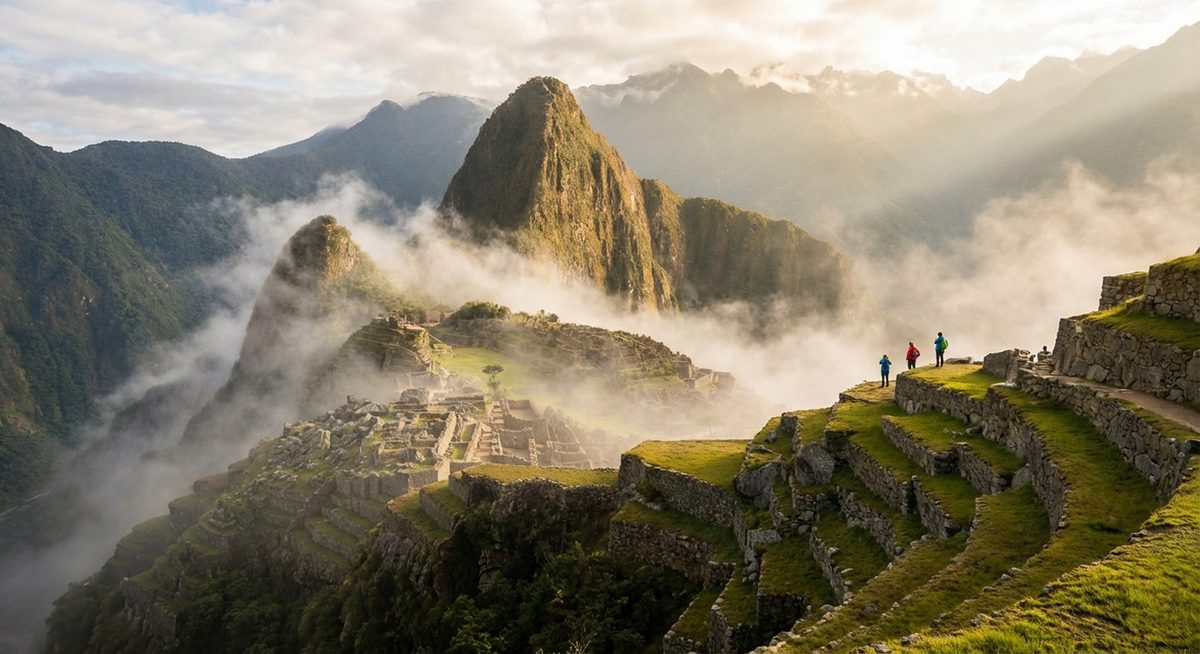
No list of top destinations in Peru can begin anywhere else. Machu Picchu, the 15th-century Inca citadel set at 2,430 meters above sea level on a narrow ridge between two peaks, is one of the most photographed and visited archaeological sites on the planet. Built during the reign of Inca emperor Pachacuti, its precisely cut stone walls, terraced agricultural platforms, and astronomical observatories demonstrate an extraordinary level of engineering sophistication.
Most visitors reach Machu Picchu via a train from Cusco or Ollantaytambo to Aguas Calientes, the small town at the base of the mountain. From there, a bus winds up the switchback road to the entrance. However, the most iconic way to arrive is on foot via the classic four-day Inca Trail, which passes through cloud forests, alpine tundra, and several lesser-known ruins before reaching the Sun Gate overlooking the citadel at dawn.
Best time to visit: The dry season from May through October offers the clearest skies and the most reliable trail conditions. June and July are the driest months but also the busiest. April and November sit on the shoulder and can offer a good balance of weather and crowd levels.
Don't miss: If the classic Inca Trail is booked out or you want a more challenging alternative, consider the route to Choquequirao, often called the sister city of Machu Picchu. It receives a fraction of the visitors and rewards hikers with equally stunning ruins.
2. Cusco — The Navel of the Inca World
Cusco was the capital of the Inca Empire and remains the cultural heart of Peru. Its cobblestone streets, built on top of Inca stone foundations, wind past colonial churches, lively markets, and art galleries. The Plaza de Armas, flanked by the cathedral and the Jesuit church of La Compañía, is one of the most atmospheric central squares in all of South America.
Beyond the historic center, Cusco is the gateway to the Sacred Valley, the launching point for treks to Machu Picchu, and a hub for adventure tourism ranging from mountain biking to white-water rafting. The city itself sits at 3,400 meters, so give yourself a day or two to acclimatize before heading to higher elevations. For a different perspective on exploring this ancient city, read about discovering the hidden gems of Cusco.
Best time to visit: May through September provides dry weather and comfortable temperatures during the day, though nights can be cold. The Inti Raymi festival in late June is one of the most spectacular cultural events in the Andes.
Don't miss: Sacsayhuamán, the massive Inca fortress on the hill above the city, features stones weighing over 100 tonnes fitted together without mortar. It is a 20-minute walk uphill from the Plaza de Armas and offers panoramic views of the city and surrounding mountains.
3. Lima — The Gastronomic Capital of the Americas
Lima has transformed from an overlooked stopover into one of the most exciting cities in Latin America. Its food scene is world-renowned, with Central and Maido consistently ranked among the best restaurants on Earth. But Lima's appeal goes far beyond fine dining. The bohemian district of Barranco is packed with street art, live music venues, and independent galleries. Miraflores offers cliffside parks overlooking the Pacific, and the historic center houses colonial-era architecture that earned it a UNESCO World Heritage designation.
For culture enthusiasts, Lima is home to some of Peru's finest institutions. Our guide to the museums in Lima you must see covers the essentials, from the Larco Museum's pre-Columbian ceramics to the contemporary art at the MALI. If you prefer the outdoors, the beaches in Lima offer a surprising coastal escape within the city limits.
Best time to visit: December through April is Lima's summer, with warm temperatures and sunny days. The winter months from June to September bring the garúa, a persistent coastal fog that keeps skies grey.
Don't miss: A ceviche lunch at one of the city's traditional cevicherías in Surquillo market is an essential Lima experience. Pair it with a Pisco Sour for the full introduction to Peru's culinary identity.
4. Lake Titicaca — The Highest Navigable Lake in the World
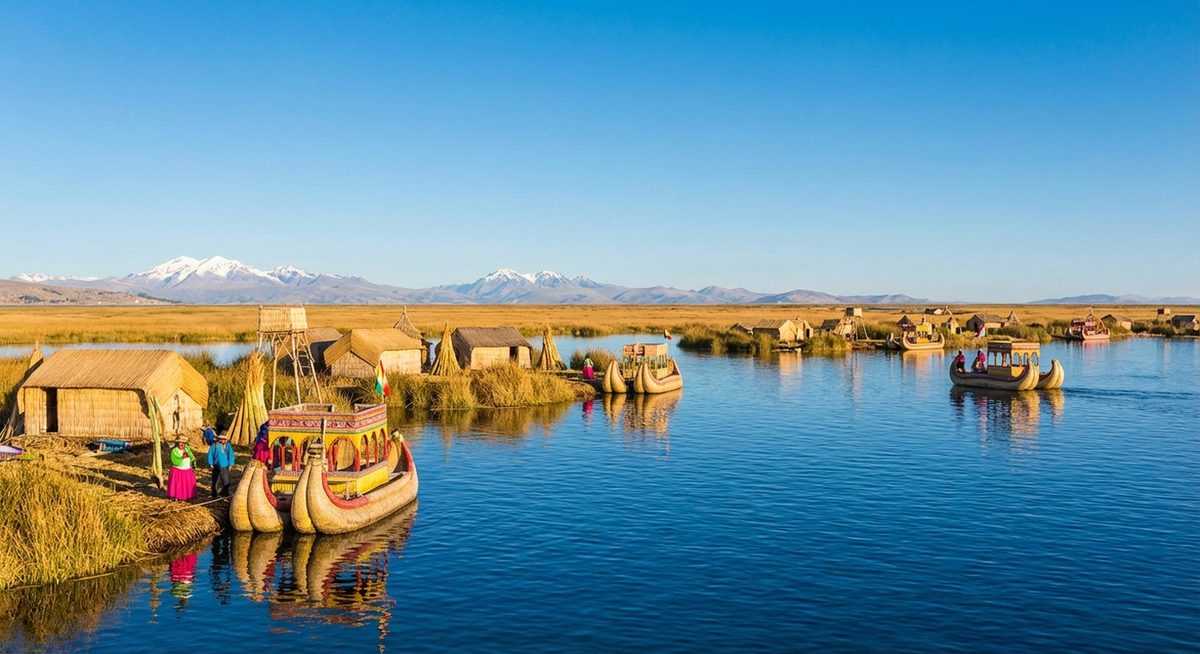
Sitting at 3,812 meters above sea level on the border between Peru and Bolivia, Lake Titicaca is a vast expanse of deep blue water that has been considered sacred since before the Inca Empire. According to Andean mythology, the creator god Viracocha emerged from the lake's waters to create the sun, moon, and stars. The Inca believed the lake was the birthplace of their civilization.
The Peruvian side of the lake is accessed from the city of Puno, which serves as a base for visiting the famous floating islands of the Uros people. These artificial islands, constructed from layers of dried totora reeds, support entire communities and are one of the most unique living traditions in the Americas. Further out on the lake, the natural islands of Taquile and Amantani offer homestay experiences where visitors live with local families and participate in traditional textile weaving and farming.
Best time to visit: The dry season from May to October is ideal. Nights at this altitude are bitterly cold year-round, so pack warm layers regardless of when you visit.
Don't miss: A night on Amantani Island, where families host travelers and share meals cooked on traditional clay stoves. The sunrise over the lake from the island's hilltop temple is unforgettable.
5. The Sacred Valley — The Breadbasket of the Inca
Stretching along the Urubamba River between Cusco and Machu Picchu, the Sacred Valley is a lush, fertile corridor dotted with Inca ruins, traditional villages, and terraced hillsides. At lower altitude than Cusco, the valley's warmer climate makes it a pleasant place to acclimatize while exploring archaeological sites that rival Machu Picchu in their ingenuity, if not in their fame.
The town of Ollantaytambo, at the valley's western end, is one of the few places in Peru where you can see a continuously inhabited Inca settlement. Its massive terraced fortress, which successfully repelled a Spanish cavalry charge during the conquest, rises above narrow stone streets that still follow the original Inca grid. Pisac, at the eastern end, hosts one of the largest outdoor markets in the Andes and offers hiking trails through extensive agricultural terraces.
Best time to visit: The Sacred Valley enjoys pleasant weather year-round thanks to its lower elevation. The dry season from April to October is best for hiking and outdoor activities.
Don't miss: The Maras salt mines, where thousands of small terraced pools cascade down a hillside, producing salt through evaporation just as they have since Inca times. Nearby, the circular terraces of Moray are thought to have been an agricultural laboratory where the Inca experimented with different crops at varying microclimates.
6. Colca Canyon — Where Condors Soar
Twice as deep as the Grand Canyon, Colca Canyon in southern Peru is one of the most dramatic landscapes in the country. The canyon, carved by the Colca River over millions of years, drops to a depth of 3,270 meters and is flanked by pre-Inca agricultural terraces that are still cultivated today. But the main draw for most visitors is the Andean condor, the largest flying bird in the Western Hemisphere with a wingspan that can exceed three meters.
The Cruz del Condor viewpoint, perched on the canyon's edge, is the best place in South America to observe condors riding the thermal updrafts that rise from the canyon floor each morning. Watching these massive birds glide effortlessly at eye level, sometimes close enough to hear the wind through their feathers, is one of the most powerful wildlife experiences Peru has to offer. For more on Peru's remarkable bird watching opportunities, we have a dedicated guide.
Best time to visit: The dry season from June to November is best. Early morning visits to Cruz del Condor, around 8 to 10 AM, provide the best chance of seeing condors in flight.
Don't miss: The multi-day trek to the bottom of the canyon and back, which passes through the oasis village of Sangalle, known locally as the "garden of Eden" for its palm trees and natural pools.
7. The Amazon Rainforest — The World's Greatest Wilderness
Peru claims roughly 60 percent of its territory as Amazon rainforest, making it one of the most accessible entry points to the world's largest tropical forest. The Peruvian Amazon is staggeringly biodiverse: the Manu Biosphere Reserve alone contains more bird species than the entire continent of Europe. From jaguars and giant river otters to pink river dolphins and harpy eagles, the wildlife here is unlike anything else on Earth.
There are two main gateways to the Peruvian Amazon. Puerto Maldonado, in the southeast near the Tambopata National Reserve, is the easier and more affordable option, reachable by a short flight from Cusco. Iquitos, in the northeast, is the largest city in the world unreachable by road and serves as the launching point for expeditions deeper into the wilderness. Both offer lodge-based and expedition-style experiences. For a closer look at what the jungle holds, read our guide to the Peruvian Amazon and our overview of tropical rainforest plants.
Best time to visit: The dry season from May to October means lower water levels, more accessible trails, and fewer mosquitoes. The wet season from November to April raises river levels and allows canoe access to flooded forest ecosystems.
Don't miss: A night walk through the jungle with a trained naturalist guide. The rainforest comes alive after dark with tree frogs, tarantulas, caimans, and nocturnal primates that are invisible during daylight hours.
8. The Nazca Lines — Ancient Mysteries Etched in the Desert
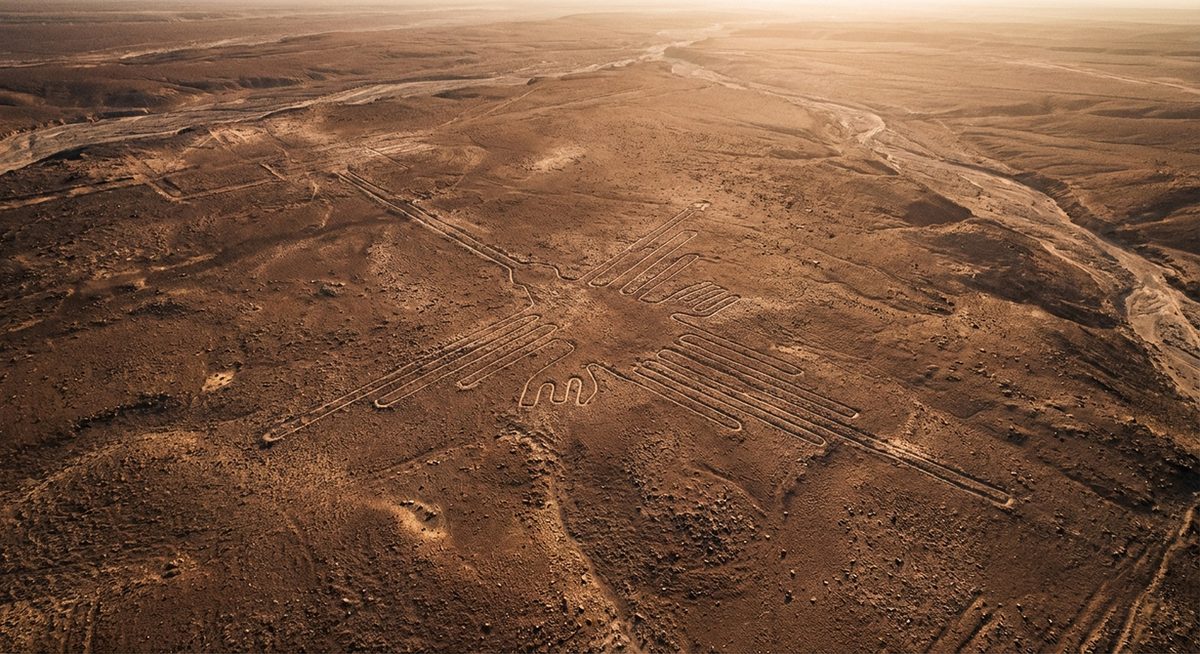
The Nazca Lines are a collection of over 1,500 geoglyphs etched into the arid plains of southern Peru between 500 BCE and 500 CE by the Nazca civilization. The designs range from simple straight lines stretching for kilometers to intricate depictions of animals, including a hummingbird, a spider, a monkey, and a condor, some measuring over 200 meters in length. Their purpose remains debated: astronomical calendar, ritual pathways, or messages to the gods?
The lines are best appreciated from the air. Small aircraft operate from Nazca airport and offer 30-minute flyovers that cover the major figures. For those who prefer to stay on the ground, a metal observation tower along the Pan-American Highway provides a partial view of two of the geoglyphs, and a newer mirador on a nearby hillside offers a wider perspective.
Best time to visit: The Nazca desert is dry year-round, so visits are possible at any time. Mornings tend to offer calmer air for flights, reducing turbulence.
Don't miss: The Chauchilla cemetery outside Nazca, where 1,000-year-old mummified remains sit in open tombs surrounded by pottery and textiles, offering a haunting glimpse into the Nazca culture that created the lines.
9. Huacachina — The Desert Oasis
Built around a natural lagoon surrounded by towering sand dunes, Huacachina looks like it belongs in the Sahara rather than coastal Peru. This tiny village, home to just a few hundred permanent residents, sits five kilometers from the city of Ica and has become one of the most popular backpacker stops in the country. The dunes, some reaching over 100 meters in height, provide the setting for two of Peru's most adrenaline-pumping activities: sandboarding and dune buggy rides.
Despite its small size, Huacachina punches above its weight as a destination in Peru. The golden light at sunset turning the dunes amber and orange is one of the most photographed scenes in the country. Beyond the dunes, the broader Ica region is Peru's wine and pisco country, with bodegas offering tastings of the grape brandy that forms the base of Peru's national cocktail.
Best time to visit: Year-round, though the cooler months from June to September are more comfortable for dune activities. Summer months from December to March bring intense heat.
Don't miss: Climbing to the top of the highest dune at sunset. The panoramic view of the oasis below, framed by an ocean of sand and the distant Andes, is worth every step.
10. Arequipa — The White City
Peru's second-largest city earns its nickname from the gleaming white sillar stone, carved from volcanic deposits, that makes up the facades of its colonial buildings. Arequipa sits at 2,335 meters in a valley surrounded by three volcanoes, with the snow-capped El Misti forming a perfect cone on the city's skyline. The historic center, a UNESCO World Heritage Site, revolves around the stunning Plaza de Armas, widely considered the most beautiful main square in Peru.
The city's crown jewel is the Santa Catalina Monastery, a sprawling 20,000-square-meter complex founded in 1580 that functioned as a self-contained city within a city for nearly 400 years. Its narrow streets, painted in vivid terracotta and cobalt blue, open onto quiet plazas and cloistered gardens. Arequipa is also the jumping-off point for excursions to Colca Canyon and provides access to some of Peru's most distinctive cuisine, including rocoto relleno and chupe de camarones.
Best time to visit: Arequipa enjoys over 300 days of sunshine per year. The dry season from April to November is ideal, with warm days and cool nights.
Don't miss: The Juanita mummy at the Museo Santuarios Andinos. This remarkably preserved Inca girl, sacrificed on the summit of Mount Ampato over 500 years ago, was discovered in 1995 and remains one of the most significant archaeological finds in the Americas.
Bonus: More Destinations Worth Your Time
Peru has far more to offer than any top-10 list can capture. If your itinerary allows, consider adding these experiences:
- Rainbow Mountain (Vinicunca): This stunning geological formation at 5,200 meters has become one of Peru's most popular day trips from Cusco. Read our detailed assessment of whether Rainbow Mountain is worth a visit.
- Sky Domes: For a unique overnight experience, Peru offers transparent dome accommodations with unobstructed views of the Andes sky. Explore the best sky domes in Peru.
- Ilo: This lesser-known coastal town in southern Peru offers authentic seaside culture without the tourist crowds. Discover interesting things about Ilo and why you should visit.
Planning Your Peru Trip: Practical Tips
Getting the most out of Peru requires some planning. Here are the key considerations for organizing your trip around these top 10 destinations in Peru:
Duration: Two weeks is the minimum for covering Cusco, the Sacred Valley, Machu Picchu, Lake Titicaca, and Lima. Three weeks allows you to add the Amazon, Arequipa, and Colca Canyon. A month gives you time for the Nazca Lines, Huacachina, and some of the off-the-beaten-path destinations listed above.
Altitude: Several of Peru's top destinations sit above 3,000 meters, and altitude sickness can affect anyone regardless of fitness level. Spend your first two days in Cusco or the Sacred Valley taking it easy, drink coca tea, stay hydrated, and avoid alcohol until you have acclimatized.
Safety: Peru is generally safe for tourists who take standard precautions. Our guide on whether Peru is safe for tourists covers everything you need to know about staying safe during your trip.
Wildlife: Peru is one of the most biodiverse countries on the planet. If wildlife encounters are important to you, read our guide to the cutest animals of Peru and our list of must-see animals in Peru.
Culture: Peru's cultural heritage extends far beyond the Inca. Learn about the history and use of palo santo in Peru, explore the legend of the pishtacos, or discover what an ayahuasca ceremony involves. For those drawn to the unexplained, our piece on paranormal Peru is not for the faint of heart.
Frequently Asked Questions About Peru Destinations
What is the number one destination in Peru?
Machu Picchu is consistently ranked as Peru's number one destination and one of the top travel attractions in the world. The Inca citadel draws over a million visitors per year and was voted one of the New Seven Wonders of the World in 2007. However, many returning travelers consider Cusco, the Amazon rainforest, or Lake Titicaca equally rewarding for different reasons.
How many days do you need to see Peru?
A minimum of 10 to 14 days allows you to visit Lima, Cusco, the Sacred Valley, and Machu Picchu comfortably. Three weeks opens up destinations like Arequipa, Colca Canyon, and the Amazon. A full month lets you explore the Nazca Lines, Huacachina, Lake Titicaca, and some of Peru's lesser-known gems without feeling rushed.
Is Peru safe for tourists?
Peru is generally safe for tourists who take standard precautions. Petty theft can occur in crowded tourist areas, so keep valuables secure and stay aware of your surroundings. The main tourist circuits through Cusco, Lima, and the Sacred Valley are well-traveled and supported by reliable infrastructure. Our detailed Peru safety guide covers specific tips for each region.
When is the best time to visit Peru?
The dry season from May to October is the best time for most of Peru's highland and jungle destinations. Lima's coast is warmest from December to April. June through August are the peak tourist months for Cusco and Machu Picchu, so book permits and accommodations well in advance. Shoulder months like April and November can offer lower crowds with generally good weather.
What are the most underrated places to visit in Peru?
Choquequirao, the Kuelap fortress in the northern highlands, the Huaraz region for trekking, and the Ballestas Islands off the Paracas coast are all fantastic destinations that see far fewer visitors than the main circuit. Within the popular areas, Ilo on the southern coast and the hidden neighborhoods of Cusco offer authentic experiences away from the crowds.
Do I need vaccinations before traveling to Peru?
A yellow fever vaccination is recommended if you plan to visit the Amazon rainforest regions below 2,300 meters. Routine vaccinations for hepatitis A, hepatitis B, and typhoid are also advised by most travel health clinics. No vaccinations are required for entry into Peru itself, but carrying your yellow fever certificate is wise if you are traveling onward to countries that require proof of vaccination.
Can I drink the tap water in Peru?
Tap water in Peru is not safe to drink in most areas. Stick to bottled water or use a reliable purification method such as a filtered water bottle or purification tablets. Most hotels and restaurants serve purified water, and bottled water is inexpensive and widely available throughout the country. Be cautious with ice in drinks outside of reputable establishments.
What currency does Peru use and should I bring cash or cards?
Peru uses the Peruvian sol (PEN). Major cities like Lima and Cusco have ATMs that accept international cards, and credit cards are accepted at hotels, restaurants, and larger shops. However, smaller towns, markets, and local transport rely heavily on cash. Carry a mix of soles in small denominations for everyday purchases, and keep some US dollars as backup since they are widely accepted at exchange offices.
Start Planning Your Peru Adventure
Peru packs an extraordinary amount of diversity into a single country. The top 10 destinations in Peru listed here represent the essential framework for any trip, whether you have two weeks or two months. From the archaeological wonder of Machu Picchu to the culinary excitement of Lima, from the spiritual depth of Lake Titicaca to the wild abundance of the Amazon, each destination offers something that cannot be found anywhere else on Earth.
Ready to go deeper? Explore our guides on the top things to do in Peru, learn about guinea pigs as the quintessential Peruvian pet, or discover the stunning Andean cock-of-the-rock, Peru's national bird. Whatever draws you to this remarkable country, Peru rewards curiosity at every turn.